

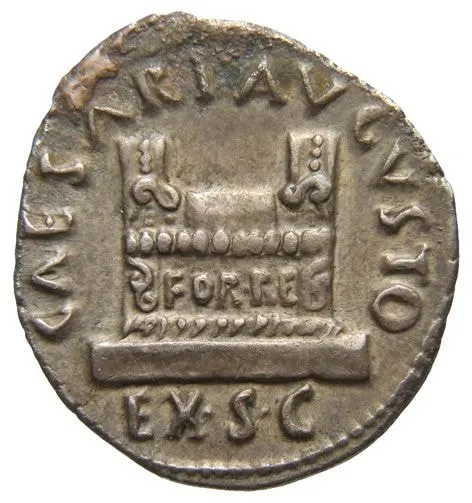
a man came back from a journey and entered rome by night to dodge the welcome the city was preparing for him. out of that arrival without an audience came a festival day bearing his name. it happened on 12 october in the year 19 before the common era, and the traveller was augustus, who had spent nearly three years in the east. the calendar of amiternum records it thus: a festival by decree of the senate, because on that day the emperor caesar augustus returned from the overseas provinces and entered rome; an altar was established to fortuna redux.
rome had not missed him in calm. cassius dio says that the second consulship of that year was still unfilled, that the elections again ended in riots and killings, and that the senate sent envoys to augustus. he appointed one of them consul, quintus lucretius, a man whose name had appeared on the proscription lists. for this and for what he had done abroad, honours of every kind were voted to him; dio says he accepted none of them except two: the altar of fortuna redux, the fortune that brings one home, and that the day of his arrival be counted among the holidays under the name of augustalia. and then the scene: as the magistrates and others were preparing to go out to meet him, he entered by night.
there was, however, an official welcome, and he tells of it himself. the res gestae say that, by resolution of the senate, some of the praetors and of the tribunes of the plebs, with the consul quintus lucretius and the leading men of the city, went out to meet him as far as campania, «an honour that up to this day has been decreed to no one but me». he did not refuse the homage; he refused the scene at the gate. he accepted the delegation on the road, dodged the crowd and left both things written down as merit.
the altar was raised next to the temple of honour and virtue, at the porta capena, where the via appia came in. that augustus came back that way is the usual inference — he was coming from the south and the altar was put for him at that gate —, not a fact from a source. the calendars separate two steps: on 12 october the altar is established; on 15 december, according to the feriale of cumae, it is dedicated, with a thanksgiving to fortuna redux «who brought caesar augustus back from the overseas provinces». no remains survive: platner and ashby record none and refer its image to the coins, among them those of the moneyer quintus rustius. a poet of those same years left an allusion to the same gate: in propertius, a girl waiting for her man to come home from the war promises to bring votive arms to the porta capena and sign beneath them «grateful, for her man’s safety».
with the altar came an order, and here is the delicate part: we know it only because he wrote it. the res gestae say that the senate consecrated the altar «for my return», that it ordered the pontiffs and the vestal virgins to make a sacrifice there on each anniversary of the day he came back from syria, and that it called the day augustalia «after my cognomen». the document is the index of his own deeds which, according to suetonius, he left sealed among his last wishes, deposited in the keeping of the vestals, to be engraved on bronze in front of his mausoleum. the text we read is the copy from ancyra, and its heading declares itself a copy of the two bronze pillars at rome, which do not survive; that heading is not even his: tiberius drafted it, or someone on his orders, for the pillars. when it says «the senate consecrated», the one signing the sentence is the beneficiary.
two details from the same text. augustus’s version says he was coming back «from syria»; the calendars, «from the overseas provinces». and the name: not the goddess’s, which would have given something like fortunalia, but his own.
he did not refuse the homage: he refused the scene. and he recorded both things as merit.
the name in stone raises a problem of record, not of testimony. the calendar of amiternum, the one that describes the entry and the altar, is later than augustus’s death: its october already records games of the year 14 in honour of the deified augustus. of the earlier calendars we have no october that says otherwise. it is a silence of the archive, not proof that the name was invented later.
the ancient sources, moreover, do not agree on what was being celebrated. dio says that in 11 bce the hunts for the birthday were paid for almost every year by one of the praetors, «even though it was not authorised by decree», whereas the augustalia «were then celebrated for the first time by virtue of a decree». but in another passage he calls augustalia the festival «that was held in honour of his birthday», which is 23 september, not 12 october. and after his death he separates them again: the consuls would take charge of the birthday and the tribunes of the augustalia. the day that bears his name and the day he was born are not the same, and the ancients already mixed them up.
in 14 ce, with augustus now deified, the festival becomes a big one. tacitus records that year the new priesthood of the sodales augustales, twenty-one drawn by lot from the leading men of the city, and that the first augustal games were wrecked by a brawl among actors. «national holiday», by the way, is a modern analogy: the roman category was feriae ex senatus consulto, a holiday by decree of the senate, with an obligatory sacrifice.
the day stayed wedged between two much older rites, the meditrinalia of the 11th and the fontinalia of the 13th. in the calendar of filocalus, of the year 354, with the empire now christian, 12 october still says AVGVSTALES · CM · XXIIII: twenty-four circus races. it is preceded by the alamannic games from the 5th to the 10th, and the 11th is blank. from 19 before the common era to 354 run three hundred and seventy-two years: nearly four centuries of chariots for a journey its protagonist ended by night, so that no one would see him arrive.