

fasti event
the same year · every reckoning
bc
30 bc
bce
30 bce
a.u.c.
dccxxiv
b.p.
1,980
holocene era
9,971
olympiad
187 · year 3
anno mundi
3,732
1 · august alexandria

egypt's booty and the emperor's month

aegyptvs capta

on 1 august 30 bce, octavian's legions enter alexandria almost without resistance. with the deaths of antony and cleopatra, the last independent hellenistic kingdom falls, and years later the senate renames a month of the calendar in his honour.

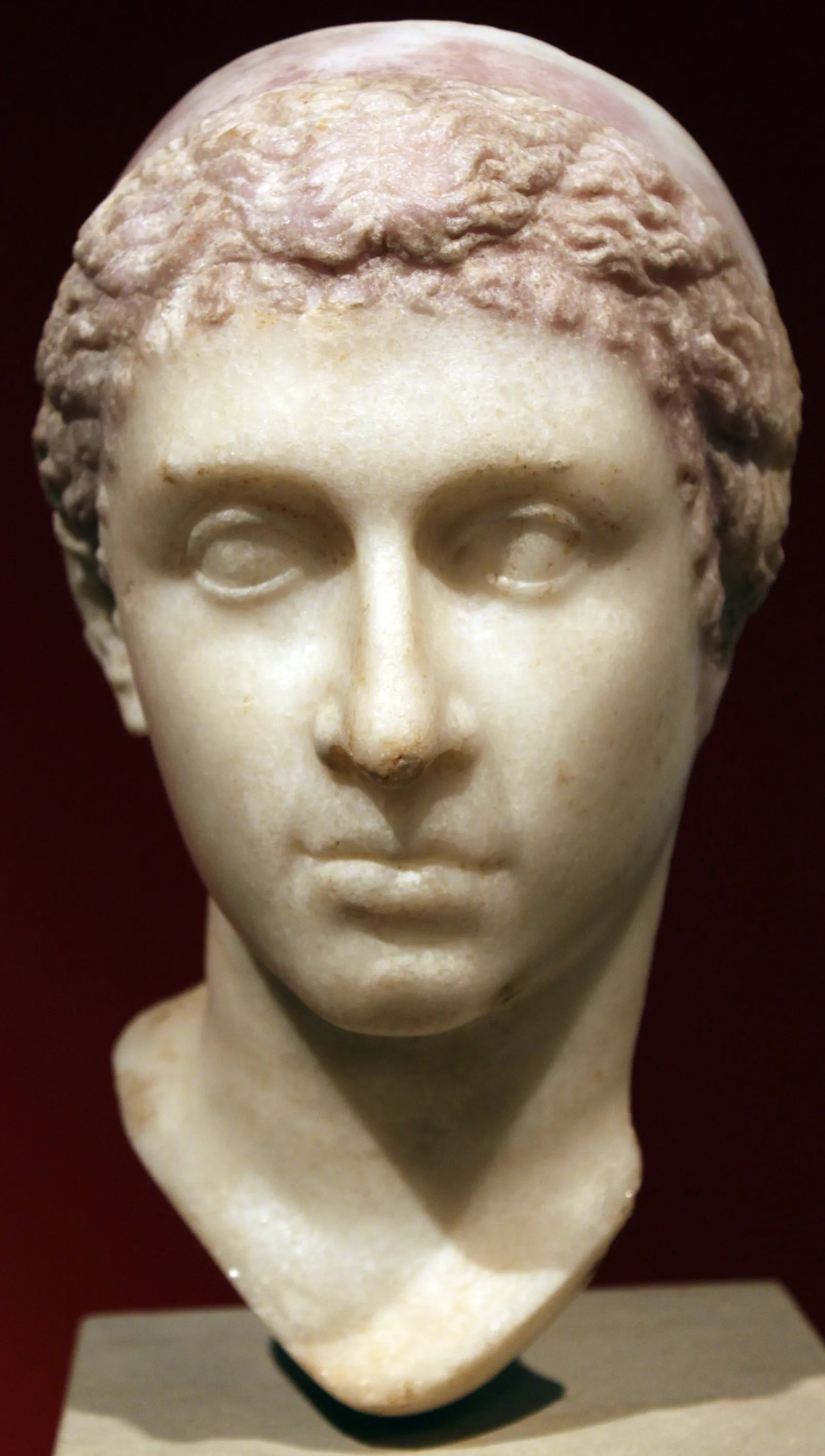
marble bust of cleopatra vii, known as the "berlin cleopatra", altes museum
anagoria · public domain

august is not named for an emperor’s birthday. it is named for a conquest. it happened on a day like today, 1 august in the year 30 before our era: the legions of octavian —the future augustus— entered alexandria almost without meeting resistance.

mark antony, seeing the game was lost, took his own life; cleopatra did the same a few days later. with them died ptolemaic egypt, the greek dynasty that had reigned since the days of alexander the great, and the last great independent kingdom of the mediterranean vanished. according to suetonius and cassius dio, the plunder of the pharaohs was so colossal that, back in rome, octavian settled the state’s debts and handed out money among the people —the congiaria he would later list himself in his res gestae— to the point that money grew plentiful in the city, interest rates fell and the price of land soared.

and egypt did not become just another province. octavian kept it almost as a private estate: it was governed by a prefect of equestrian rank, not a senator, appointed personally by him, and no senator could even set foot in the country without his explicit permission —a prohibition tacitus was still recording generations later, already under tiberius. the granary that would feed rome for centuries was, in practice, his.

the name of the month does not celebrate his cradle: it celebrates the month in which he became master of the world.

years later, the senate, in a gesture of calculated flattery, renamed sextilis —the old sixth month of the calendar— as augustus. and here is the detail almost no one tells: according to suetonius, augustus preferred this month to september, in which he had actually been born, precisely because it was in sextilis that he had achieved his first consulship and his greatest military victories. the name does not commemorate his birth: it commemorates the month in which he became master of the known world.

now the historiographical nuance, which is worth not skipping. a late legend, attributed to the medieval monk johannes de sacrobosco, holds that a day was “stolen” from february so that august would not end up shorter than july and the emperor would not come off worse against his predecessor. it is a catchy story, but blackburn and holford-strevens disprove it in detail in the oxford companion to the year: the lengths of all the months had already been fixed by the julian reform of the calendar, decades before sextilis changed its name. no one stretched august at february’s expense; augustus had no need to steal a day from any month. it was enough for him to win an entire month by right of conquest.

the irony survives in the very calendar we use today. every time the date of 1 august is written down, it invokes —almost no one realising it— the fall of alexandria, the end of three centuries of greek kings in egypt and the silent birth of an empire that would rule the mediterranean for the following five hundred years. as rüpke recalls in his history of the roman calendar, few monuments have survived the passage of time as well as a simple name repeated twelve times a year.

@yodidac · tiktok egypt's booty and the emperor's month play
@yodidac
read transcript (original audio in spanish)

agosto no lleva ese nombre por el cumpleaños de un emperador. lo lleva por una conquista. ocurrió un día como hoy, un 1 de agosto del año 30 antes de nuestra era: las legiones de octaviano —el futuro augusto— entraron en alejandría casi sin resistencia. marco antonio, viéndolo todo perdido, se quitó la vida; pocos días después lo hizo cleopatra. con ellos moría el egipto de los ptolomeos —la dinastía griega que reinaba desde los tiempos de alejandro magno— y el último gran reino independiente del mediterráneo caía bajo roma. según suetonio y casio dión, el botín de los faraones fue tan colosal que, ya de vuelta, octaviano saldó deudas del estado, repartió dinero al pueblo, y en roma el dinero abundó hasta hacer caer los tipos de interés y disparar el precio de la tierra. y egipto no se volvió una provincia cualquiera. octaviano se la quedó casi como finca privada: la gobernaba un prefecto de rango ecuestre —no un senador— que él nombraba en persona, y ningún senador podía pisar el país sin su permiso. el granero que alimentaría a roma durante siglos era, en la práctica, suyo. años más tarde, el senado, en un gesto de pura adulación, rebautizó sextilis —el viejo mes sexto— como augustus. y aquí está el detalle que casi nadie cuenta: suetonio dice que augusto prefirió este mes al de septiembre, en el que había nacido, porque en sextilis había logrado su primer consulado y sus mayores victorias. el nombre no celebra su cuna: celebra el mes en que se hizo dueño del mundo. una leyenda tardía, del monje medieval sacrobosco, añade que le robaron un día a febrero para que agosto no fuera más corto que julio. los historiadores lo desmienten: las longitudes de los meses ya las había fijado la reforma de julio césar. nadie estiró agosto. augusto no necesitó robar días: le bastó con ganar un mes entero por conquista.

⁕ ⁕ ⁕ apparatus ⁕ ⁕ ⁕

fontes classicae.

  1. i. suetonius · lives of the twelve caesars (augustus)
  2. ii. cassius dio · roman history book li, 17 and 21
  3. iii. macrobius · saturnalia i, 12.35
  4. iv. tacitus · annals ii, 59
  5. v. plutarch · life of antony 76-86
  6. vi. augustus · res gestae divi augusti 15

modern bibliography.

  1. i. bonnie blackburn and leofranc holford-strevens · the oxford companion to the year
  2. ii. jörg rüpke · the roman calendar from numa to constantine

transitus

dídac
⁕ about the author ⁕

dídac

software engineer, history communicator. writes about ancient political history and the rage his own century gives him. building an encyclopædia romana on the internet — and a few rooms more.