

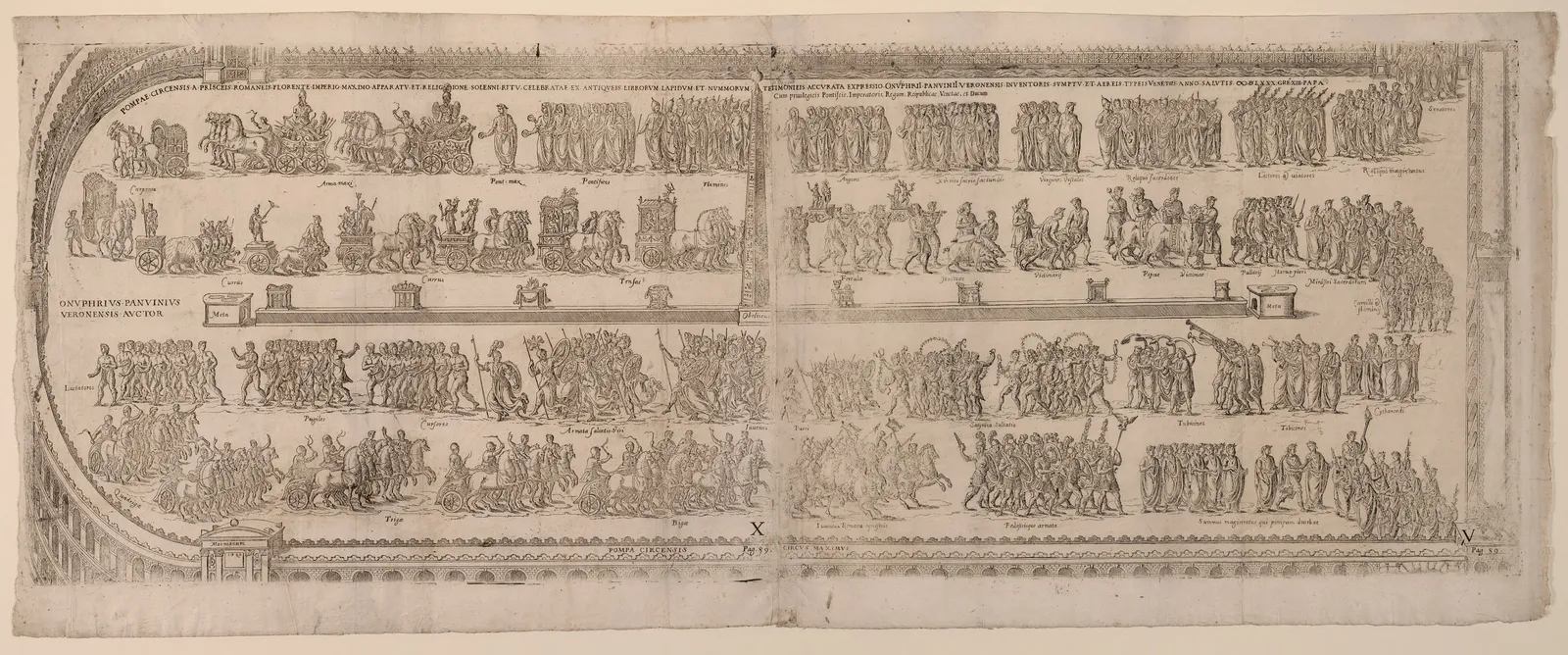
on 5 september rome opened the ludi romani, and everyone taking part in them knew one uncomfortable thing: if a single gesture of the rite went wrong, the festival was not patched up on the spot, it was run again from day one. the romans called it instauratio, and it was no rhetorical threat: the sources preserve a case in which the city started over a set of games that were themselves already a repeat.
they were jupiter’s games, and rome held them to be the oldest in the city — worth saying with the attribution attached, because that antiquity rests on tradition and not on independent evidence. livy takes it back to the reign of tarquinius priscus, the king who according to him marked out the site of the circus maximus and left the games as an annual fixture: sollemnes deinde annui mansere ludi, romani magnique varie appellati (i, 35).
one thing popular history tends to run over is worth qualifying, and it is the date everyone reaches for. 366 before our era circulates as the year the games became annual, in the hands of the newly created curule aediles. livy, who is the source, says no such thing: in vi, 42 the senate decrees that the ludi maximi be held, that one day be added to the three they already had and, the plebeian aediles having refused the job, that two patrician aediles be created. four days, not fifteen. annual-since-366 is scullard’s formulation, not livy’s.
the festival opened with the pompa circensis, which came down from the capitol, crossed the forum and entered the circus. the most detailed ancient description that survives is dionysius of halicarnassus (vii, 72), taken by his own account from quintus fabius pictor: in front, the magistrates; behind them the young men — on horseback those from families whose census rating destined them for the cavalry, on foot the rest — then the charioteers, the athletes, the choruses of dancers and the musicians; and closing the parade, on men’s shoulders, the images of the gods. the gods did not open the procession: they ended it. that they then presided over the races from the pulvinar is well attested — augustus lists it among his works in the res gestae, 19 — but not in that passage: they are two separate facts and it is worth not fusing them.
a rite that can be repeated in full is a rite that admits it can go wrong.
the case that fixes the rule is told by livy in ii, 36. at a set of games, in the morning, before the show began, a head of household had a slave flogged under the yoke and dragged him like that across the middle of the circus. the games went ahead, livy writes, as though the matter had nothing to do with religion. the offence surfaced afterwards, and in a dream: jupiter appeared to a plebeian, titus latinius, to tell him that the man who had led the dance in the procession had not pleased him. latinius said nothing, his son died, he was left paralysed, and only when he was carried into the senate house and told the story did the senate decree that the whole thing be run again.
the warnings need counting carefully, because the sources do not agree: livy tells of two, cicero speaks of a third admonition (de divinatione i, 55) and dionysius describes three apparitions (vii, 68). nor do livy and cicero agree on the repetitions: livy tells of one, and the flogging is its cause; cicero, of two: the games of the slave were already repeating a set that a call to arms had interrupted, and they were repeated once more. and neither latin passage calls those games «ludi romani»: livy calls them ludi magni, and already in repetition; cicero, ludi votivi maximi held for the first time during the latin war, which sits badly with an annual festival already in place. that they are the direct ancestor of the ludi romani is a modern reconstruction: plausible, but not proven.
the other thing tradition anchored here is the birth of latin literature. in 240 before our era, under the consuls gaius claudius and marcus tuditanus, livius andronicus staged the first latin play; that is cicero’s date, in the brutus (72). what cicero does not say is that it happened at the ludi romani — that comes from cassiodorus, who moreover dates it to 239 — nor that the play was a translation from the greek, nor that andronicus was a freedman: those come from jerome and aulus gellius. and in that same passage cicero records that the scholars disagreed about the date. 240 is not an archival fact: it is the point of origin the romans fixed for themselves.
even today’s date has layers: the fifteen days from 5 to 19 september are the late-republican programme, and the only pre-julian calendar that survives, the fasti antiates maiores, marks ludi magni only on the 8th, 9th and 10th, with the 5th down as the nones of jupiter stator. what did not change is the mechanism beard, north and price put at the centre of roman cult: the repetition of the exact formula, where a single error is enough to void the whole act. rome invented its own literature in passing, as one more item on the programme, while making sure the parade came out right. the first cost it nothing; the second, if it went wrong, was paid in days of calendar.