

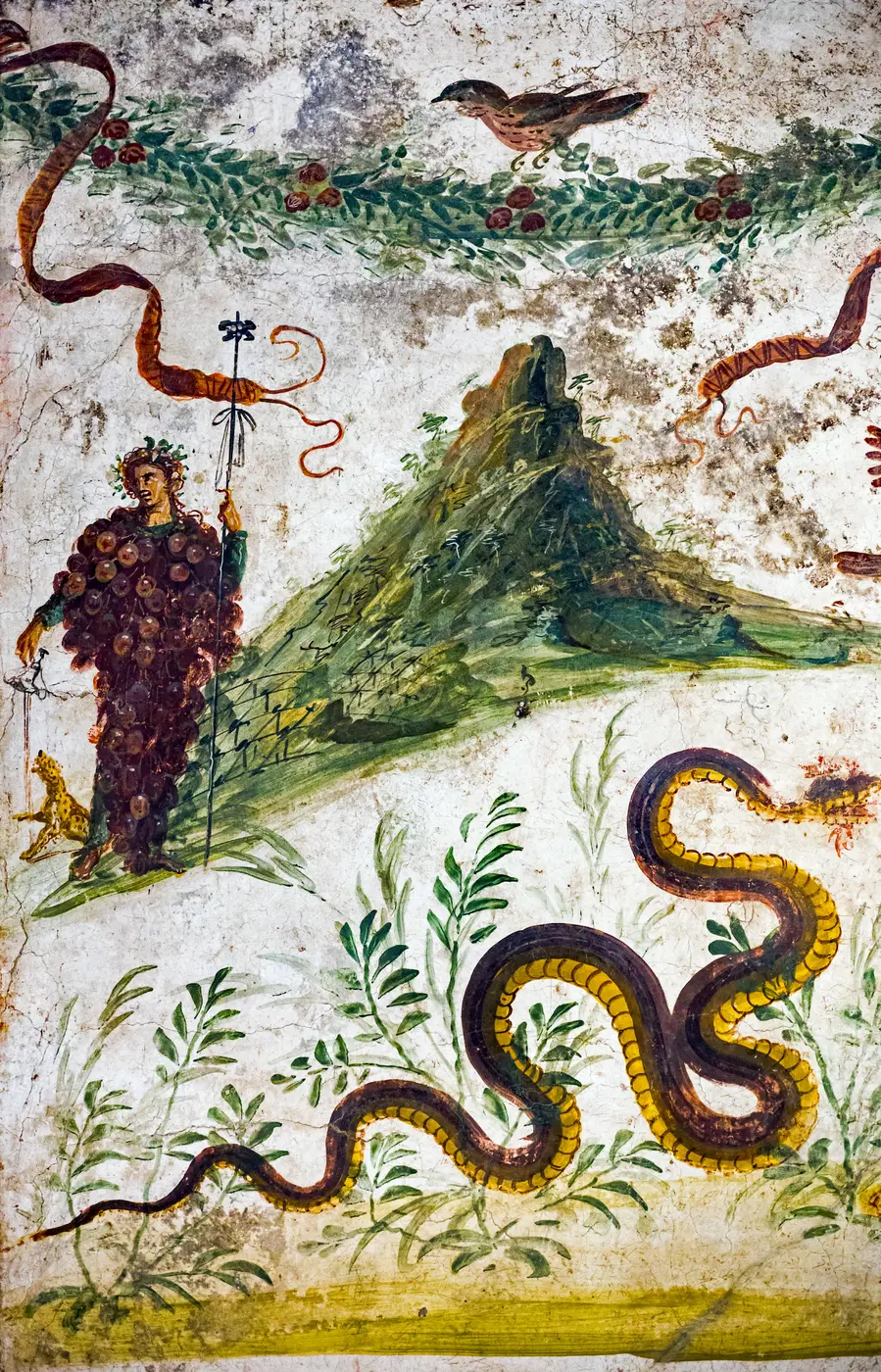
in ancient rome there was one day in the calendar on which the courtesans of the city held a recognised religious role, and they shared it with none other than the king of the gods. it fell on a day like today, a 19 august: the vinalia rustica, the festival that opened the grape harvest weeks before anyone trod a single grape.
and here a cliché repeated almost everywhere needs taking apart. whatever the usual claim, this was not a day of venus. varro, in his treatise on the latin language, leaves no room: it is jupiter’s day, not venus’. the officiant was the flamen dialis, the priest of jupiter, and the rite had a practical function before a devotional one. after giving the order to harvest —the auspicatio vindemiae recorded by pliny the elder— he sacrificed a ewe lamb to the god and cut the first bunch with his own hands. until that gesture, nobody could touch the vines.
so where does venus come from? varro himself explains it, and by a side door: on that same 19 august the vegetable gardens were consecrated to her as protectress of gardens, and the market gardeners took the day off. venus enters the date through horticulture, not through wine.
three altars and a single bunch of grapes: for rome, wine and desire came off the same vine.
but there was a second door, far more striking. beside the porta collina stood a temple of venus erycina, a cult brought from mount eryx, in sicily, whose reputation was tied to sacred prostitution. rome imported it during the punic wars, and the location is no minor detail: livy records two distinct sanctuaries, one on the capitol vowed in 215 bce after the disaster at trasimene, inside the pomerium, and this other one dedicated in 181 bce deliberately outside the walls, beyond the sacred boundary of the city, precisely because it was a foreign cult. there the meretrices came to offer myrtle and mint and to ask for prosperity in their trade.
it is worth saying how far the evidence goes. whether that “day of the courtesans” fell today or on the other vinalia —the vinalia priora of 23 april— is something historians are still arguing over, and ovid, in his fasti, places those rites in spring instead. scullard, who has done more than anyone to put the republican festival calendar in order, keeps jupiter as the undisputed holder of the date and treats the link with venus as the secondary addition varro describes.
so on one and the same 19 august rome handed the first grapes to jupiter, left the vegetable gardens in venus’ hands and, outside the walls, its courtesans prayed to a goddess imported from sicily. it was not a contradiction for them: the roman calendar laid layer over layer without asking permission, and one date could belong at once to the god of the state, to the goddess of gardens and to a cult the city was not willing to let all the way in.