
fasti battle
the same year · every reckoning
ad
378 ad
ce
378 ce
a.u.c.
mcxxxi
b.p.
1,572
holocene era
10,379
olympiad
289 · year 3
anno mundi
4,140
9 · august hadrianopolis

adrianople and the emperor who left no body

proelium hadrianopolitanum

on 9 august 378 the emperor valens marched in person against the goths, lost two thirds of the eastern army and vanished in the slaughter. ammianus marcellinus records two versions of his end, and in neither does the body turn up.

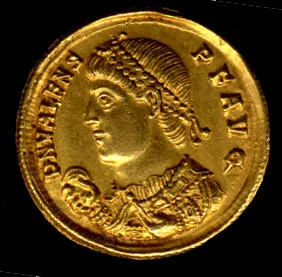
gold solidus bearing the portrait of the emperor valens
the metropolitan museum of art · public domain

on 9 august 378 a roman emperor marched in person against the goths, lost the battle, and nothing more was ever heard of his body. this is not a figure of speech: there was no funeral, no tomb, no remains to bury.

valens ruled the eastern half of the empire. two years earlier, tens of thousands of goths fleeing the huns had crowded the northern bank of the danube asking permission to cross and take refuge on roman soil. valens granted it, and not out of generosity: they were hands for the fields and recruits for the army. what failed was the logistics, and it failed in the worst way imaginable.

the officers charged with feeding them cheated them instead. ammianus marcellinus —a soldier of that era, writing with the bitterness of a man who saw the system from inside— records that they went as far as selling them dog meat in exchange for handing over their own children as slaves. the goths rose in arms, and had been ranging across thrace for two years when the emperor decided to settle the matter himself.

rome did not lose that day for being weaker. it lost for being in a hurry.

in the summer of 378 the two armies were hunting each other near adrianople. gratian, valens’ nephew and emperor of the west, was on his way with reinforcements after defeating the alamanni. valens chose not to wait. according to ammianus he resented sharing the glory with his nephew, and his scouts reported the goths to be far fewer than they actually were. he ordered the attack, and his men marched for hours under the august sun without food or water, reaching the field already exhausted.

a truce was still being negotiated when the fighting broke out. the gothic cavalry, returning from raiding the surrounding country, fell on the roman flanks and pressed them into the centre. ammianus describes the result with a detail nobody forgets: the legionaries were packed so tightly against one another that they could not raise their arms to use their swords. two thirds of the eastern army were destroyed, along with thirty-five tribunes and much of the high command. ammianus himself writes that rome had seen no such butchery since cannae.

valens disappeared in the slaughter. ammianus records two versions and both end the same way, without a body: in one he falls to an arrow among the rank and file, unrecognised by anyone; in the other, wounded, his men carry him to a nearby farmhouse which the goths burn without knowing the emperor was inside.

it is worth saying what has since been made of this battle. for a long time it was presented as the moment cavalry replaced infantry and the middle ages began — a reading current scholarship has dismantled: barbero and heather agree that adrianople was a catastrophic tactical defeat, not a military revolution. what did change was the political map. four years later theodosius made peace and let the goths settle inside the frontier, under their own leaders and with their own weapons. an entire people came to live on roman soil without ceasing to be itself. of valens, meanwhile, there was not even a body to bury.

@yodidac · tiktok adrianople and the emperor who left no body play
@yodidac
read transcript (original audio in spanish)

el 9 de agosto del año 378, un emperador de roma marchó en persona contra los godos, perdió la batalla, y de su cuerpo no volvió a saberse nada. ocurrió un día como hoy, un 9 de agosto. valente gobernaba la mitad oriental del imperio. dos años antes, decenas de miles de godos, huyendo de los hunos, le suplicaron cruzar el danubio y refugiarse en territorio romano. valente los dejó pasar. pero los oficiales que debían alimentarlos los estafaron y los mataron de hambre: amiano marcelino cuenta que llegaron a vender carne de perro a cambio de que los godos entregaran a sus hijos como esclavos. los godos se alzaron en armas. en el verano del 378, los dos ejércitos se buscaban cerca de adrianópolis, en la tracia. graciano, sobrino de valente y emperador de occidente, venía con refuerzos tras derrotar a los alamanes. pero valente no quiso esperar. según amiano, le pesaba compartir la gloria con su sobrino, y sus exploradores le dijeron que los godos eran muchos menos de los que en realidad eran. ordenó atacar, y sus hombres marcharon durante horas bajo el sol de agosto, sin comida ni agua. amiano marcelino, militar de aquella época, describe el desastre. aún se negociaba una tregua cuando estalló el combate. la caballería pesada de los godos, que volvía de saquear los campos, cayó sobre los flancos romanos. los legionarios quedaron tan apretados que, escribe amiano, no podían ni levantar los brazos para usar la espada. dos tercios del ejército de oriente fueron aniquilados, junto con treinta y cinco tribunos y sus mejores generales. el propio amiano dijo que roma no veía una carnicería así desde cannas. valente desapareció en la matanza. amiano recoge dos versiones, y las dos acaban igual: sin cadáver. en una, cae abatido por una flecha entre los soldados rasos; en la otra, herido, lo llevan a una granja que los godos incendian sin saber que el emperador estaba dentro. cuatro años más tarde, el emperador teodosio firmó la paz y dejó a los godos asentarse dentro de las fronteras, con sus propios jefes y sus propias armas. de valente no quedó ni un cuerpo que enterrar.

⁕ ⁕ ⁕ apparatus ⁕ ⁕ ⁕

fontes classicae.

  1. i. ammianus marcellinus · res gestae book xxxi

modern bibliography.

  1. i. alessandro barbero · 9 agosto 378. il giorno dei barbari
  2. ii. peter heather · the fall of the roman empire. a new history of rome and the barbarians
dídac
⁕ about the author ⁕

dídac

software engineer, history communicator. writes about ancient political history and the rage his own century gives him. building an encyclopædia romana on the internet — and a few rooms more.