

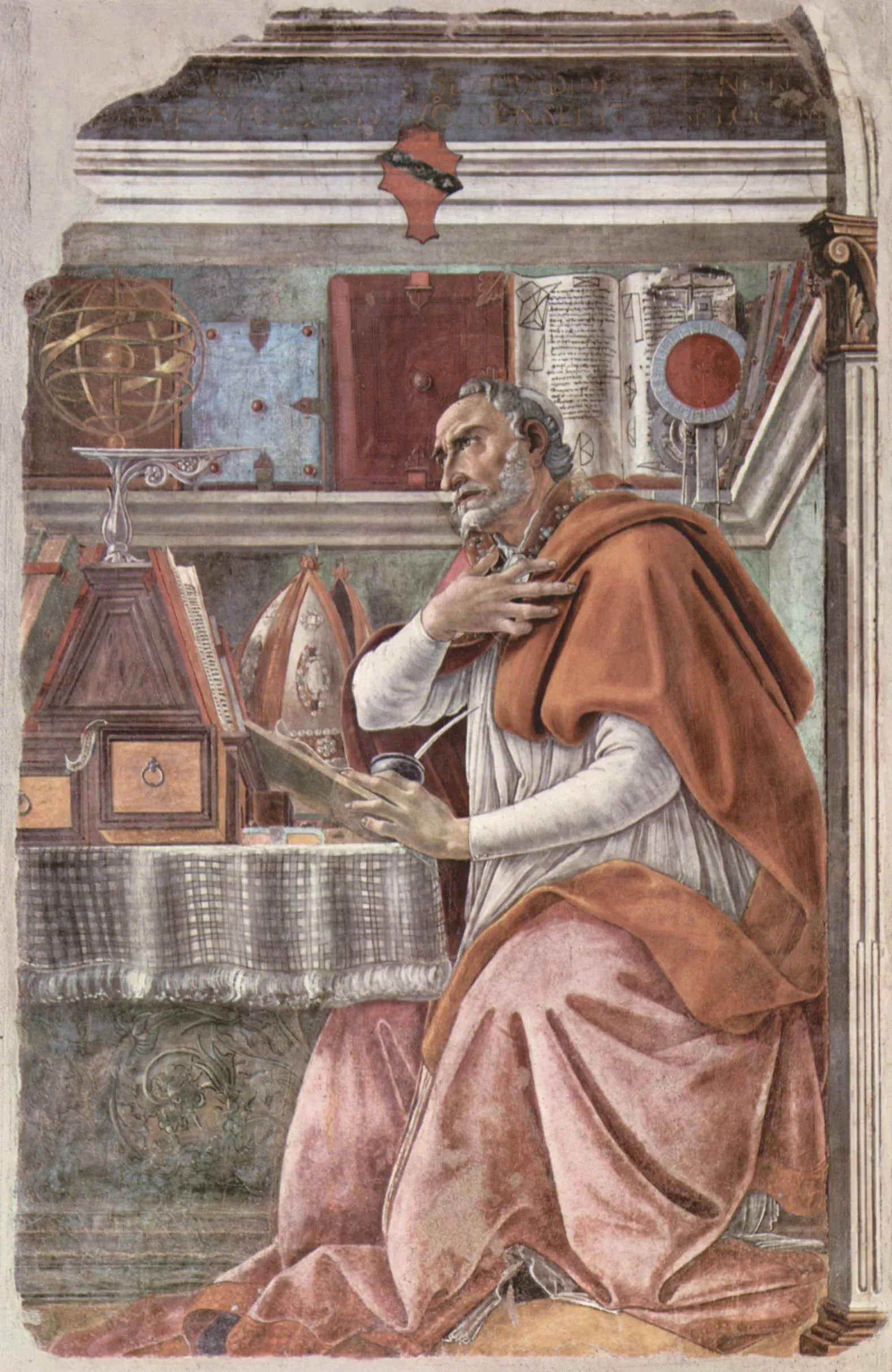
on 28 august 430, in the third month of a siege, the bishop of hippo died in his bed. the date comes from prosper of aquitaine, who noted in his chronicle that aurelius augustine, «a bishop most excellent in all things», died on the fifth day before the kalends of september. the city had been ringed by the vandals since the start of that summer, and it would hold out for almost a year more.
what we know of those months does not come from a distant chronicler. possidius, bishop of calama and his friend for almost forty years, took refuge in hippo with other bishops from the region and stayed there for the whole blockade; he says so himself in the vita augustini, written a few years later. he is an eyewitness, and that is worth saying out loud, because in late antiquity it is a rare luxury. possidius records that augustine fell into a fever in the third month of the siege, that he had the shortest penitential psalms copied out and the sheets hung on the wall beside his bed so he could read them and weep, and that some ten days before the end he asked that nobody come in except the physicians and whoever brought his food. possidius does the arithmetic as he closes the book: seventy-six years of life, almost forty of them as priest or bishop.
prosper, without contradicting him, keeps another scene: augustine died «answering the books of julian, amid the assaults of the besieging vandals». the dying man of the psalms was also a controversialist who never put down his pen, and his reply to julian of eclanum was left unfinished. both images are of the same man, and keeping only the first is keeping the more comfortable half.
he did not die contemplating the end of the world: he died correcting a bishop who disagreed with him.
the besiegers had crossed from spain into north africa in 429 under geiseric. they are called arians, and here one thing that popular history tends to trample deserves a qualification: «arian» is the label the nicene side hung on them, not the name they used, and it covers a spread of positions on the rank of the son rather than a party card. procopius of caesarea, writing a century later in constantinople, says the man who invited them into africa was count boniface, a governor at odds with the court of ravenna. the story is suspect from every angle — it explains a defeat by treason, the oldest reflex in roman historiography — and possidius himself, who was inside, says hippo was defended by boniface with an army of allied goths.
twenty years earlier, when alaric’s goths sacked rome, the pagan world had blamed the disaster on christianity. augustine answered with the city of god, begun in 413 and not closed for more than a decade after: it was no emergency rejoinder. its first book opens by reminding the romans now disparaging christian times that they survived because the barbarians spared the basilicas where they had hidden. the underlying argument was that no earthly city lasts. when he wrote it, the city that was not lasting stood a thousand kilometres away.
now the historiographical qualification, which is not to be skipped: hippo did not fall by storm. possidius says the siege lasted «almost fourteen months», that its access to the sea was cut off as well, and that it was after augustine’s death that the city, abandoned by its inhabitants, was burned by the enemy. procopius tells it otherwise: the vandals, unable to take it either by force or by surrender and pressed by hunger themselves, raised the siege. these are two different endings, and in neither is there a wall opened by a breach. none of the three sources that narrate the blockade — possidius, prosper, procopius — mentions a battering ram: what they describe is a blockade.
what did survive is the point. possidius writes that augustine ordered again and again that the library of the church and all the books be carefully preserved for those who came after, and possidius himself finished the vita with an indiculus, a catalogue of works, homilies and letters, with instructions to look for copies in the library of the church of hippo, where the best ones would be. the city burned; the catalogue did not. twenty-five years later those same vandals would enter rome and empty it over fourteen days, and by then the man who had written that no earthly empire is eternal had been dead a quarter of a century and his books were circulating across half the mediterranean.