

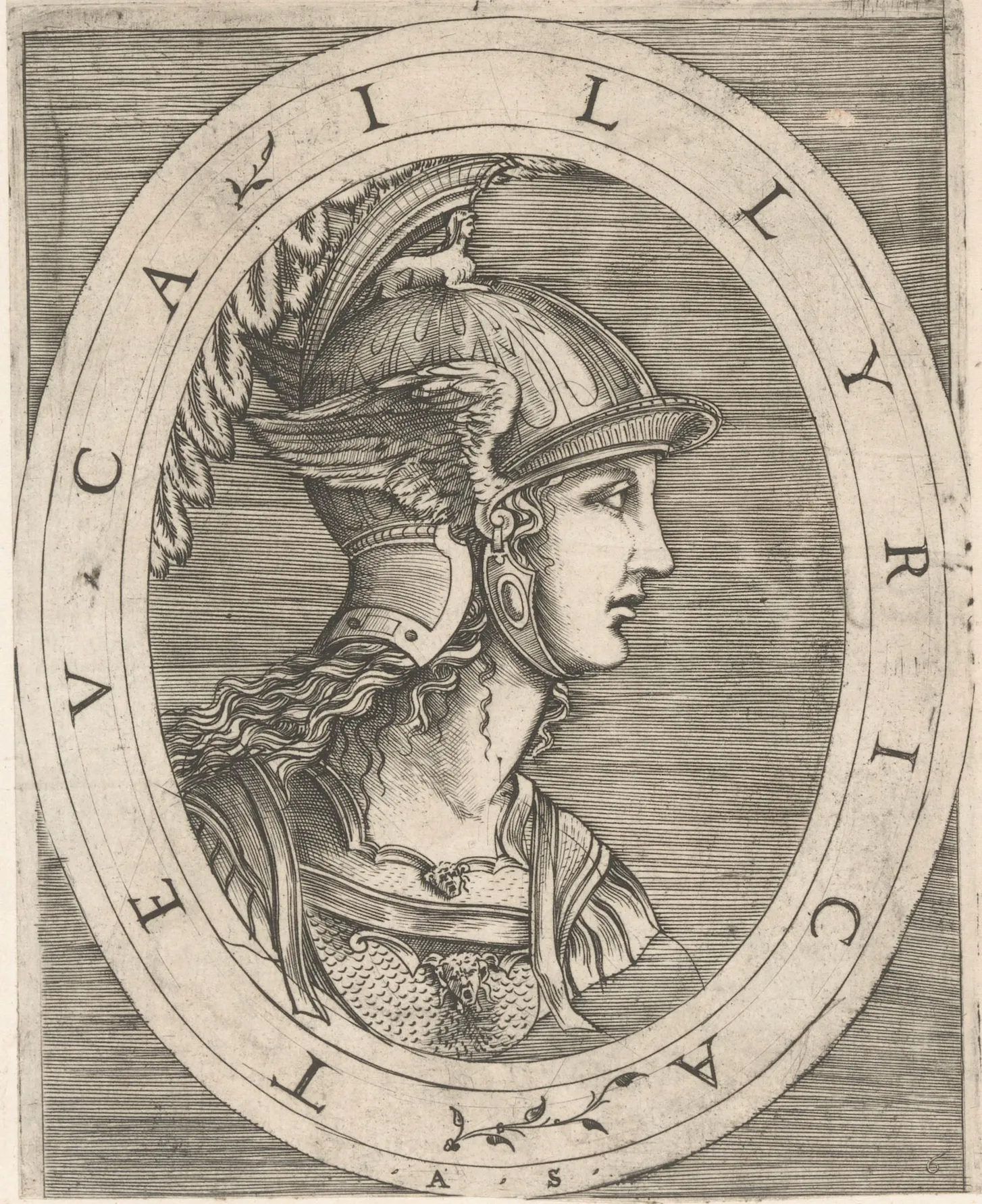
in 229 before our era rome crossed the adriatic with an army for the first time. it did so, according to polybius, to punish a pirate queen who had ordered a roman ambassador killed. the campaign happened and is well documented; the queen and the murder are worth a slower look.
the eastern shore was the ardiaean kingdom. agron had fattened it at the expense of epirus and had taken corcyra, epidamnus and pharos, where he left garrisons. when he died he also left an infant son, pinnes, in the care of his widow, who was not the boy’s mother. hence the first correction: teuta did not reign in her own right. she governed as regent, and that is how appian treats her. while she was besieging issa, the one city on the coast still holding out against her, the complaints of italian traders finally reached the senate, which sent two brothers, gaius and lucius coruncanius, to look into the matter.
the answer polybius puts in her mouth is that of a ruler with no hold over her own people: she would see to it that rome suffered no public wrong, but stopping illyrians from taking booty at sea went against the custom of their kings. one of the envoys replied that rome had a custom of its own, punishing private wrongs in public, and that they would make her mend hers. polybius says she took offence and had him killed on the voyage home. appian tells it differently: illyrian ships fell on the embassy in mid-crossing and killed two men, cleemporus, the envoy of issa, and the roman coruncanius, and agron was still alive at the time. if appian is right, the scene at the throne never happened.
a casus belli that fits perfectly is usually a casus belli written afterwards.
the expedition was out of all proportion to what was at stake. polybius puts it at two hundred ships under the consul gnaeus fulvius centumalus and some twenty thousand foot and two thousand horse that his colleague postumius albinus shipped from brundisium; the cavalry tends to fall out of the summaries. corcyra surrendered without a fight, apollonia and epidamnus followed, issa was relieved, and in the spring of 228 —not in 229, as the short version compresses it— teuta accepted the terms: to pay whatever tribute was imposed, to give up almost all of illyria and, the clause the greeks really cared about, not to sail beyond lissus, today’s lezhë, with more than two vessels, and those unarmed.
now the historiographical nuance, which here is the heart of the matter. rome is usually said to have established a protectorate over the greek coast, and that is a word the sources never use. polybius says the corcyraeans, the apolloniats, the epidamnians and the issaeans placed themselves under roman protection, and that the parthini and the atintanes were admitted to their friendship: fides, amicitia, personal bonds of trust and clientage. there was no province, no administration, no roman garrison of occupation —the garrison left on that coast answers to demetrius of pharos, and he was an illyrian— and it is precisely that scattered web of friendships that arthur m. eckstein declines to call a protectorate: used strictly, the term requires a contiguous territory that has lost its own internal administration, and this is closer to an informal sphere of influence.
what the source does support is the threshold: it was, polybius writes, the first time the romans crossed with an army into illyria and those parts of europe, and their first diplomatic dealings with greece. they sent envoys to athens and corinth, and the corinthians admitted them to the isthmian games. william v. harris argued in 1979 that roman expansion was not a chain of defensive responses but the work of an aristocracy that needed wars; read that way, the whole file —the grievance, the ultimatum, the punishment— is not the cause of the campaign but its presentable wrapping. four years later, while the senate was still looking east, the north struck back with the largest concentration of gallic tribes ever launched against italy.