

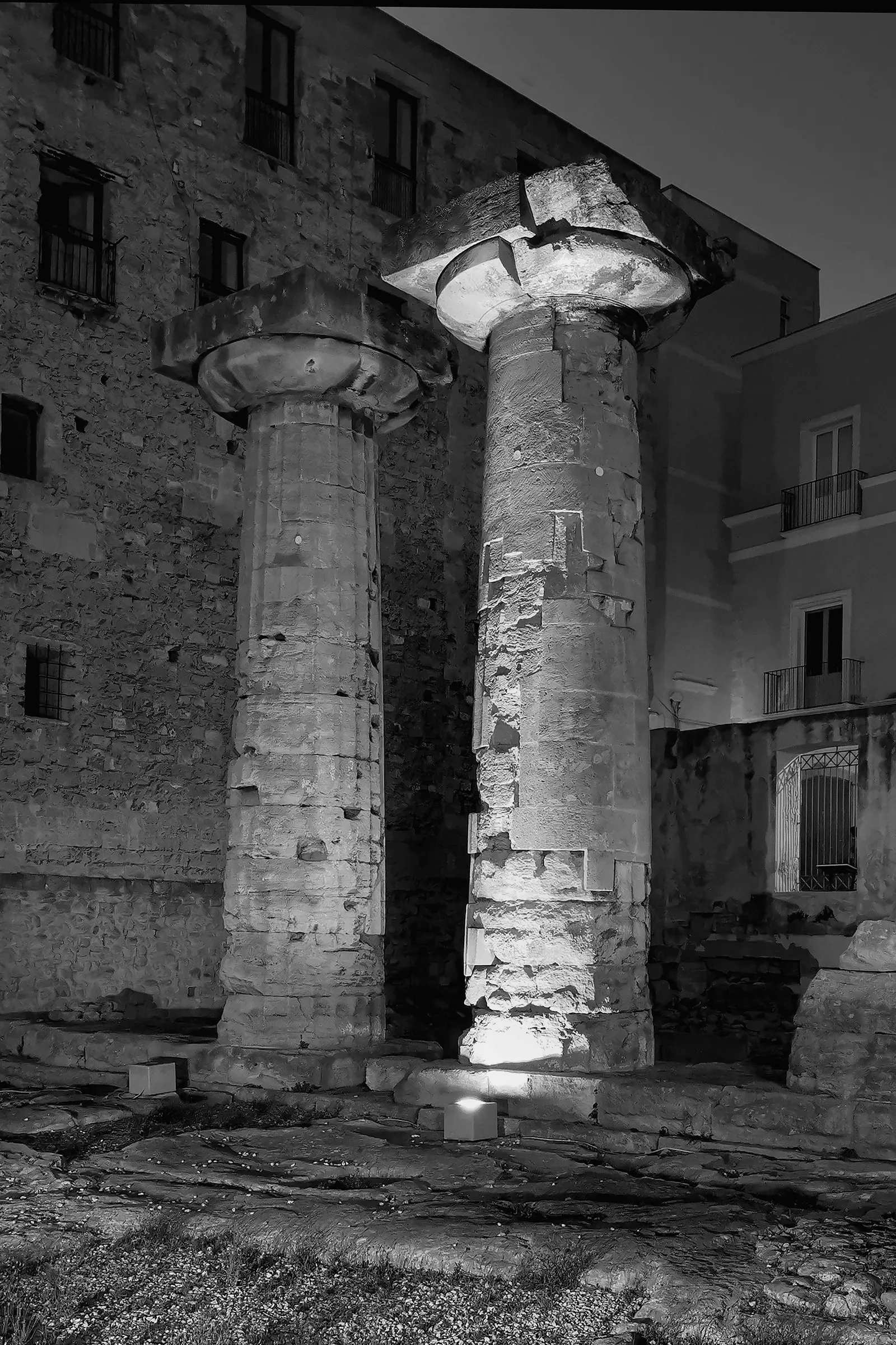
no power worth its salt declares a war of conquest; it declares a war of defence. the problem, for rome, was how to turn the annexation of a prosperous neighbour into an act of outraged honour. the answer was a tale so neat it survived twenty-two centuries: a toga fouled with filth, a humiliated ambassador and a prophecy of blood. one does well to distrust tales that are too neat.
the year is 282 bce. with southern italy all but pacified after decades of samnite wars, the roman frontier had crept forward until it brushed the economic engine of magna graecia: tarentum, the rich spartan colony that dominated the gulf. the two cities were bound by an old treaty that, according to a single source — appian — forbade roman warships to sail beyond the lacinian promontory, near present-day crotone. when nearby thurii, an ally of rome, asked for help against the lucanians, a small roman squadron entered the forbidden waters. the tarentines, in the middle of a festival, spotted the enemy sails from the theatre that overlooked the harbour and fell upon them: they sank several ships, captured another and killed the commander. the escalation handed rome the pretext it needed.
yet rome did not strike at once, and that delay says everything. before moving a single legion she had to set in motion her own liturgy of war: the bellum iustum, the “just war”. no conflict was held legitimate unless it was preceded by a formal demand for reparations, delivered by the priests called fetiales; only if the enemy refused to satisfy it could the gods, and therefore rome, declare themselves on the side of right. the procedure was sincere as a rite and convenient as an excuse: it let rome march to war always as the injured party, never as the aggressor. so the senate dispatched an embassy to tarentum led by lucius postumius megellus, an old consul of three terms, to demand the return of the prisoners and the surrender of the guilty.
what happened in the theatre of tarentum is the scene cinema would save for the climax. according to dionysius of halicarnassus, the assembly did not listen to postumius’s demands: it set itself to watch whether the roman might stumble over the finer points of greek, and to laugh at his accent. as he left, a man nicknamed “philonides” — drunk, says the source — hitched up his tunic and, in a posture “shameful to describe”, soiled the ambassador’s toga with a filth “indecent even to name”. the theatre burst into laughter. postumius, without wiping himself clean, raised the stained cloth and showed it to the crowd. dionysius puts in his mouth a sentence rome would not forget: “laugh, tarentines, laugh while you can, for long will be the time you weep hereafter”, and the promise that the toga would be washed “with much blood”. he left the stain untouched until he reached rome, to display it to the senate.
the just war is not born of the injustice suffered, but of the tale that turns it into injustice.
now the historiographical nuance, which here is the heart of the matter. the episode of the toga is, in all likelihood, a state myth. the very mechanics of the bellum iustum demanded a presentable grievance, and a humiliated ambassador amid the laughter of drunkards was the perfect grievance: it turned roman expansion into a defence of the honour of the res publica. the signs of fabrication are striking. the detail of postumius’s faulty greek is hardly historical — the roman nobility of the age spoke greek with ease — and scholars read it as a literary nod to the consul aulus postumius albinus, who a century and a half later apologised for writing greek badly: dionysius would be parading his erudition, not transmitting a fact. the treaty of the lacinian promontory, which sets the whole story in motion, is mentioned by appian alone. and the true trigger, william harris argues, was no toga at all but roman ambition itself: the garrisons and the ships already operating in greek territory. the stain covered the awkward truth that rome had sailed there first.
what was no myth was the terror. tarentum understood that its mercenaries would not halt the legions and emptied its coffers to hire the most feared general in the mediterranean: pyrrhus, king of epirus, a second cousin of alexander and a dreamer of a western empire. the romans believed they were marching to chastise a city of drunken philosophers; they were about to dash themselves against the phalanx of pikes, the war elephants and the most brilliant tactical mind of the age. postumius’s prophecy would come true, but the reverse of how rome had imagined it: the blood that would wash that toga would be, for years, above all roman. the mechanism, however, stood tested and ready. rome had learned to manufacture the grievance she needed, and she would repeat it — at messana, at saguntum, at carthage — every time she wished to cross a frontier with a clear conscience and the gods on her side.