

a tribune of the plebs handed out public land to the poorest citizens of rome, and polybius wrote that this law was the first step in the demoralisation of the roman people and, on top of that, the cause of the gallic war that followed. both sit in the same sentence, and that sentence is very nearly all we have.
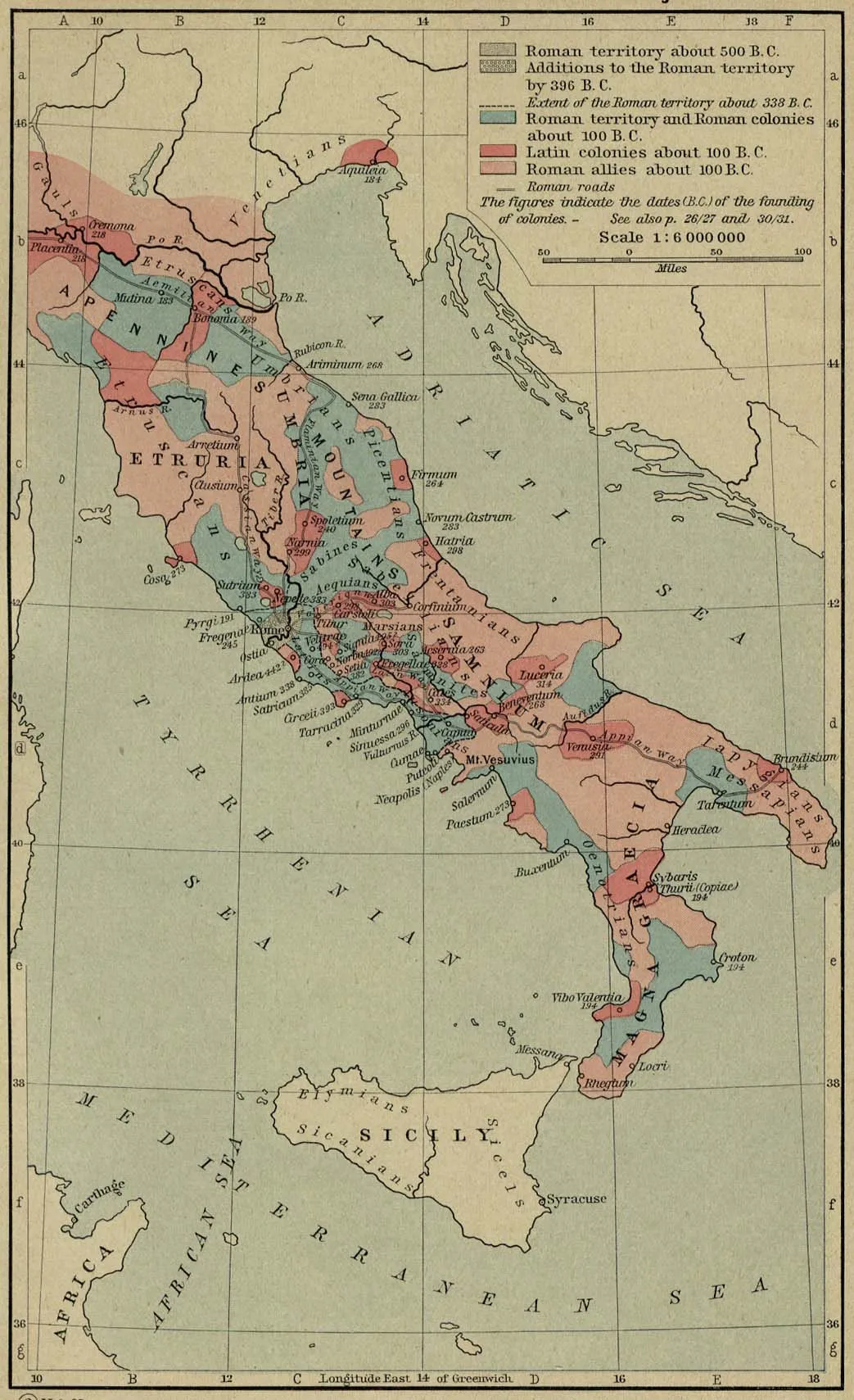
232 before our era, the consulship of marcus aemilius lepidus. the tribune of the plebs gaius flaminius proposed dividing the ager gallicus viritim —plot by plot, man by man—: the adriatic strip that rome had taken from the senonian gauls half a century earlier, around 283, between ariminum and the river esino, in the north of what is now the marche. it was not the po plain and it was not cisalpine gaul, and the distinction decides the rest of the story: the distributed land had belonged to the senones, a people already expelled, and the gauls who rose in 225 were others entirely.
the senate opposed him hard, and the ancient tradition tells it as a personal duel: cicero, in his treatise on old age, remembers quintus fabius maximus resisting “as far as he could” a flaminius dividing the picene and gallic land contra senatus auctoritatem, against the authority of the senate. flaminius took the law to the concilium plebis and the plebs voted it through. now the historiographical nuance, worth not skipping: that channel was no institutional rupture. since the lex hortensia of 287 plebiscites had bound everyone with no need for senatorial endorsement, so “going over the senate’s head” describes the political gesture very well and the procedure very badly. and the motives for the opposition need not reduce to landowners’ greed: planting roman settlers at the gates of gallic territory was also a frontier decision, with military consequences nobody in rome could overlook.
polybius did not put the cause in one sentence and the reproach in another. he put them in the same one.
one scene survives from that day. valerius maximus tells that, with flaminius already putting the law to the vote from the rostra, his own father laid a hand on him and brought him down from the platform, broken by a private authority, without the abandoned assembly letting out a murmur. cicero tells the same episode in de inventione and ends it the other way round: the father took him out of the assembly and flaminius was prosecuted for maiestas. for valerius maximus it is an example of paternal authority; for cicero, a textbook case on the majesty of the people; polybius, who dispatches the law in two sentences, does not record it. three authors, three different lessons, one single gesture.
the link to the war is what has to be marked. polybius writes that many gallic peoples, “and especially the boii, whose territory bordered on that of rome”, became convinced that the romans no longer made war on them for supremacy, but “with a view to their total expulsion and extermination”. notice who they are: the boii of the po valley, not the senones of the ager being divided. the settlement took not one hectare from them; it showed them what rome did with the land of a defeated neighbour. nor does polybius give a figure for the settlers, and when he dates the invasion he does not count the seven years of 232 minus 225: he says the gaesatae crossed the alps in the eighth year after the partition of picenum.
that the law was the cause of that war is, strictly, polybius’s judgement, and a judgement with an owner: he writes almost a century later, from inside the roman aristocracy that took him in, building a thesis about how a constitution decays. cicero, who did not care for flaminius either, remembers the same distribution as an institutional duel and not as the origin of an invasion. the rest stands firm: flaminius was censor in 220 and gave his name to the via flaminia, the road joining rome to ariminum — that is, to the land he had divided. and in 217 he died in the mist of lake trasimene, where that same hostile tradition found in him, once again, the perfect culprit.