

the last great celtic invasion of italy ended on the coast of etruria, with a host of seventy thousand men caught between two consular armies that had never planned to meet there. the year is 225 before our era, near telamon, today’s talamone. almost everything we know about that day comes from a single author.
the cause is given by that author, polybius, and it is not the colonies: in 232, at the urging of gaius flaminius, rome parcelled out among its citizens the ager gallicus, the picene land taken from the senones half a century earlier. polybius, no friend of flaminius, calls it the first step in the corruption of the people and the cause of the war that followed: the boii, whose territory bordered it, understood that rome was no longer fighting for hegemony but to drive them out and wipe them out. together with the insubres they sent envoys across the alps, to the gaesatae of the rhone. and here the video says «allies» where the source says something else: polybius insists that the gaesatae were paid — gold up front, and a great deal of it — and even explains their name, wrongly, as «those who serve for hire». their kings, concolitanus and aneroestus, were reminded that their own ancestors had taken rome.
in the eighth year after the distribution the gaesatae crossed the alps. polybius puts the host at fifty thousand foot and twenty thousand horse and chariots; a fragment of diodorus raises it to two hundred thousand. neither figure is a census. and now the historiographical caveat, which is worth not skipping: polybius uses the panic to review every man of military age in italy — more than seven hundred thousand foot and seventy thousand horse — with a declared purpose: that the reader measure the power hannibal would dare to attack seven years later. how much of that list is a count and how much is rhetoric is still argued over. about the fear there is no doubt: plutarch reports that rome, obeying the sibylline books, buried alive in the forum boarium two greeks, a man and a woman, and as many gauls.
the gauls crossed etruria unopposed as far as clusium, three days from rome. there they tricked the praetor who was following them — cavalry left in plain sight, infantry withdrawn by night towards faesulae — and killed no fewer than six thousand of his men. the consul lucius aemilius papus arrived from ariminum; the gauls, loaded with plunder, decided on aneroestus’ advice to go home along the coast, and aemilius merely hung on their rear. the other consul, gaius atilius regulus, was not coming to spring any trap: he was returning from sardinia, had landed at pisa and was marching on rome when his vanguard captured some gallic foragers near telamon. only then did he learn that he had the whole host in front of him and his colleague’s army behind it.
nobody designed the perfect encirclement at telamon: it was a crossroads.
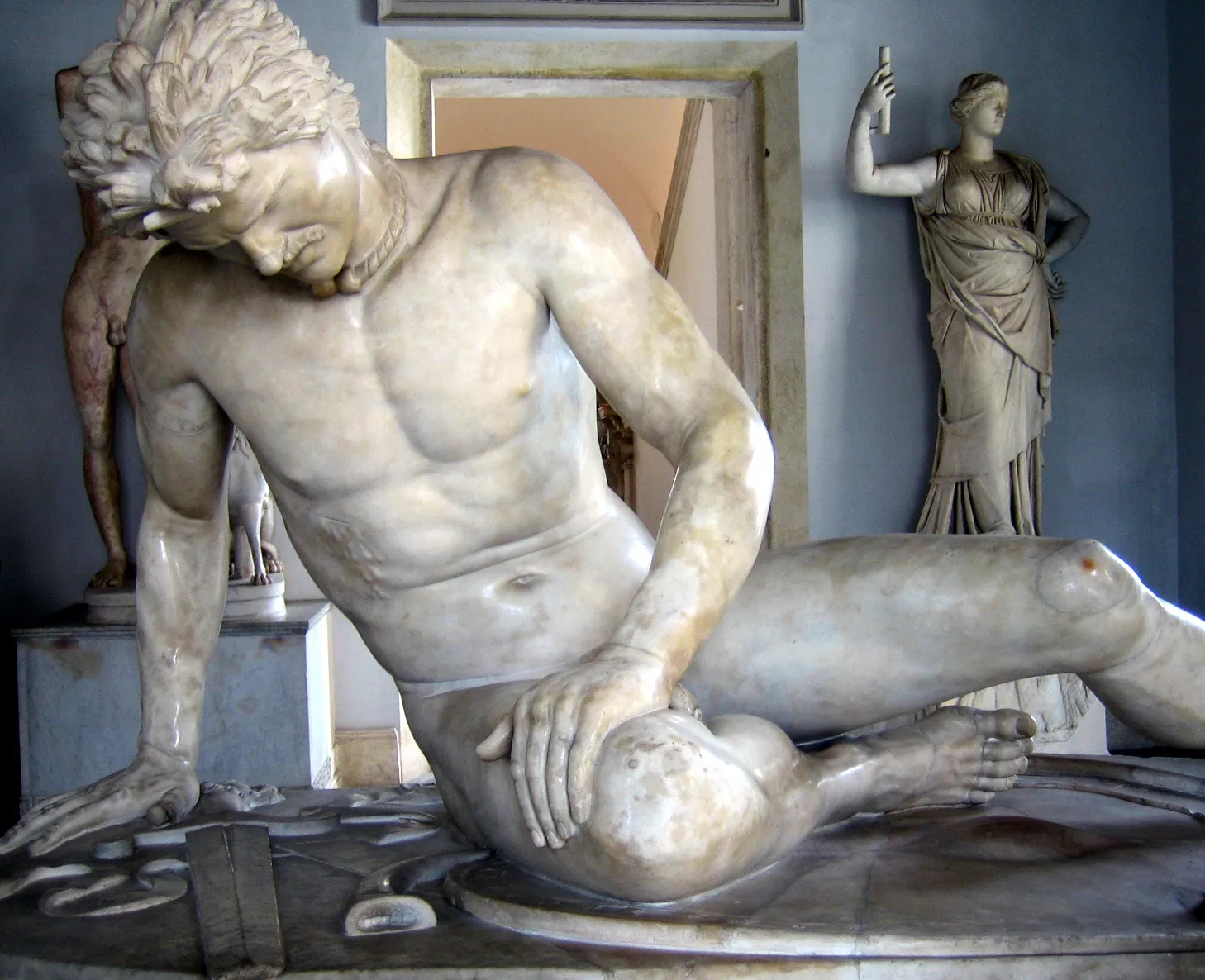
atilius seized the hill that commanded the pass. the gauls did not form a circle but a line facing two ways: gaesatae and insubres towards aemilius, boii and taurisci towards atilius’ legions. the gaesatae fought naked but for their gold torcs and armlets, and the din of horns and war cries, polybius admits, terrified the romans. two things decided the battle, and neither is numbers: the javelins of the light infantry against a front rank with no armour and shields that did not cover the body, and the cavalry, which having won the hill charged downhill into the flank of men polybius grants were equal in courage and inferior only in arms. atilius fell there, and his head was carried to the gallic kings; polybius does not say it was stuck on any pike.
forty thousand dead and no fewer than ten thousand prisoners, king concolitanus among them; aneroestus escaped with a few followers and took his own life. these are polybius’s figures; he writes some three quarters of a century later and rests, on the usual reconstruction, on fabius pictor, rome’s first historian, of whom orosius notes that he fought in that very war; and it is polybius himself who, in his first book, reproaches fabius with the partiality of a man who always sides with his own country. a round forty thousand out of a host nobody counted is an order of magnitude, not a tally. aemilius papus returned the plunder to its owners, laid waste the land of the boii and triumphed in rome; the gold torcs went to adorn the capitol.
telamon broke the invasion, not the war. the following year the consuls subdued the boii, and in 222 another consul, marcus claudius marcellus, would go after the insubres for a trophy no roman had won in centuries. the submission lasted exactly as long as it took hannibal to reach the alps, in 218, and to find the boii and insubres ready to rise again. polybius, who saw the gauls expelled from the po valley, closes with a moral for greeks: the might of such peoples is short-lived. that is his verdict, not ours. ours is simpler: the last great gallic invasion of italy was won by a consul who was on his way somewhere else.