
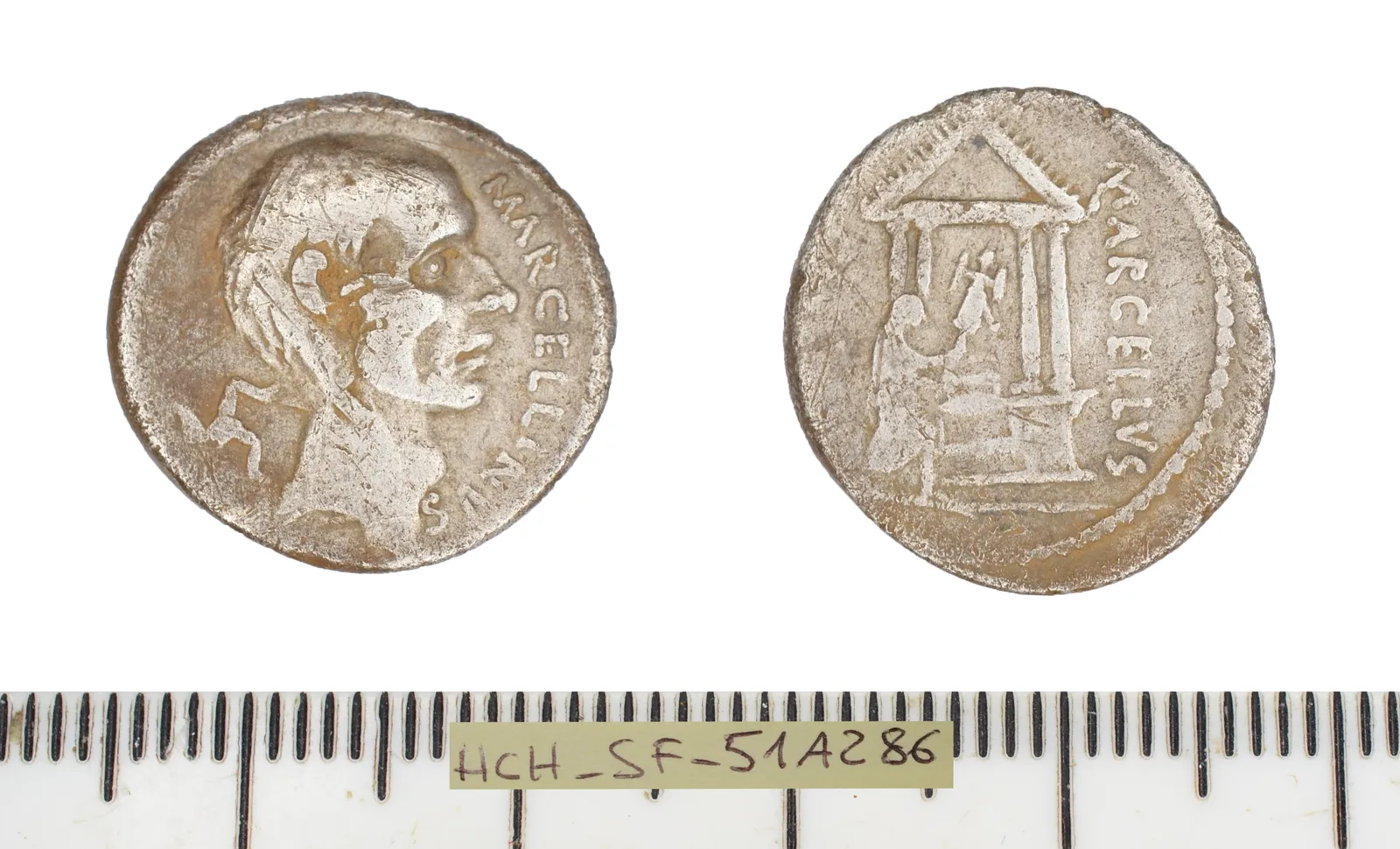
in 222 before our era, near clastidium, a village in the po valley, the consul marcus claudius marcellus won the rarest honour in roman military religion: the spolia opima, the arms of an enemy chief struck down by the general’s own hand and consecrated to jupiter feretrius. tradition recognised only two precedents, and both are lost in rome’s first centuries, somewhere between legend and history. the episode in full detail is told by a single author, plutarch, writing more than three centuries later.
after telamon, rome went on the offensive in cisalpine gaul. polybius relates that in 222 the celts sued for peace, ready to accept any terms, and that the new consuls, marcus claudius and gnaeus cornelius, strongly opposed it; plutarch goes further and records that, so it was said, it was marcellus who pushed the people to carry on the war while the senate leaned towards peace. rebuffed, the insubres, the great gallic people of the po, hired the gaesatae of the rhone once more, some thirty thousand men according to both authors. the consuls besieged acerrae, between the po and the alps, and the gauls answered by crossing the river to besiege clastidium.
marcellus hurried to its relief with the cavalry and, according to plutarch, some six hundred light infantry, halting neither by day nor by night; polybius speaks only of the cavalry and of «a small body of infantry». what follows is plutarch. as he was about to charge, marcellus’s horse took fright and wheeled round; the consul, so that his men would not take it for a bad omen, turned it to the left and worshipped the sun, as if the turn had been deliberate, and at that moment vowed to jupiter feretrius the finest armour of the enemy. the gallic king, taller than the rest and with arms of gold, silver and colours that flashed like lightning, came forward to challenge him. marcellus pierced his breastplate with his spear, threw him down with the shock of his horse and finished him with a second and a third blow. then he dismounted, laid his hands on the dead man’s arms and prayed to jupiter feretrius as «the third roman general» to kill a king in this way.
here the video simplifies, and on a point that matters: it says the gallic army collapsed on seeing its leader fall, and neither of the two sources says so. in plutarch, once the prayer is over, the roman cavalry charges the gallic horsemen and foot soldiers and wins a victory so unusual that, he assures us, never did so few horsemen defeat so many horsemen and infantry together. polybius, who writes much earlier and mentions neither the duel nor the spolia opima, relates that the celts held at first and that, enveloped from the rear and the flank, they were finally defeated by the cavalry alone; many drowned throwing themselves into the river. the death of the chief only weighs afterwards, and in plutarch too: on learning of it, the gaesatae withdrew from mediolanum, the insubrian capital, which gnaeus cornelius was besieging. the city fell and the insubres surrendered unconditionally.
nor is the name of the vanquished certain. plutarch calls him britomartus, «king of the gauls», and puts him at the head of ten thousand gaesatae; florus calls him king viridomarus; the periocha of livy’s book xx, vertomarus, and presents him as chief of the insubres. a tradition that cannot agree on either the name or the people of the man it despoiled is not a record; it is a story that took shape in the telling.
of the three romans of the spolia opima, marcellus is the only one who stands on firm historical ground.
the senate decreed the triumph to him alone. plutarch describes it: marcellus cut the trunk of a young oak, straight and tall, shaped it into a trophy, fastened the gaul’s arms to it and carried it himself in his chariot to the temple of jupiter feretrius, where he consecrated it. he was, plutarch writes, the third and the last «down to our time»: before him came romulus, who despoiled acron, king of the caeninenses, and cornelius cossus, who despoiled the etruscan tolumnius. even the name of the god was unclear to him: feretrius would come from the greek pheretron, the litter on which the trophy was carried, or from the latin ferire, to strike. florus sums up the feat with the same count: marcellus was the third after romulus to hang the spolia opima before jupiter feretrius.
now the historiographical caveat. «only three generals in all of history», as the video says, is tradition’s count, and it is worth asking who made it. harriet i. flower argues that it was marcellus himself who invented the spolia opima as we know it: his feat would have given shape to the whole tradition, romulus and cossus included, and augustus would have reinvented it almost two centuries later, after restoring the temple of jupiter feretrius on the capitol. it fits a detail in plutarch that usually goes unnoticed: the one who proclaims himself «the third», in the prayer, is marcellus himself. the list, moreover, very nearly grew longer. in octavian’s time, marcus licinius crassus, grandson of the triumvir, killed deldo, king of the bastarnae, with his own hand, and cassius dio notes that he would have consecrated his arms as spolia opima to jupiter feretrius had he been the general in command. he was not, and the count stayed at three.
rome now controlled the po valley, but not for long. in 218, with the colonies of placentia and cremona newly founded, the boii rose on learning that hannibal was near and called on the insubres, who joined without needing to be asked twice, polybius relates. before that, rome had to turn its eyes to the adriatic, where an ally it had raised up itself had just changed sides.