

hannibal marched on italy travelling light. polybius reports that, north of the ebro, he left a certain hanno with ten thousand foot, a thousand horse and all the baggage of the expeditionary army, and went on with the lightened force. that same year, 218 before our era, a roman army landed behind him, and near a town called cissa that baggage changed hands. it was the first harvest of a decision the consul publius cornelius scipio had taken on the banks of the rhone.
publius had drawn hispania in the allotment of provinces, and he sailed there with sixty ships. learning that hannibal was already crossing the pyrenees, he landed at the massaliot mouth of the rhone, convinced that the enemy was many days away; when he reached the river crossing, three days after the carthaginians had left it behind, he found no one. with the enemy on the road to italy, he divided his forces. the sources put it in different words: polybius says in one passage that he sent his brother gnaeus to the operations in iberia and, in another, that he left him the forces with orders to wage war vigorously against hasdrubal, while he himself landed in italy with few men; livy writes that he gave him «the greater part of the troops». the motive is given only by livy: he did not want to leave the province he had drawn without roman troops. publius went back to meet hannibal as he came down from the alps. where he landed is another disagreement: polybius says pisa; livy says genoa in one chapter and pisa a few chapters later.
facing him were two carthaginian commands. in the south, hasdrubal barca, hannibal’s brother, to whom hannibal had left the government of hispania with infantry, cavalry, a fleet and twenty-one elephants. north of the ebro, hanno with his garrison, placed there, livy says, to hold the passes that link hispania with the gauls. this hanno is not the son of bomilcar who accompanied hannibal at the rhone.
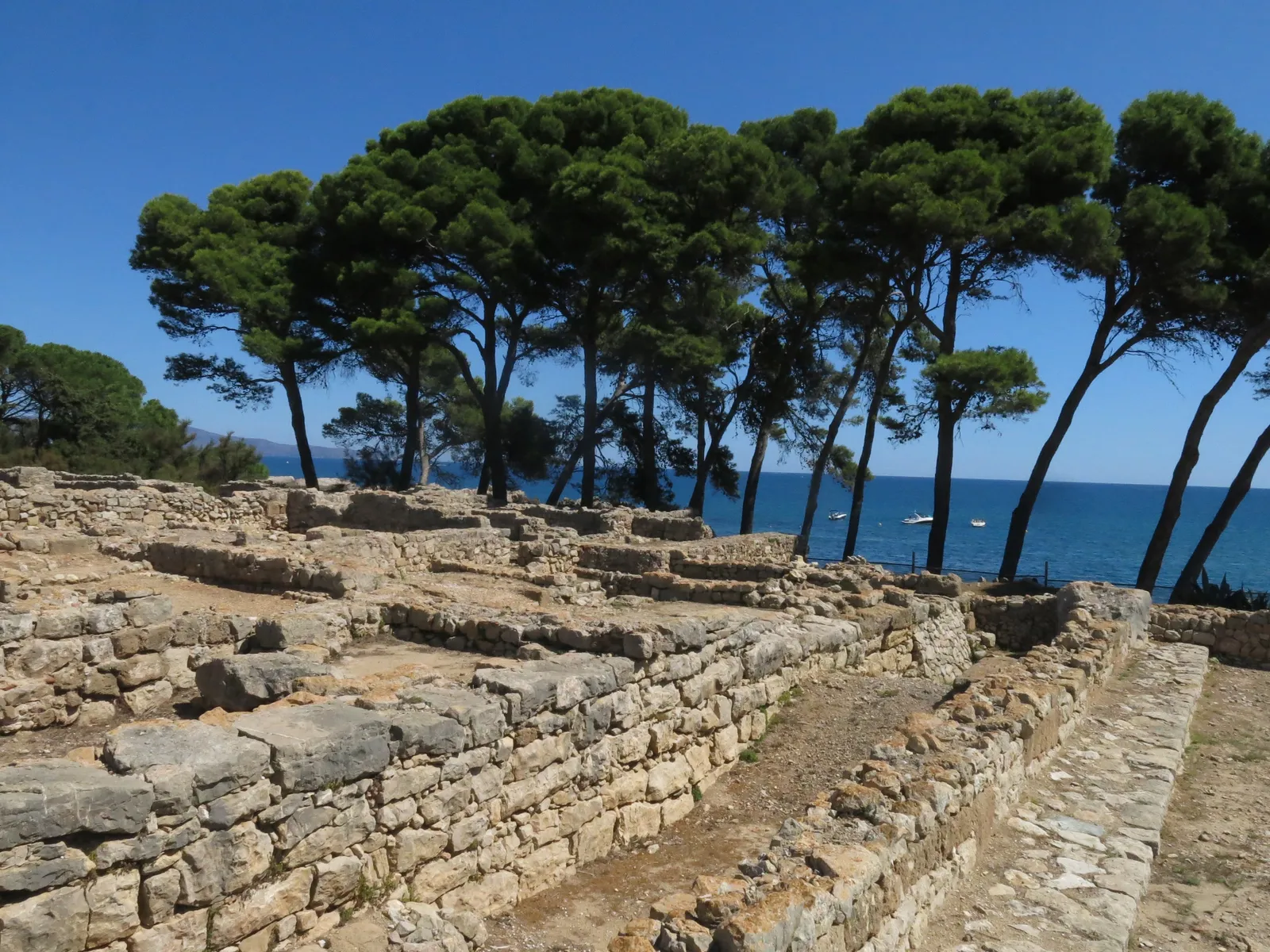
gnaeus landed at emporion, today’s empúries. the video calls it a greek city, and so it was, but not only that: pliny describes it as a double city, of ancient inhabitants and of greeks descended from phocaea, and livy, telling of cato’s campaign in 195, says that by then they were two communities separated by a wall. from there, gnaeus won over the coast as far as the ebro. polybius tells of landings, sieges of the towns that rejected him and good treatment for those that accepted him; livy begins with the laietani, speaks of alliances renewed and new, of a reputation for clemency, and mentions no sieges. then he pushed into the interior with many iberian allies.
for polybius, cissa was a pitched battle; for livy, «it was no great fight».
hanno camped opposite him near a town called cissa. here the two sources part ways. polybius speaks of a pitched battle, without figures: gnaeus won, took prisoner hanno and andobales, an iberian chieftain very attached to carthage, and seized a rich haul, because with the defeated was all the baggage of the army that had set out for italy. livy tells of a minor clash: six thousand enemy dead, two thousand prisoners along with the camp guard, the camp stormed, the general captured with some of the leading men and cissis itself taken, with plunder of little value, barbarian household goods and cheap slaves. what made the soldiers rich was the camp, where hannibal’s army had left almost everything of value on this side of the pyrenees so as not to carry it. that polybius’ andobales is livy’s indibilis rests on the fact that polybius himself, later on, calls andobales king of the ilergetes and brother of mandonius, and livy makes mandonius the brother of indibilis, chieftain of the ilergetes; polybius does not say he was the same man captured at cissa. where cissa was, no ancient source says: livy only places it next to hanno’s camp.
hasdrubal crossed the ebro, but he arrived too late. the sources do not agree on the order: for polybius he already knew of the disaster and came to help, and the eight thousand foot and thousand horse are the detachment he split off to strike the blow; for livy he crossed with that force before having reliable news and learned of it on the way. what he did, they agree on: he surprised the crews of the roman fleet, overconfident after the victory and scattered across the fields, killed many and forced the rest to take refuge in the ships. livy places the strike, not the battle, not far from tarraco. afterwards hasdrubal crossed back over the ebro and, according to polybius, wintered at carthago nova.
gnaeus punished those responsible according to roman custom, polybius says; livy specifies a few ship prefects. in polybius, gnaeus united army and fleet, wintered at tarraco and shared out the plunder in equal parts among his soldiers, a gesture only he reports. livy stretches the year out: a garrison at tarraco, the return to emporiae, the revolt of the ilergetes — who had given hostages to scipio — stirred up by hasdrubal, the siege of their capital, atanagrum, and then that of a town of the ausetani, with an ambush on the lacetani and thirty days of siege in which the snow seldom lay less than four feet deep, before at last wintering at tarraco. nor is it known whether cissa came before or after publius faced hannibal at the ticinus: livy tells the hispanic events «while this was happening in italy», with no season.
tarraco was not born then: livy already names it in 218. almost three centuries later, pliny the elder would call it «the work of the scipios, as carthage is of the punic people». work, not foundation. and the other half of the decision on the rhone was being played out in italy: publius, facing hannibal in person.