

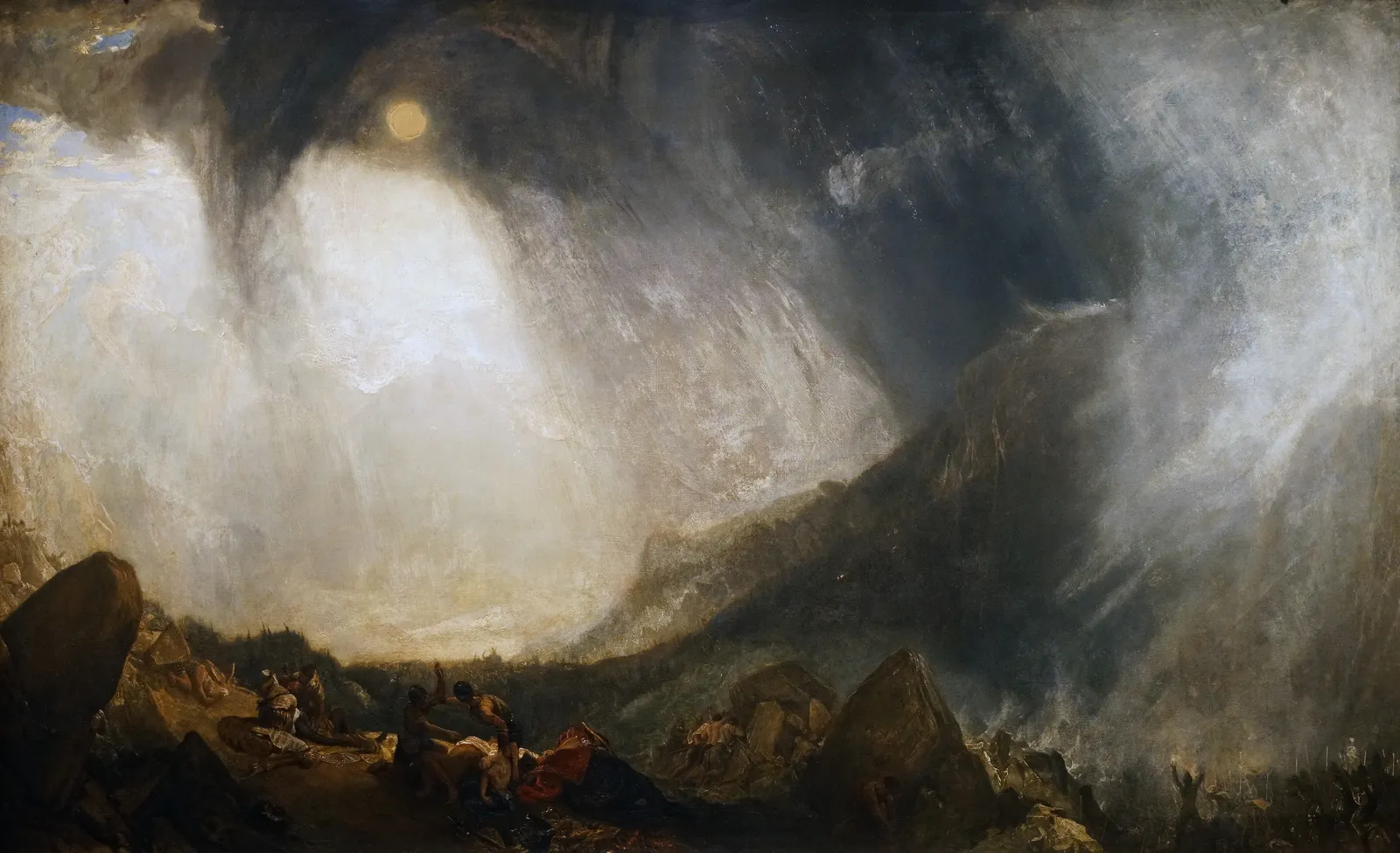
in the autumn of 218 before our era, hannibal’s army crossed the alps in fifteen days and came down into the po plain with less than half the infantry that had set out from hispania. we know how many arrived because polybius copied the figures from an inscription that hannibal himself left at cape lacinium. almost everything else — the snow, the ambushes, the rock split with fire and vinegar — depends on which author you read.
the march began in spring, at carthago nova. polybius and livy agree on the figure with which hannibal crossed the ebro: ninety thousand foot and twelve thousand horse. he subdued the peoples between the ebro and the pyrenees, quickly but with heavy losses, left hanno there with ten thousand foot, a thousand horse and all the heavy baggage, and dismissed as many men again so that the iberians would hope to return home. livy adds that three thousand carpetani deserted on seeing what lay ahead of them. the video’s fifty thousand foot and some nine thousand horse are, in polybius, the already lightened army that went on from the pyrenees towards the rhone.
at the rhone, hannibal bought every boat he could from the people along the river, but on the far bank a host of gauls was waiting for him. polybius tells how he solved it: he sent upstream hanno, son of bomilcar — not the one of the garrison — who crossed on rafts and fell on the gauls from behind while the main body crossed in boats. the thirty-seven elephants crossed afterwards, and in the most ingenious way: on rafts moored to the bank and covered with earth, so that they would look like road, with two females in front. some, terrified, threw themselves into the river; their mahouts drowned, but the animals walked out along the bottom with their trunks above the water. in polybius, by the time the elephants were crossing, the gauls on the far bank were already beaten: the javelins raining on the rafts are the video’s dramatisation. meanwhile the consul publius cornelius scipio, on his way to hispania, had landed by the massaliot mouth of the rhone. the cavalry patrols of the two armies clashed; according to livy, hannibal hesitated between pressing on to italy and giving battle, and it was some boii envoys who persuaded him not to spend his strength before arriving. publius reached the crossing three days after the carthaginians had left, ready to give battle, livy says, and found no one.
polybius tells the ascent in great detail, and points out that he himself made the passage of the alps to see it and questioned eyewitnesses. in a narrow defile, the allobroges attacked the column from above, and the damage was done above all by the terrain: the wounded horses reared and pushed the pack animals over the precipice with their loads. days later, other mountain people came with olive branches and garlands, handed over hostages, offered themselves as guides and attacked the column in a ravine, rolling stones down from the slopes. hannibal had to spend the night with half his force beside a bare rock, cut off from the horses and the baggage. the elephants, polybius reports, the enemy dared not approach. after nine days of climbing he reached the summit, rested there two and found snow: the setting of the pleiades was approaching.
the descent was almost as deadly as the ascent. the path was narrow and steep, and whoever stepped off it fell into the void; lower down, a landslide had carried away a stade and a half of the slope. the fresh snow lay over the ice of the previous winter, the men slipped on it and the animals sank in and were trapped. in polybius, hannibal had the path rebuilt in the rock face: one day for the pack animals and the horses to pass, three more for the elephants, which arrived half dead from hunger.
polybius went to see the pass with his own eyes; the fire and the vinegar are not in his account.
livy’s version is different. to open the rock, his soldiers felled huge trees, built an enormous fire taking advantage of the wind, heated the stone and cracked it by pouring vinegar on it, and then opened it with iron; four days were spent around that rock. the episode is not in polybius, and a good part of modern scholarship regards it as legend. nor did livy know where hannibal had crossed: he is surprised that it is disputed, rejects the pennine alps and the cremonis pass that coelius gave, and places the descent in the land of the taurini. the exact pass is still a matter of debate.
the arrival figures are the firmest part of the story, and even so they have an owner. polybius writes that the march from carthago nova took five months and the crossing of the alps fifteen days — livy gives the same fifteen — and that hannibal came down into the po plain with twelve thousand african foot, eight thousand iberians and no more than six thousand horse, «as he himself states» in the lacinium inscription. the source of the figure is hannibal himself. livy, by contrast, records that the authors did not agree: some gave a hundred thousand foot and twenty thousand horse; others, twenty thousand and six thousand. and he quotes lucius cincius alimentus, who says he was hannibal’s prisoner and heard him say that, since the rhone, he had lost thirty-six thousand men. set against the fifty thousand foot of the pyrenees, twenty thousand is less than half, without yet having fought a pitched battle against rome; part of those losses, to be fair, were fights with the tribes.
the video closes with the speech before the po plain, and it is worth placing it. in polybius it is not given at the end but at the summit, with the snow freshly fallen and the troops disheartened: hannibal shows them the plain, reminds them of the friendship of the gauls who lived there and points out where rome lies. the comparison of the alps with the citadel of italy is polybius’ own, who uses it to explain why the sight of italy restored the troops’ spirits. livy does put it in his mouth: from a promontory, hannibal tells them they are crossing the walls not only of italy but of rome itself, and that in one or two battles they will hold the citadel and capital of italy in their hands. for the elephants, the worst was not over: of the thirty-seven, polybius reports, after the battle of the trebia and the rain and snow that followed only one survived.