
neoclassical painting of a roman general returning from exile to find his wife dead, seated by the deathbed as his daughter clings to his leg in mourning
pierre-narcisse guérin · musée du louvre, paris · public domain
festival

the dark roman ritual to repel ghosts at midnight

lemvria

published updated

at the lemuria, the roman patriarch rose barefoot at midnight, filled his mouth with black beans and spat them over his shoulder to drive away the hostile spirits of his dead. the domestic terror of the civilisation that ruled the mediterranean.

imagine waking up in the middle of the night, barefoot, filling your mouth with black beans and spitting them along the corridors of your house in the dark, trembling, not daring to look back. that is exactly what the roman head of household did at the lemuria, and he was no superstitious village figure: he might be a senator, a consul, a man who by day governed provinces.

the lemuria was celebrated on three alternate nights of may, the 9th, 11th and 13th, and was one of the gloomiest festivals on the calendar. its object was the lemures, the restless spirits of the dead: not the venerated and benevolent ancestors, but the restless dead, those who had died badly, without burial or without descendants to honour them, and who returned in may to haunt the houses of the living in search of some form of revenge. the whole month was marked by their presence: it was ill-omened to marry in may, “mense maio malae nubunt”, said the proverb.

the ritual to drive them out is described by ovid step by step, and it is unsettlingly precise. at midnight, the pater familias rose without sandals, because walking barefoot was a condition of the rite. with his fingers he made a protective sign against the spirits and rinsed his hands in spring water. then he filled his mouth with black beans and began to walk through the house throwing them over his shoulder, one by one, without turning, repeating nine times a formula: “haec ego mitto; his redimo meque meosque fabis”, “these i throw; with these beans i redeem myself and mine”.

you can rule the mediterranean with your engineering, but at night even consuls feared the dark.

the bean was not chosen at random. for the romans it was a legume loaded with funerary connotations, bound to the world of the dead to the point that the priest of jupiter was forbidden even to name it. by offering the beans, the patriarch was paying a ransom: he handed food to the spirits in exchange for them leaving the living in peace. the absolute rule, the one ovid underscores as unbreakable, was not to look back while throwing them, just as in the myth of orpheus: to turn would have ruined the spell and left the door open to the dead.

the close of the rite was pure din. after throwing the beans, the head of the household rinsed his hands again in the water and struck bronze vessels or cauldrons loudly, ordering the spirits to leave the property. the noise of metal, which appears in so many cultures as a repellent of the supernatural, drove the lemures from the house until the following year. the civilisation of law and concrete closed its day of domestic exorcism by banging on a pot.

modern historiography reads the lemuria as one of rome’s most archaic rites, a fossil of the family religion older than the city and its official gods, preserved almost intact for centuries alongside the feralia, its february counterpart dedicated to the benevolent dead. this is what is revealing: the same culture that wrote treatises of jurisprudence and laid out roads from one end of europe to the other believed that, on three nights in may, its own dead came home with bad intentions, and that the only defence was a handful of beans and a bronze pot.
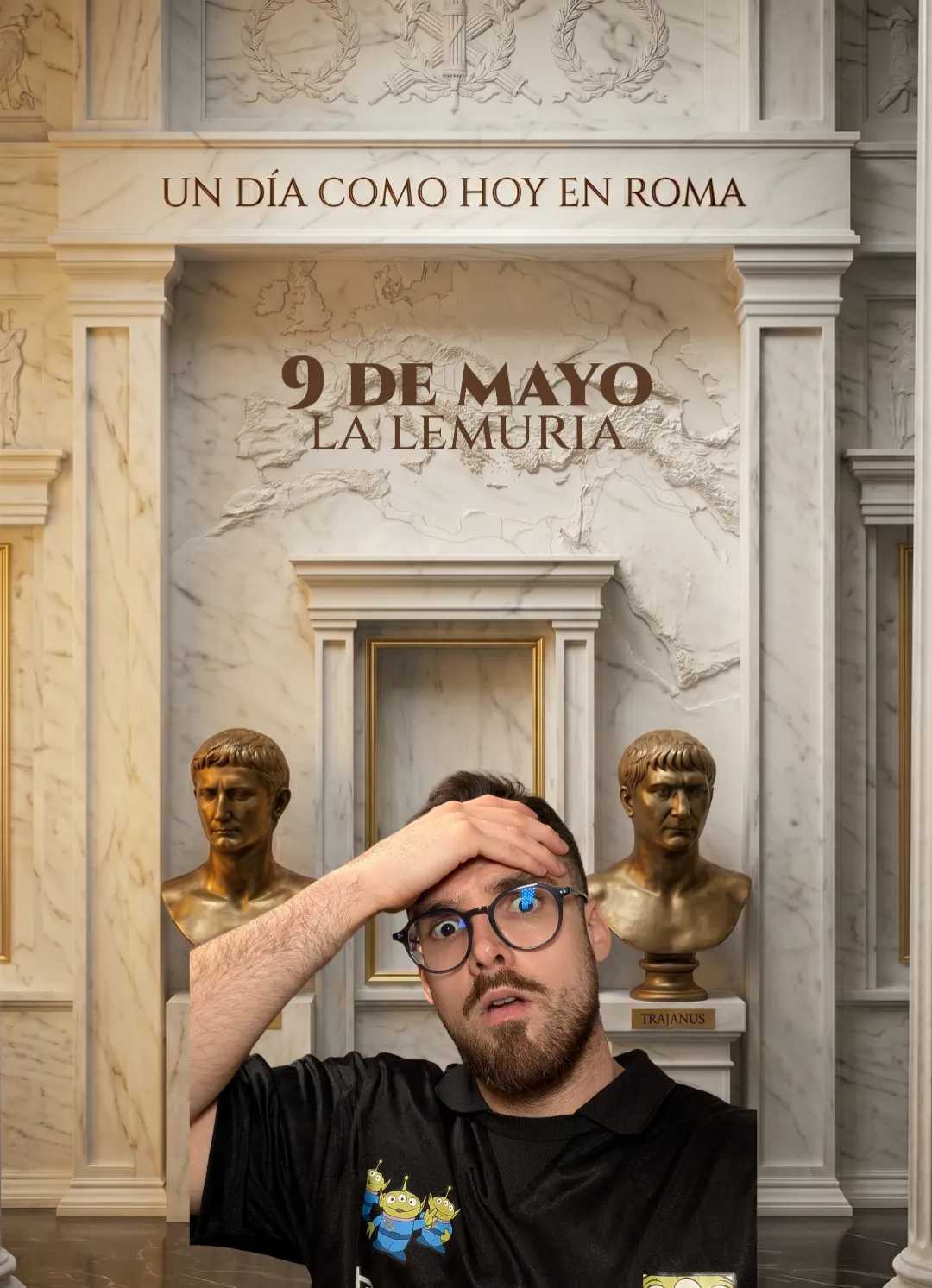

the dark roman ritual to repel ghosts at midnight
@yodidac · tiktok the dark roman ritual to repel ghosts at midnight play
@yodidac_
read transcript (original audio in spanish)

Imagina despertarte a la media noche, completamente descalzo, para llenarte la boca de frijoles negros y escupirlos por los pasillos de tu villa temblando de miedo. Ocurrió un día como hoy. Roma daba inicio a la Lemuria. A pesar de su fría burocracia, los romanos sufrían un terror psicológico a los espíritus de sus ancestros sin descanso, conocidos como los "Lemures", que emergían en mayo buscando venganza doméstica. Para evitar que la entidad rondara los cuartos, el jefe de la casa debía ejecutar un protocolo de contención. A medianoche se levantaba sin sandalias, pues el cuero animal atraía a la muerte. Con frijoles negros en la boca, avanzaba por la penumbra arrojándolos por encima de su hombro izquierdo repitiendo rítmicamente una fórmula mágica de redención. Ovidio señala la regla inquebrantable: estaba terminalmente prohibido mirar hacia atrás. Finalmente, el hombre golpeaba pesadas ollas de bronce exigiendo a los fantasmas que abandonaran la propiedad. Puedes dominar todo el Mediterráneo con tu ingeniería militar, pero de noche, hasta los cónsules temían a la oscuridad.

⁕ ⁕ ⁕ apparatus ⁕ ⁕ ⁕

fontes classicae.

  1. i. ovid · fasti book v

modern bibliography.

  1. i. john scheid · an introduction to roman religion
⁕   responsa   ⁕

questions on this entry

all the responsa
si el frijol (phaseolus vulgaris) es americano, ¿qué legumbre lanzaba el paterfamilias en las lemuria para repeler a los muertos?

buena pega botánica, y tiene respuesta limpia: lo que vuela por encima del hombro a medianoche no es ningún frijol. el phaseolus vulgaris es americano y no pisa el mediterráneo hasta después de colón, así que en la roma de ovidio era literalmente imposible. la legumbre del ritual es la vicia faba, el haba común del viejo mundo, que los romanos cultivaban desde siempre (plinio la trae en su historia natural). y ovidio en los fastos (libro v) es explícito: el patriarca se llena la boca de habas negras (fabae) y las escupe una a una sin mirar atrás, “his redimo meque meosque fabis”, con estas habas me redimo a mí y a los míos. el haba no es relleno decorativo: era la legumbre de los muertos por excelencia, tan cargada de inframundo que el flamen dialis, el sacerdote de júpiter, tenía prohibido hasta nombrarla, y los pitagóricos se negaban a comerla. el mito del frijol americano lanzando fantasmas no se sostiene: la magia romana corría a base de habas

ovidio, fasti v (ritual de las lemuria: fabae nigrae)
plinio el viejo, naturalis historia xviii (cultivo de la faba)
answered in spanish
dídac
⁕ about the author ⁕

dídac

software engineer, history communicator. writes about ancient political history and the rage his own century gives him. building an encyclopædia romana on the internet — and a few rooms more.