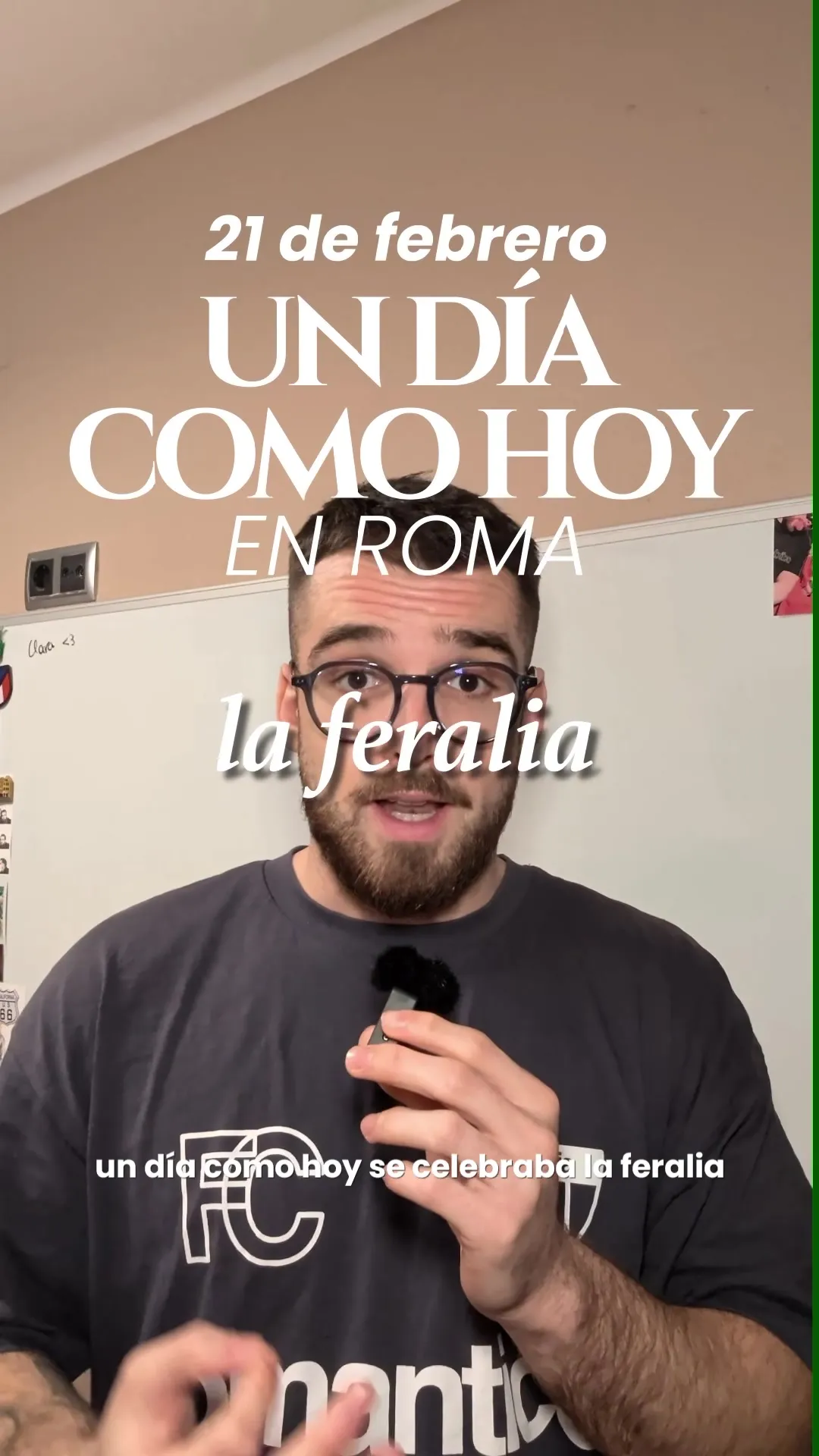


a tradition ovid records painted the people who conquered the known world living in the terror that their own dead relatives might come out of the tomb because they were hungry. every 21 february, the families of rome loaded up food and carried it to the necropolises on the outskirts to feed, literally, their deceased. it was the feralia, and it was not a metaphor: it was a transaction.
the feralia did not come alone. it closed the parentalia, nine days of mourning that began on 13 february, during which the state slowed down: temples shut their doors, magistrates set aside their insignia, and weddings were forbidden. it was the stretch of the calendar in which the living tended en bloc to their dead, a long week consecrated to family memory before the archaic year rolled into motion again in march.
for roman theology, the dead ancestors — the manes — did not vanish. they remained bound to the family by a sacred duty of piety (pietas), and demanded material attention in exchange for not causing trouble. hence the obligation to go down to the tombs on the day of the feralia and leave the offering. what is striking is how modest the price was: the spirits asked for no gold or mausoleums. ovid notes that all it took was a tile with a garland, a few grains of salt, bread soaked in wine and a handful of violets scattered over the grave.
the gesture sought no ostentation, but to send a clear message to the underworld: we are still keeping the pact, we still remember. it was a pact of annual compliance between the living and the dead. whoever neglected it exposed himself to reprisals from beyond, and mythology kept the precedent to frighten the forgetful.
the dead wanted no gold or marble: they wanted bread soaked in wine and the proof that nobody had forgotten them.
ovid records the warning. on one occasion, he tells, the romans were so absorbed in a war that they forgot to honour the dead on their day. the punishment was immediate: the neglected spirits burst from the tombs, wandered howling through the alleys of the city and through the fields, and the city did not recover its calm until the offerings were returned to them. the story, true or not, served its purpose: nobody wanted to be the neighbour who left the dead without dinner.
the feralia also had a darker and less touristic reverse. ovid describes on the same day a rite presided over by a drunken old woman who, surrounded by girls, officiated in honour of tacita, the silent goddess. the ceremony was straight out of a manual of witchcraft: incense under the threshold, knotted leaden threads, chewed black bean grains and, as a centrepiece, the head of a fish sewn shut and pierced through with a bronze needle. the aim was to gag hostile tongues, to seal enemy mouths. nothing of orderly mourning: pure and simple containment magic.
the next day, the 22nd, the tone changed completely. the caristia arrived, a family meal of reconciliation among the living in which quarrels were settled and peace was sealed at the table. romans resolved in this way, in forty-eight hours, what today costs us years of therapy: first feed the dead so they do not bother you, and the next day, sit the living down to make peace before they become the next problem.