

the longest war of the ancient world did not begin over a clash of civilisations or an ideal, but over the blackmail of a handful of out-of-work mercenaries. in 264 bce, with the italian peninsula at last under its control, rome’s frontier touched the sea directly across from sicily. and on the far side of the strait, dug into a stolen city, a gang of former soldiers of fortune was about to light a fuse that would burn for twenty-three years.
those mercenaries called themselves mamertini, “sons of mamers” — the oscan name for the god of war, the italic mars. they were campanians who had served agathocles, the tyrant of syracuse, and who, on his death around 289 bce, found themselves without pay and without a purpose. rather than go home, around 288 bce they had themselves taken in as guests at messana, the prosperous greek city that watches over the strait. the gates were opened to them; they answered by murdering the men, dividing the women and the property among themselves and keeping the city. for more than two decades they turned that trading port into a base of plunder from which they extorted the north-east of the island.
the reckoning came late, but it came. hiero ii, the new and forceful king of syracuse, beat them in the open field on the banks of the longanus and around 265 bce laid siege to messana, determined to wipe out that nest of pirates once and for all. cornered, the mamertines did what every extortionist does when the noose tightens: they went looking for a bigger godfather. one faction handed the citadel over to carthage, which slipped a garrison into the port under a certain hanno and forced hiero to withdraw. but their rescue soon tasted of a new prison: fearing they would be swallowed whole by the africans, another faction sent envoys to rome begging for help “as a kindred people”. they had appealed to the two greatest powers of the western mediterranean at once.
the senate saw clearly that the cause was indefensible; the people, by contrast, saw the whole of sicily ripe for plunder.
here rome came face to face with its own conscience, and the source that tells it best is polybius, who opens his great history with this very episode. to rescue a band of usurpers who had seized a city by force was, he writes, a manifestly unjust cause; and to do so meant, besides, an almost certain collision with carthage. the senate was divided and could not bring itself to decide: the moral scruple weighed as heavily as the strategic advantage. so the matter passed to the assembly of the people. according to polybius, the magistrates painted before the commons the plain plunder each man stood to win, and the vote came out in favour of intervention. the command was entrusted to the consul of that year, appius claudius caudex — whose colleague was marcus fulvius flaccus — with orders to cross over to messana.
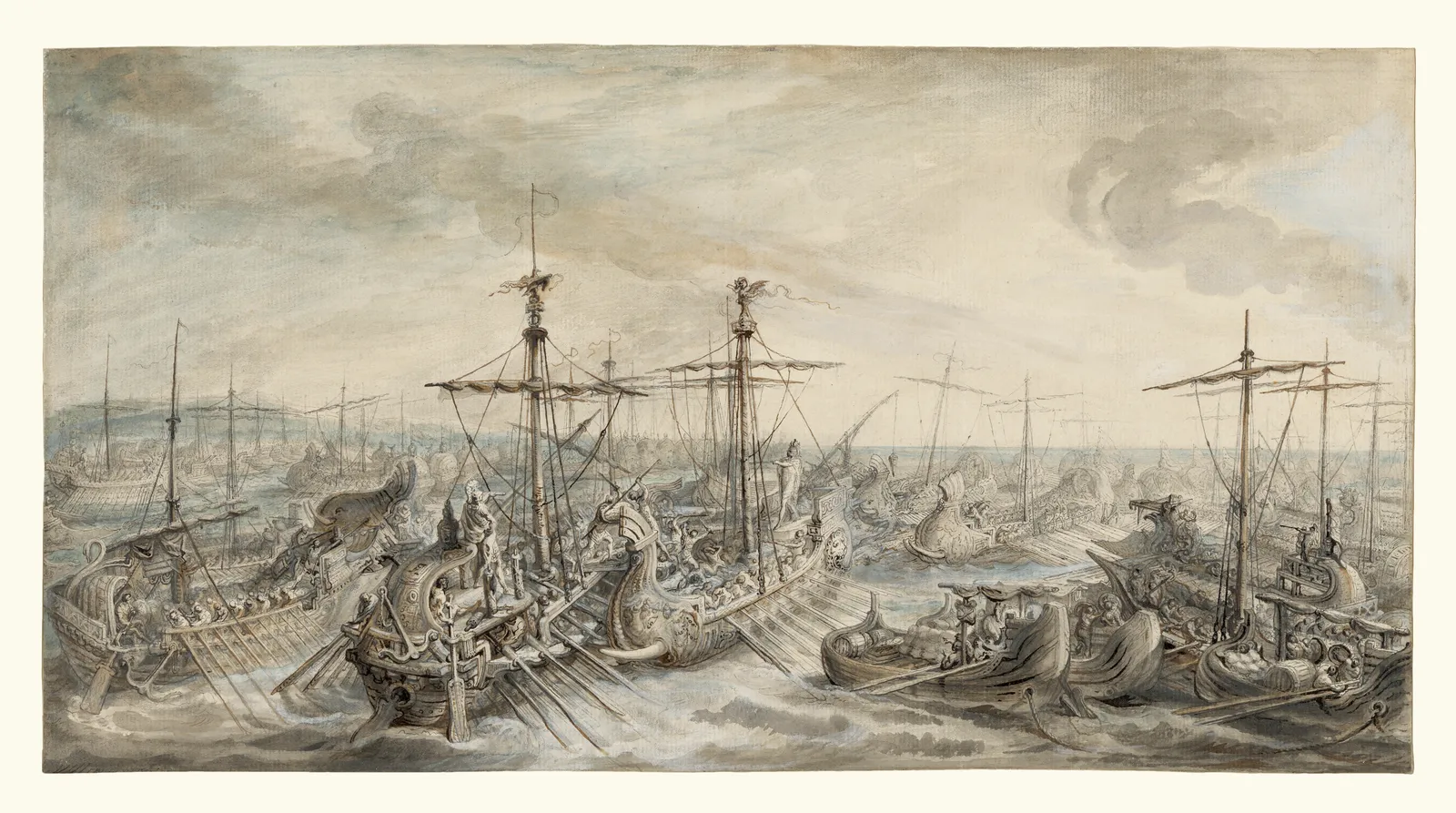
popular accounts tend to round off the scene with rome suddenly assembling a great fleet requisitioned from its italian allies. a correction is in order: in 264 bce rome was not yet a naval power, and the crossing of the strait was made with other men’s transport ships and borrowed boats, not with a navy of its own — which it would have to improvise later, in the thick of the war and at the cost of shipwrecks. what lies beyond doubt is the outcome: caudex occupied rhegium on the calabrian shore, and by night a military tribune slipped across to messana; with that rome set foot in sicily and unleashed the first punic war.
now the historiographical nuance, which it would be wrong to skip. our story depends almost entirely on polybius, who wrote generations later and with marked sympathy for rome; even so, he was honest enough to confess that the roman cause struck him as indefensible. the sicilian historian philinus of acragas, by contrast, held that a treaty existed forbidding rome to set foot in sicily, so that the intervention would have been a flagrant violation; polybius denied that any such pact ever existed, and modern scholars go on arguing the point without agreement. nor should we imagine a machiavellian senate executing a plan of conquest: as dexter hoyos’s reading underlines, this was in large part an “unplanned” war, a chain of local decisions and opportunisms that got out of everyone’s hands. what later propaganda dressed up as fides — roman loyalty to a friendly people — was, at its root, a risky wager on the plunder of a rich island.
from that decision was born a conflict that would last until 241 bce: twenty-three years, the longest continuous war and the greatest naval war of antiquity. to defeat carthage, a power that had never known defeat at sea, the land legions would have to learn from scratch how to sail and fight upon the waves, or drown in the attempt. that is the great irony of the episode: rome, which crossed the strait to rescue a band of pirates, came out of the war as the mistress of sicily and, above all, as a sea power. the blackmail of a group of unpaid mercenaries ended up drawing the map of the mediterranean for centuries to come.