

on the ides of september a magistrate climbed to the summit of the capitol and drove a nail into the wall of the temple of jupiter optimus maximus. the order came from a law that livy says he read written priscis litteris verbisque, in archaic letters and words, and which ordered nothing beyond that: let whoever is praetor maximus drive a nail on the ides of september. no why, no what for. by the time livy copied it out, the meaning of the gesture had been lost for centuries.
the date was not arbitrary: it was the building’s birthday, and two things usually served up together are worth prising apart. the year and the scene of the dedication — marcus horatius pulvillus gripping the doorpost while he was told that his son had just died, a report plutarch takes to have been fabricated — are livy’s, in book ii, which places the episode in «the first year» after the expulsion of the kings and gives no calendar date at all. it is plutarch, in the life of publicola, who puts the dedication on the ides of september; livy ties it to that date by another route, when he says horatius dedicated the temple in accordance with the law of the nail.
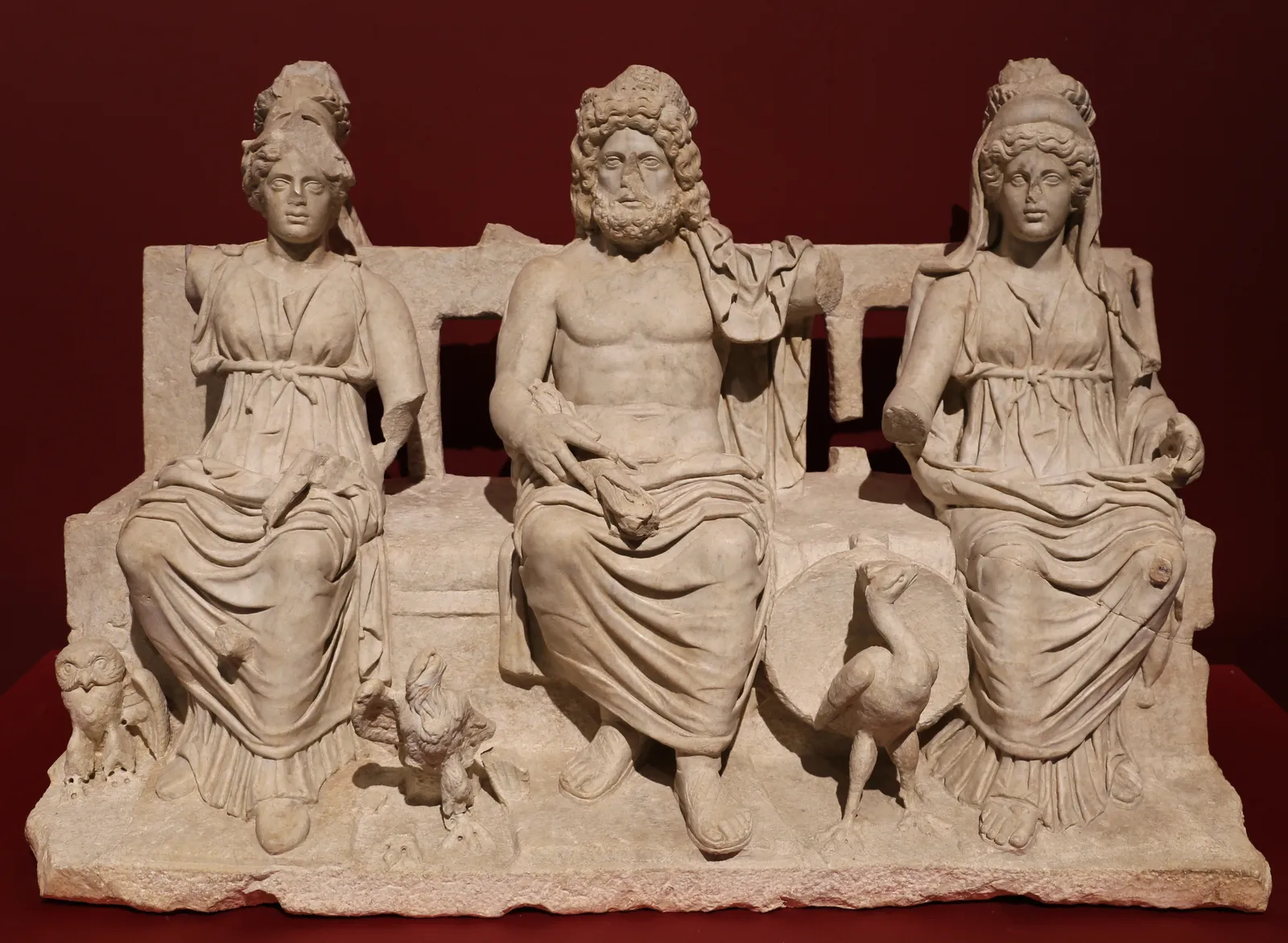
there was not one god living inside, but three. dionysius of halicarnassus, writing in rome under augustus, describes three parallel shrines separated by party walls, under a single pediment and a single roof: jupiter in the middle, juno on one side, minerva on the other. and in a corner, the stone of terminus, the god who — in the story rome told about itself — refused to move out, and around whom the building had to be raised.
that same day the epulum iovis was held there: the image of jupiter reclining on a couch, those of juno and minerva seated on chairs beside him. the basis for that scene is thinner than it looks. it comes from a single sentence of valerius maximus, first century of our era, and the sentence is not even about the rite: valerius is explaining how romans ate at home — women seated, men reclining — and adds that the custom passed from the human to the divine, nam iovis epulo ipse in lectulum, iuno et minerva in sellas ad cenam invitabantur. that the senate banqueted on the capitol that day we owe to aulus gellius, who mentions it in passing while telling how scipio africanus and tiberius gracchus were reconciled at that very table. and beard, north and price warn that the epulum and the lectisternium are not the same rite: at the epulum, they note, the gods sat on sellae instead of reclining on couches — the opposite of what valerius maximus says of jupiter.
what survives of an ancient rite is the gesture. the belief that went with it does not survive.
and now the scholarly caveat, which is not to be skipped: what the sources document is the gesture, not the belief. taking for granted that «the romans believed» any one thing erases a disagreement alive among them. varro divided theology into three — that of the poets, that of the philosophers and that of the cities — and we know of that division only because augustine of hippo cites it four centuries later in order to attack it. cicero devoted a whole dialogue to the question and put into cotta’s mouth, who in matters of religion says he follows the chief pontiffs and not zeno or chrysippus, the sentence that puts it best: of a philosopher one must demand a reason for religion; one’s ancestors are to be believed even when they give none.
as for the nail, livy does not sign off on the explanation: he passes it on. «it is said» — ferunt — that it marked the number of the year, because in those days letters were scarce; and in the same sentence he gives a second, competing reason, that the law was consecrated beside minerva’s shrine because number is her invention. and he adds a third detail, from the antiquarian cincius: at volsinii nails were driven into the temple of nortia, the etruscan goddess, likewise to count the years.
livy himself makes it plain that the custom had lapsed and had to be recovered: «every year» describes what the law ordered, not what is attested. when the plague dragged on, the senate had a dictator appointed — lucius manlius imperiosus — with the single task of driving that year’s nail; the ceremony had passed from the consuls to the dictators, livy writes, because their power was greater. scullard closes the matter in neither direction: he notes that it has provoked much discussion and leaves it there.
one confusion is left to undo: a reckoning of years is not a calendar. the wall kept a count; the year was dated by other means, and livy himself dates the dedication to «the year after the kings were driven out», not by any nail. what survives, once the unsupportable is stripped away, is still an excellent image: the city that would end up measuring the world began by measuring its own time with a hammer, without being altogether sure why.