

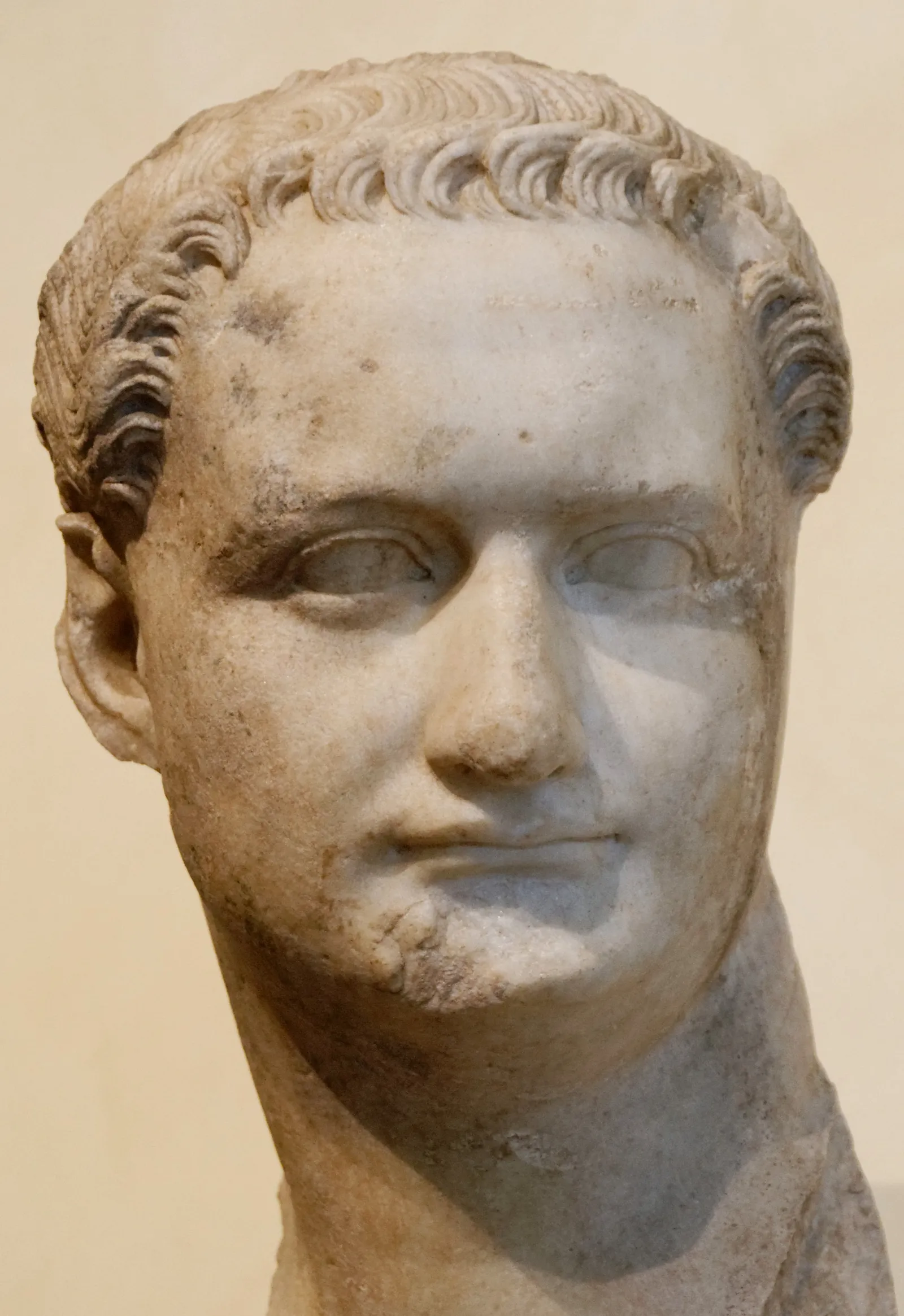
on 18 september 96 the emperor domitian was stabbed to death in his bedchamber. suetonius gives the date the roman way — the fourteenth day before the kalends of october — and tells of the preparation with a detail that reads like a novel: stephanus, the steward of domitilla, a niece of the emperor, stood accused of embezzling other people’s money, and offered himself to the conspirators. for several days he wore his left arm wrapped in woollen bandages, feigning an injury, and inside them he hid a dagger. when the moment came, nobody was looking at that arm any more.
almost everything we know about domitian’s last years was written by people who hated him. tacitus, who lived through that reign as a senator, published his agricola a few years later, with trajan already associated to the throne, and speaks of «fifteen years» in which the most alert fell to the cruelty of the prince. pliny the younger, also a senator, painted him in the panegyric of trajan as the counter-example of the good emperor. suetonius was not a senator but an official of equestrian rank, and he wrote a generation later. all three look from the same side, and today’s historians tone their portrait down considerably. suetonius himself, in fact, concedes that domitian kept such close watch on the magistrates of rome and the governors of the provinces that they were never more honest or more just, and that after him many of them were seen accused of every kind of crime. and tacitus lets slip a sentence an accuser does not usually write against himself: that it was «our hands», those of the senators, that led helvidius to prison.
on one thing, however, the sources agree without a crack: those who finished domitian were not a distant enemy but the people of his own household. suetonius relates that since his youth the emperor had lived with a prophecy of the year, the day and even the hour of his death, and that on that day he feared the fifth hour. he asked what hour it was and, as arranged beforehand, was told it was already the sixth. relieved, believing himself safe, he was about to go to the bath when his chamberlain parthenius turned him aside: someone had brought a matter of great importance. it was stephanus, on the pretext of denouncing a conspiracy. he handed him a document and, while domitian was reading, drove the dagger into his groin.
the man who killed him had spent days walking round the palace with a bandaged arm, and everyone had grown used to seeing him that way.
according to suetonius, the emperor fought back, and four others finished him off with seven wounds: clodianus, a subaltern; maximus, a freedman of parthenius; satur, decurion of the chamberlains; and a gladiator from the imperial school. the detail of the dagger comes from a boy who tended the lares of the bedchamber and saw it all: after the first blow domitian shouted to him to hand over the dagger he kept under his pillow, and the boy found only the hilt. it is not a single-source detail. cassius dio, writing more than a century later, tells the same from the other side and names who did it: parthenius took the blade out of the sword that always lay under the pillow, so that domitian could not use it, and then sent in stephanus, because he was stronger than the others. the two versions differ in viewpoint and converge on the fact. dio also names another chamberlain, sigerus, and entellus, the official in charge of petitions, and says that the empress domitia and the two praetorian prefects were aware of it, though he flags it himself: «at least, that is the tradition».
the succession had been arranged. dio relates that the conspirators did not dare act until they had a successor, that they sounded out several men who refused for fear it was a test of loyalty, and that only then did they go to nerva, a senator of sixty-five, twice consul and childless, whom an astrologer had shortly before saved from domitian’s own suspicion. what dio does not date, an inscription fixes: the fasti of ostia record, under the fourteenth before the kalends of october, that domitian was killed and that on that same day marcus cocceius nerva was acclaimed emperor.
the reaction was not unanimous, and suetonius says so: the people received the news with indifference; the soldiers, with grief, and they wanted to call him the deified domitian at once. the senators, by contrast, rushed to the curia, had ladders brought to tear down his shields and images and dash them to the ground, and ended by decreeing that his inscriptions be scraped off everywhere and his memory erased. dio adds that his gold and silver statues were melted down and the arches being raised to him were pulled down. pliny remembered it years later with a relish that says a great deal: «it was a joy to dash those proud faces to the ground». the moderns call all this damnatio memoriae, the condemnation of memory; rome had no single name for it, only a handful of concrete measures — removing images, scraping off the name, abolishing the remembrance — which the senate voted case by case.
there remains the fact that best explains that end. domitian was made censor for life, and dio stresses that he was the first and only one, private citizen or emperor, to receive that honour; as censor he expelled caecilius rufinus from the senate for dancing in pantomimes. he therefore decided who was a senator, and he controlled who entered his palace. no legion brought him down, nor any rebel province. he was brought down by half a dozen people from his own household, among them a man whose arm nobody looked at any more.