
in 219 before our era, hannibal barca laid siege to saguntum, a rich iberian city, a short way from the sea, south of the ebro and bound to rome by a pact. eight months later he took it by storm, and in 218 a roman embassy was declaring war in the senate of carthage. it is the textbook trigger of the second punic war. whether it was also its cause is another argument, and the one who opened it was polybius.
hannibal was still young and had been at the head of the army of hispania for two years: the soldiers had proclaimed him in 221, after the murder of hasdrubal the handsome. he spent those two years campaigning in the interior, against the olcades, the vaccaei and the carpetani, and livy reads them as a calculated detour: subdue the neighbours first, so that the attack on saguntum would seem to be dragged along by the course of events rather than sought. the oath of hatred the video attributes to him needs its origin made precise. polybius reports that hannibal himself, already defeated and a refugee at the court of antiochus iii, told the king that at the age of nine his father had made him lay his hand on the victim of a sacrifice and swear never to be a friend of the romans. polybius does not claim to have heard it himself: he presents it as what hannibal told antiochus, decades later and at a moment when it suited him to prove his enmity towards rome.
the city, polybius says, lay some seven stades from the sea, at the foot of the hills, and its territory was the most fertile in iberia; livy calls it the richest of those beyond the ebro and gives it a legendary origin on the island of zacynthus. the problem was a legal one. the treaty made with hasdrubal only forbade carthage to cross the ebro under arms, and saguntum lay to the south. but the saguntines, polybius writes, had placed themselves under rome’s protection many years before hannibal, and he proves it thus: when factional strife broke out in the city, they called in the romans to arbitrate it, not the carthaginians, who were much nearer. that is exactly what hannibal seized on: he accused rome of having had several notables unjustly executed in that arbitration. polybius takes it for a pretext, dictated by anger, and thinks he would have done better to claim sardinia.
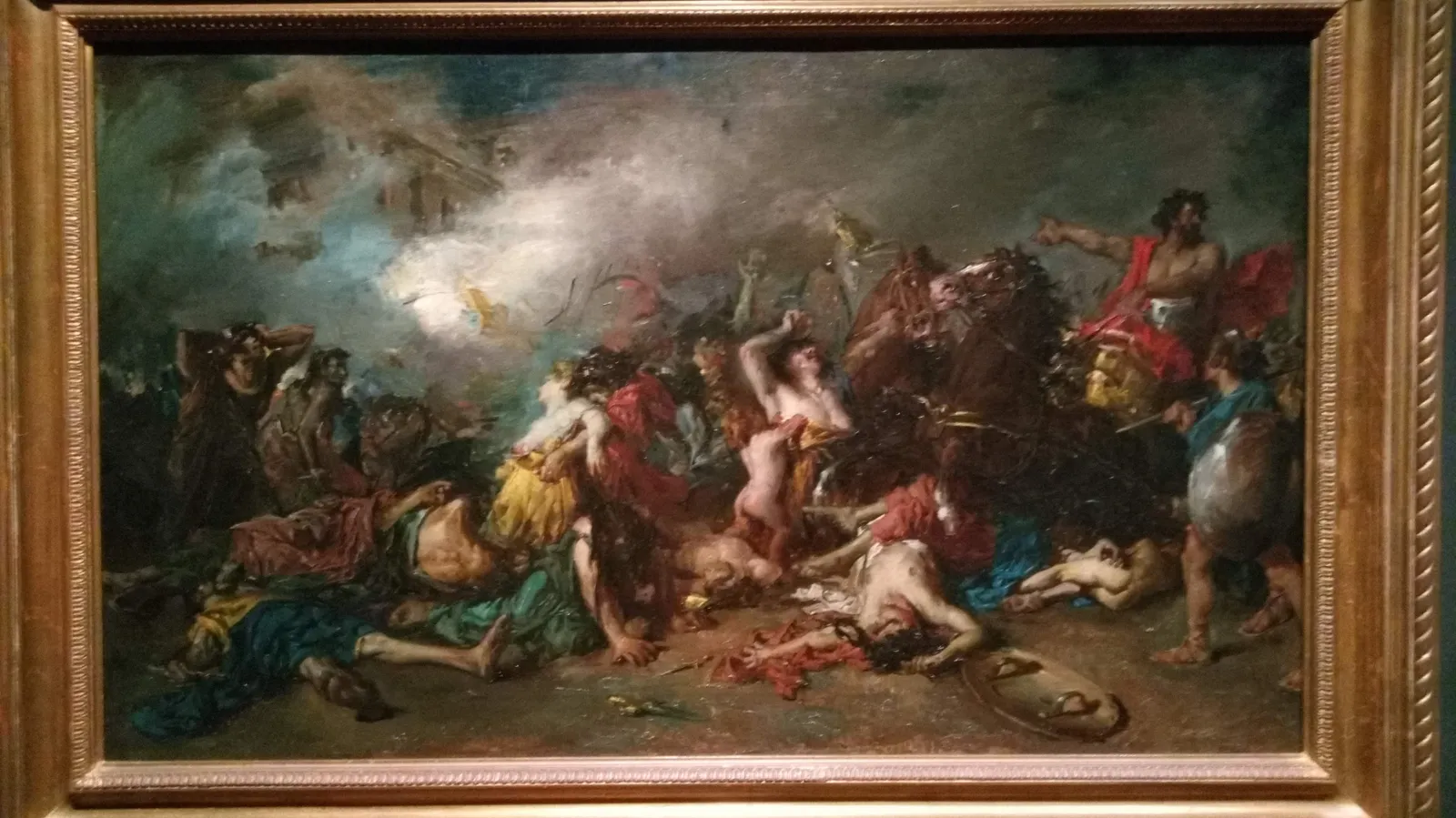
of the siege, polybius gives little more than the essentials: hannibal directed it in person, sharing the toil at the engines and exposing himself without measure, and after eight months of hardship he took the city by storm. the plunder served him for everything: he kept the money for his plans, shared out the captives among the troops and sent the rest to carthage. the detail comes from livy. while approaching the wall incautiously, hannibal was gravely wounded by a tragula, a throwing weapon, in the front of the thigh; the rout was such that the works were almost abandoned, and for a few days the siege became a blockade while he healed. the video says the javelin went through his thigh; livy only says it wounded him gravely. the fall also comes from livy: the leading men of the city threw their gold and silver into the fire and many threw themselves in after it, and hannibal ordered every adult put to death, an order livy himself calls cruel and almost necessary. and livy warns about his own chronology: those who write that saguntum fell in the eighth month do not square, he admits, with the consuls who, by his account, received the first saguntine plea and then fought against hannibal in italy.
the toga laden with war and peace is in polybius and in livy; the words, each puts in his own way.
the video presents a roman senate that debated endlessly while saguntum was dying and sent no reinforcements. the second point livy himself concedes: when the fall became known, the senators felt, among other things, shame at the help they had not given. the first needs qualifying, because rome did send envoys, and the two sources do not agree on when. polybius places them at carthago nova, before hannibal, in the winter before the siege, warning him not to touch saguntum or cross the ebro. livy, with the siege already under way: hannibal sent word that it was not safe to approach and that he had no time for embassies, and they went on to carthage. and polybius expressly mocks those who say that, after the fall, the senate debated whether or not to go to war: absurd, he says, when a year earlier rome had warned that entering saguntine territory would be a cause of war. the astonished senate and its speeches belong to the tradition he rejects.
the decisive embassy reached carthage in 218. polybius sums it up as an ultimatum: either they handed over hannibal and his council, or war. the carthaginians answered with a plea: the treaty of hasdrubal did not bind them, because it was made without their approval, and the treaty of lutatius protected the allies of each party, but saguntum was not an ally of rome when it was signed. livy opens the list of envoys, all of them elderly, with a quintus fabius, and it is he whom livy has put the one question they had brought: whether saguntum had been attacked by public decision of carthage. both tell the gesture. in polybius, the eldest of the envoys points to the fold of his toga and says he carries in it war and peace; the suffete answers that he should let fall whichever the romans prefer, and when he says «war», many senators shout that they accept it. in livy, «the roman» makes a fold in his toga: «here we bring you war and peace; take whichever you wish»; they shout back that he should give whichever he wishes, and when he lets it fall saying that he gives war, all answer that they accept it and will wage it with the same spirit. these are two literary versions of one scene, not a record of proceedings.
polybius closes the matter with a double verdict that is worth not simplifying. if the cause of the war was the destruction of saguntum, the carthaginians were to blame, by the treaty of lutatius and by that of hasdrubal; if it was the seizure of sardinia, they had good reasons. meanwhile, hannibal wintered at carthago nova preparing the march. polybius reports that, even before the siege, rome expected to fight the war in hispania, with saguntum as its base. it got the theatre wrong.