

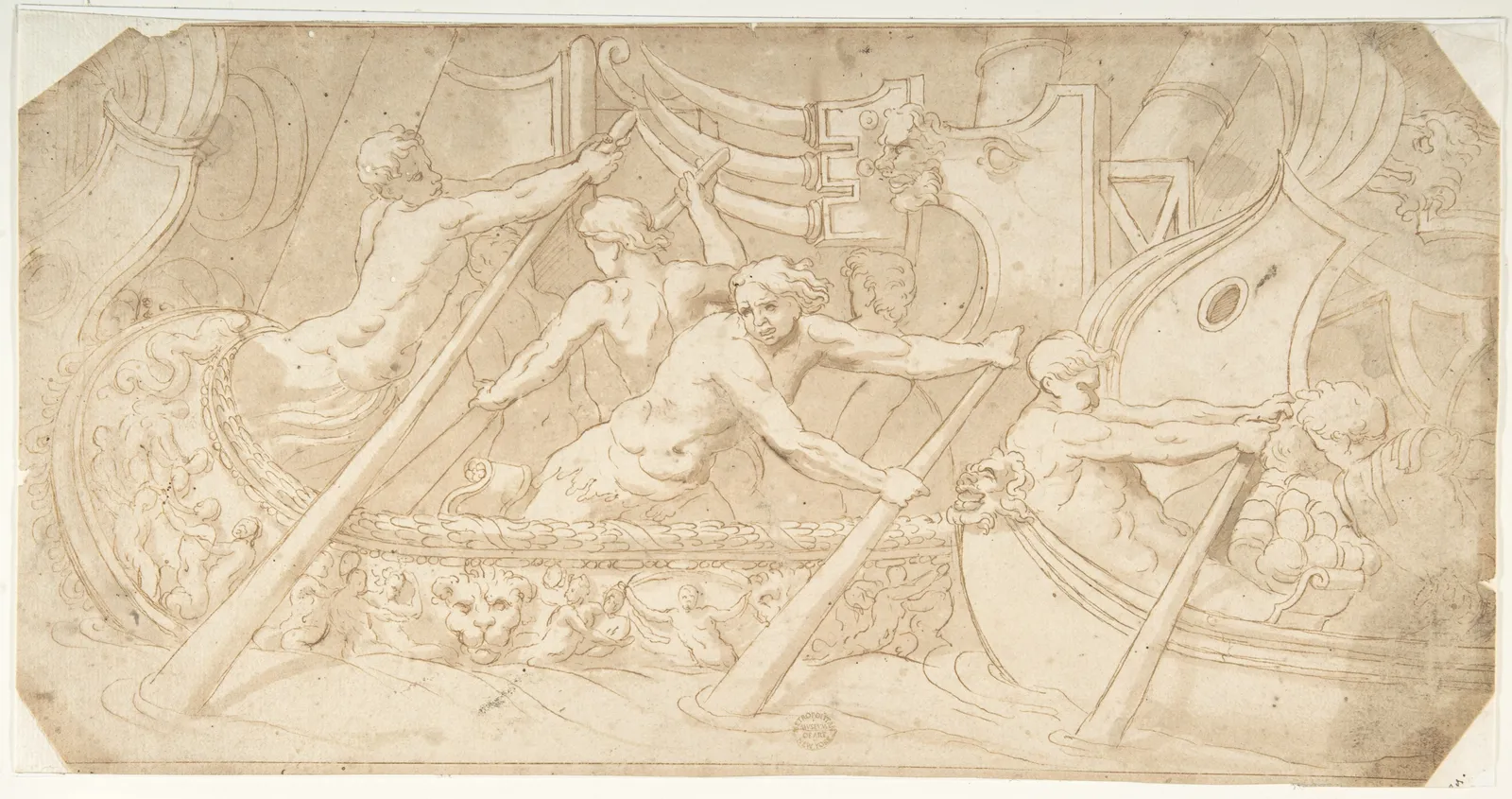
to take on the greatest naval power of its day, rome did something no great power likes to admit doing: it copied. it captured an enemy warship, dismantled it like a piece of furniture and made its carpenters reproduce it part by part. the year is 261 bce, and rome’s first war fleet comes out of that decision.
the problem came out of the siege of acragas. rome had taken the city and discovered, in the same motion, that the victory was worth nothing: as long as carthage held the sea it could resupply any sicilian stronghold by ship and harass roman supply lines at will. sicily was an island. whoever ruled the water ruled the war, and rome did not rule the water.
the legions could crush any army on land. against carthage, that was exactly half of what was needed.
what rome lacked was one very specific type of ship: the quinquereme. the name misleads, because the «five» does not count stacked banks of oars but rowers per rowing unit —several men sharing an oar across two or three levels—, a design meant to move heavy tonnage with less specialised crews. it was the capital ship of the mediterranean, and italian yards had never built one.
here comes the stroke of luck. polybius tells us that when rome first crossed the strait of messina in borrowed ships, a carthaginian warship pushed too far ahead chasing the roman vessels and ran aground. the romans captured it intact. instead of burning it, they used it as a master plan: they studied its structure, took it apart and set their carpenters to replicate it. from that model, still according to polybius, came one hundred quinqueremes and twenty triremes built from scratch.
pliny the elder adds the detail that made the episode famous: the fleet was afloat sixty days after the trees it was made of were felled. and there was still the matter of the people. rome had ships and no sailors, so while the hulls took shape in the yards the officers built wooden benches on dry land, sat thousands of farmers on them and had them rehearse the stroke in the air, until they learned to move all at once.
now the historiographical caveat, which in this episode weighs more than in almost any other. the account comes from polybius, and polybius tells it to prove a thesis: the roman capacity to improvise in the face of the unknown. modern scholarship looks at it more coldly. rome had been allied for decades with cities of long naval tradition —tarentum, naples, the greek cities of southern italy—, it had socii navales, allies bound to supply ships and crews, and it had kept smaller squadrons before this war. lazenby and goldsworthy agree that the novelty was not sailing but mass-producing a heavy model rome genuinely did not manufacture; and the sixty-day figure, while not impossible in a war effort using green timber and simultaneous yards, has every appearance of having been rounded off by tradition.
what no source disputes is the outcome, and it is strange enough on its own: within months, a land power built itself a war navy out of a stranded enemy ship. what rome still did not have was crews able to manoeuvre against the finest sailors in the mediterranean. sending seasick farmers into a ramming duel with carthage was an elegant way to lose the entire fleet. something else was needed: a device that would turn a naval battle into an infantry fight.