

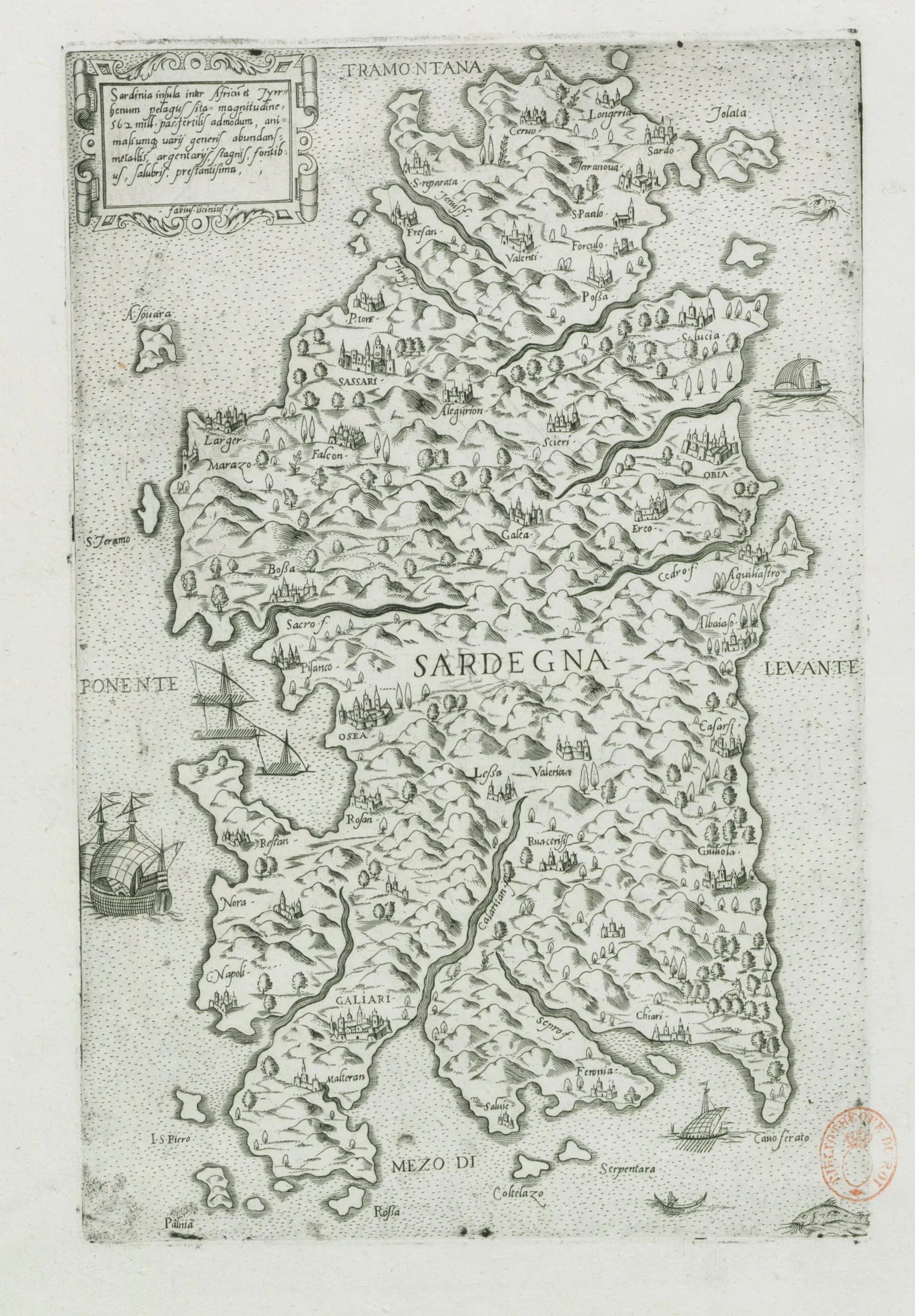
there was no battle. there was an embassy, a threat and an invoice. in 238 bce —or already 237: the chronology of those months is not settled— rome demanded that carthage, barely out of the war against its own mercenaries, hand over sardinia and twelve hundred talents more, or face war. carthage paid. calling it the most dishonourable moment of the republic is a headline’s superlative: polybius, the man who actually condemns the episode, writes something narrower and harsher.
the background is the mercenaries’ war —the inexpiable one, which polybius offers as the finest possible illustration of what was then called a truceless war—: the unpaid soldiers who turned on carthage once the first punic war was over, and which by his reckoning lasted three years and four months. sardinia was one of its fronts: the mercenary garrison, in imitation of mathos and spendius, killed its commander bostar, crucified hanno, the general sent to bring it to heel, and murdered every carthaginian it could find. then the mutineers fell out with the sardinians themselves, who drove them off the island to italy. carthage thus lost, polybius notes, an island «of great extent, most thickly populated and most fertile».
rome, at first, behaved well: when those mercenaries, still in arms on the island, offered it sardinia, it refused; when utica offered to surrender, it did not accept either; it gave back the prisoners of the sicilian war without ransom and let its merchants supply carthage, not the rebels. polybius sums it up thus: they kept the treaty.
the turn came once carthage had already won its war. the expelled mercenaries, now in italy, invited rome again, and this time rome fitted out an expedition. carthage protested —the island was hers— and began raising a force to punish the mutineers. that armament was the pretext: the romans declared the preparations were aimed not at sardinia but at themselves, and voted for war. carthage tried to negotiate, convinced that justice was on her side; rome refused. with no strength left for another war, carthage ceded the island and undertook to pay twelve hundred talents more, on top of the three thousand two hundred of the treaty of lutatius. not one drop of roman blood.
sardinia was not conquered: it was invoiced.
polybius, a greek writing almost a century later who admired rome without disguise, can find no way to defend her: «it is impossible to discover any reasonable pretext or cause», and everyone would agree, he says, that the carthaginians evacuated sardinia «contrary to all justice, and merely because the occasion permitted it». he even dismantles the official excuse —that carthage had wronged roman crews during the libyan war— by recalling that rome had itself closed the matter when it got its sailors back. that excuse survives in the roman tradition summarised by zonaras: rome «secured sardinia without a battle, as well as a fresh supply of money, by charging the carthaginians with injuring roman shipping». livy passes no sentence: he inherits the grievance. what gnawed at hamilcar, he writes, was that sardinia had been snatched from him fraude romanorum, with a tribute imposed on top. polybius is the fullest source, but not the only one.
now the historiographical caveat, which is worth not skipping. polybius speaks not of one cause of the second punic war but of three. the first, hamilcar barca’s indignation over the war for sicily; the second «and principal», the seizure of sardinia with its added tribute; the third, carthaginian success in spain. and when he speaks of resentment he places it not in one man but in hamilcar and «all his compatriots». current scholarship goes further: hans beck, in the companion edited by dexter hoyos, dismisses the «wrath of the barcids» as an engine of the war —he reads it as a roman way of shifting the blame onto carthage— without denying that the carthaginians, and the barcids in particular, nursed a standing grudge. his reading is less moral and more geographical: sicily, lipari, sardinia and the ligurian coast were sealed off one after another, and spain was all carthage had left.
polybius speaks only of sardinia; corsica, which popular accounts tend to fold into the same package, does not appear in his account of the ultimatum, and subduing the two islands cost rome campaigns of its own in the years that followed, as zonaras recalls. what did come out of that year was a man sailing for spain: hamilcar, polybius says, threw himself into conquering it so as to have the means of making war on rome. out of that silver empire hannibal would come. but first rome itself was going to be shaken from within, in the assemblies of its own people.