

rome’s treasury was empty and yet the fleet that closed twenty-four years of war was not paid for by the state: its richest citizens advanced it out of their own pockets, one ship each.
the loan is organised around 243-242 before our era. rome had not put to sea for five years —storms and drepana had cost it whole fleets— and on land hamilcar barca was unbeatable. according to polybius there were no funds in the treasury, and it was «the leading citizens» who, singly or in groups of two or three, undertook to pay for one fully equipped quinquereme each, «on the understanding that they were to be repaid if all went well». two hundred were fitted out that way, copied from the ship of the rhodian blockade-runner captured at lilybaeum.
one thing popular history tends to run straight over is worth pausing on. polybius does not mention the senate, nor does he say the repayment was to come out of the carthaginian indemnity: that is a modern inference, not the text. «the people» of the title are, strictly, those who could afford it, and what polybius —very nearly our only source, and a century later— celebrates as the generosity of the elite his text lets you read as an investment that only paid out on a win.
the consul gaius lutatius catulus sailed at the beginning of the summer of 242, took the harbour of drepana and the roadsteads off lilybaeum and spent months drilling his rowers. carthage loaded its ships with grain and sent them under hanno to the holy isle —marettimo— bound for eryx, to take hamilcar’s best mercenaries aboard there. lutatius gave him no time: on 10 march 241 —the date comes from eutropius— the day broke with a headwind and a heavy sea, and he attacked all the same: he preferred a loaded convoy with no veterans on board. it was drepana in reverse: the romans had left ashore everything that was no use in a fight; the carthaginians, certain that rome would never come back to sea, had let their navy go. fifty punic ships sunk, seventy captured with their crews and close to ten thousand prisoners, according to polybius.
carthage lost the war the day it stopped believing rome would come back to sea.
now the historiographical caveat, which here is a double one. the first is about command: the video says the wounded consul handed the fighting over to the praetor quintus valerius falto; polybius mentions neither the wound nor falto. it is eutropius who says catulus «went aboard ill, having been wounded in the previous battle», and valerius maximus the lawsuit that followed: falto claimed the triumph on the grounds that the consul had spent the battle lying lame in a litter, and the arbiter ruled on the superiority of consular command, not on merit. the fasti triumphales record two naval triumphs all the same: catulus on 4 october, falto on the 6th. the second is about numbers: diodorus, following the pro-carthaginian philinus, gives one hundred and seventeen punic ships lost and adds what polybius keeps quiet, eighty roman ships out of action and thirty of them destroyed; eutropius inflates the prisoners to thirty-two thousand.
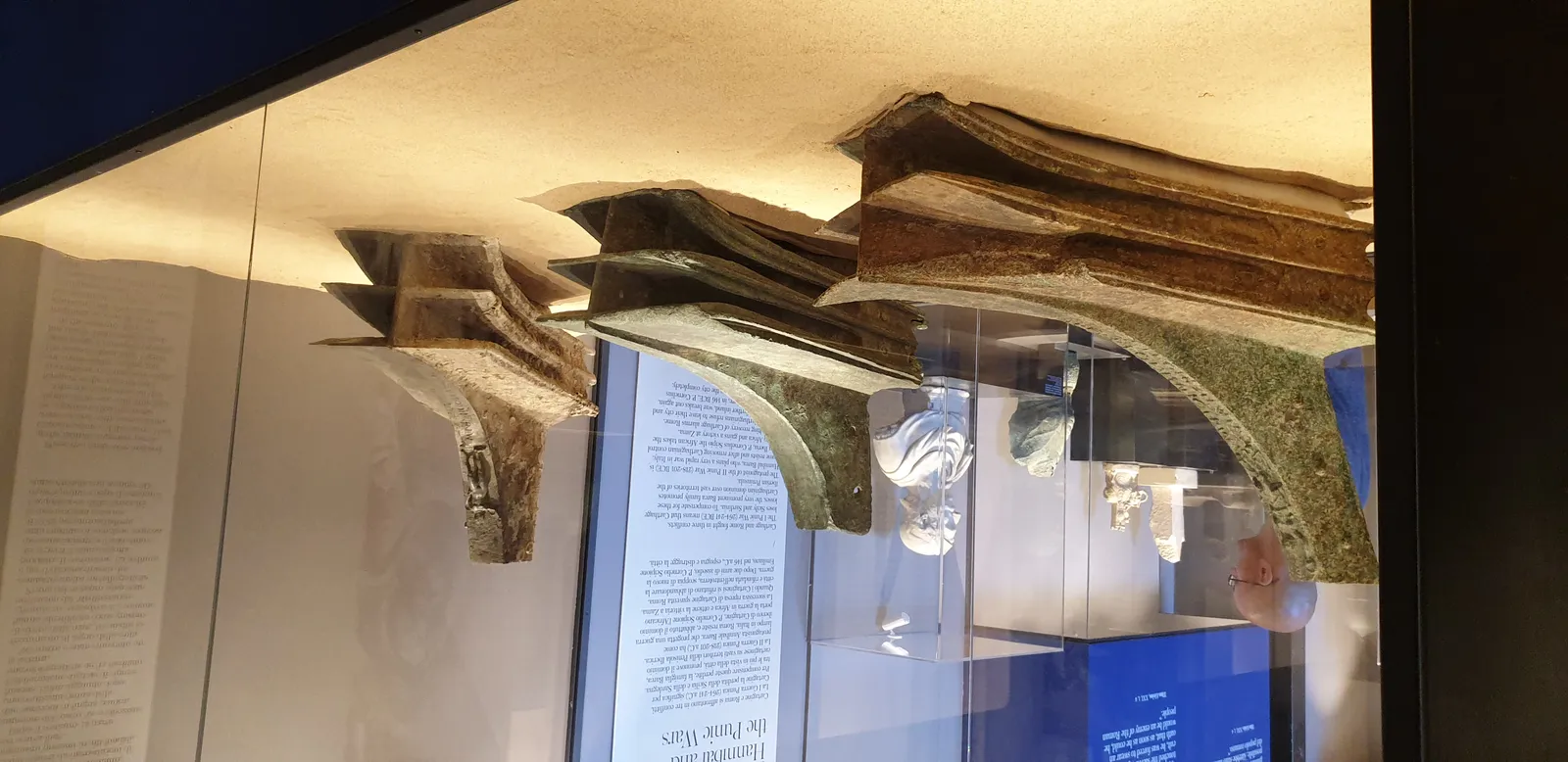
what is not in the texts is on the seabed. since 2005 the soprintendenza del mare and the rpm nautical foundation have been surveying the bottom off the aegates: twenty-seven bronze rams, where before only three were known worldwide. eight carry a legible inscription: seven in latin —naming the quaestors who approved the piece— and one in punic. those who have measured them attribute them to ships no bigger than a trireme, not to the quinqueremes of the account. they prove where the battle was fought and with what; how many ships went down is still a matter for the texts.
carthage, with no fleet and no way of supplying sicily, gave hamilcar full powers, and he sued for peace. what lutatius signed was moderate: evacuate sicily, return the prisoners without ransom and pay two thousand two hundred talents over twenty years. it was the roman people who refused it, and their commission of ten halved the term, added a thousand talents and demanded the islands between sicily and italy. pure revenge, says the video; polybius calls them «slight alterations», though he specifies that every one of them ran towards greater severity for carthage. what that peace sowed in hamilcar’s house is tomorrow’s story.