

for almost two years the roman legions formed up in sicily facing the enemy and did not dare attack. the sight of a single elephant was enough to make them remember how regulus had ended.
the detail comes from polybius and is worth pausing on, because it describes something that rarely appears in military histories: a collective paralysis. the terror xanthippus sowed on the bagradas was still intact five years later. the consular armies deployed near lilybaeum and selinus, saw the carthaginian elephant corps in front of them and refused to give battle. this was not individual cowardice; it was an entire fighting force that had stopped believing it could win.
summer of 250 bce. the carthaginian general hasdrubal, son of hanno, marched on panormus —modern palermo, by then in roman hands— with some thirty thousand men and a large elephant corps. inside was the proconsul lucius caecilius metellus. hasdrubal believed him terrified, and that was exactly what metellus wanted him to believe.
metellus did not defeat the elephants. he defeated the idea that elephants were invincible.
metellus feigned dread and shut himself behind the wall until hasdrubal, confident, crossed the river and planted his beasts in front of the city. that was the trap. metellus had had an enormous ditch dug at the foot of the wall and posted his light infantry there with a single order: to put as many javelins as possible into the elephants and then take cover in the trench. from inside, the citizens carried bundles of darts up to the wall —ammunition without end—. riddled with wounds, with no room to charge and nobody to reach, the animals went mad, turned around and trampled their own army. then metellus came out through the gate and struck the exposed flank. hasdrubal was crushed.
it is worth saying where the certainty ends. the number of beasts captured shifts from source to source, between sixty and more than a hundred and forty, and polybius, pliny and frontinus do not tell the same story in the details; there is even a tradition that metellus ferried them across to italy on rafts mounted on wine jars, which sounds more like a memorable anecdote than a logistical report. what is not in dispute is the effect.
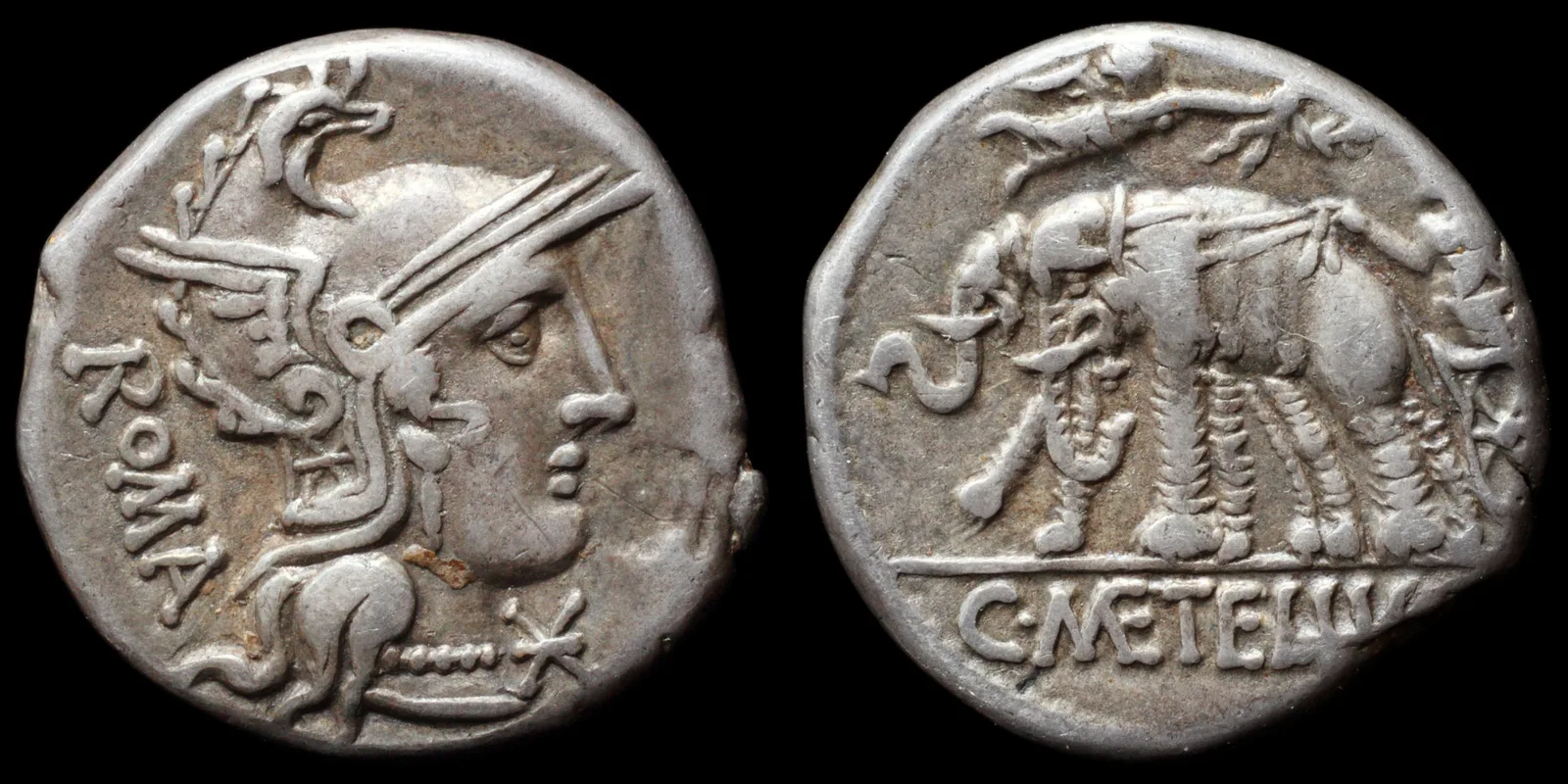
metellus paraded the elephants in his triumph, the animal became the emblem of the caecilii and went on appearing on their coins for generations afterwards, and the legions looked carthage in the face again. the victory that matters here is not tactical but psychological: a weapon is invincible only for as long as nobody has seen it beaten. that recovered confidence, though, was about to run aground on a harbour called drepana, and on account of some chickens.