

rome had the war won. it did not lose it on the battlefield but at the negotiating table, through the sheer arrogance of a general in a hurry.
it is late in the year 256 bce. after the naval victory at cape ecnomus, the legions of the consul marcus atilius regulus had landed in africa, laid waste to the fields of carthage and were camped practically at the gates of the city. polybius is explicit about what happened next, and the detail matters: it was regulus himself who opened the negotiations, anxious to close the war before his successor arrived and carried off the glory of having ended it.
he had the victory in his hand. he imposed terms so abusive —so calculated to humiliate— that carthage preferred to gamble its existence rather than sign them. it is a mistake that recurs throughout military history: confusing having the advantage with leaving the enemy no way out. an adversary who cannot surrender has nothing left but to fight.
an enemy you will not let surrender has nothing left but to fight to the end.
in desperation, the carthaginians hired a spartan mercenary named xanthippus. what he brought was not a stroke of genius or a new weapon but something far more prosaic and far more lethal: he reorganised the punic chain of command, drilled the troops in greek discipline and —above all— chose the ground. he drew the roman army off the hills, where the heavy legionary infantry was all but unbeatable, and forced it to fight on an open plain.
in the spring of 255, beside the river bagradas, xanthippus deployed his nearly one hundred war elephants in front of the centre and the cavalry on the wings. the charge broke the roman front and the punic cavalry, far superior, closed the ring. the legions of regulus were annihilated. regulus himself, by then proconsul after his command was prorogued, was taken prisoner.
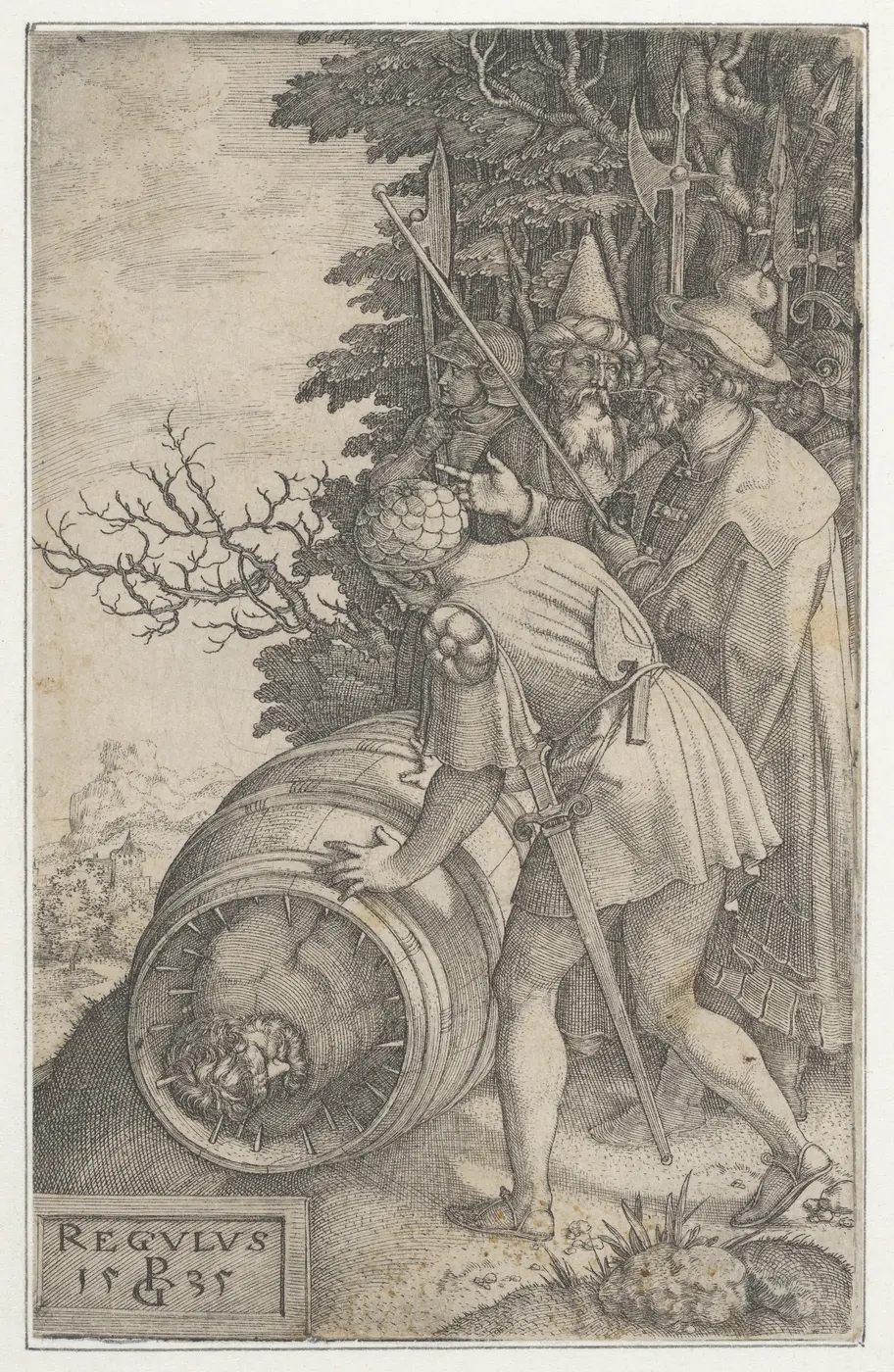
it is worth saying what was later made of this man. the rome that came after turned regulus into a secular saint: the legend —told by cicero and horace, not by polybius— has it that the carthaginians sent him to rome on parole to negotiate an exchange of prisoners, that he advised the senate to refuse it, and that he then returned to carthage of his own accord to die under torture rather than break his oath. polybius, the contemporary source and the best informed, mentions none of it. modern scholarship treats the episode as a moral exemplum built generations later. the historical regulus is no martyr of his given word: he is a general who had the war won and threw it away out of arrogance.
when the disaster became known, the senate hurriedly sent an enormous fleet to rescue the survivors. the operation worked. what nobody foresaw was what awaited that fleet on the voyage home.