

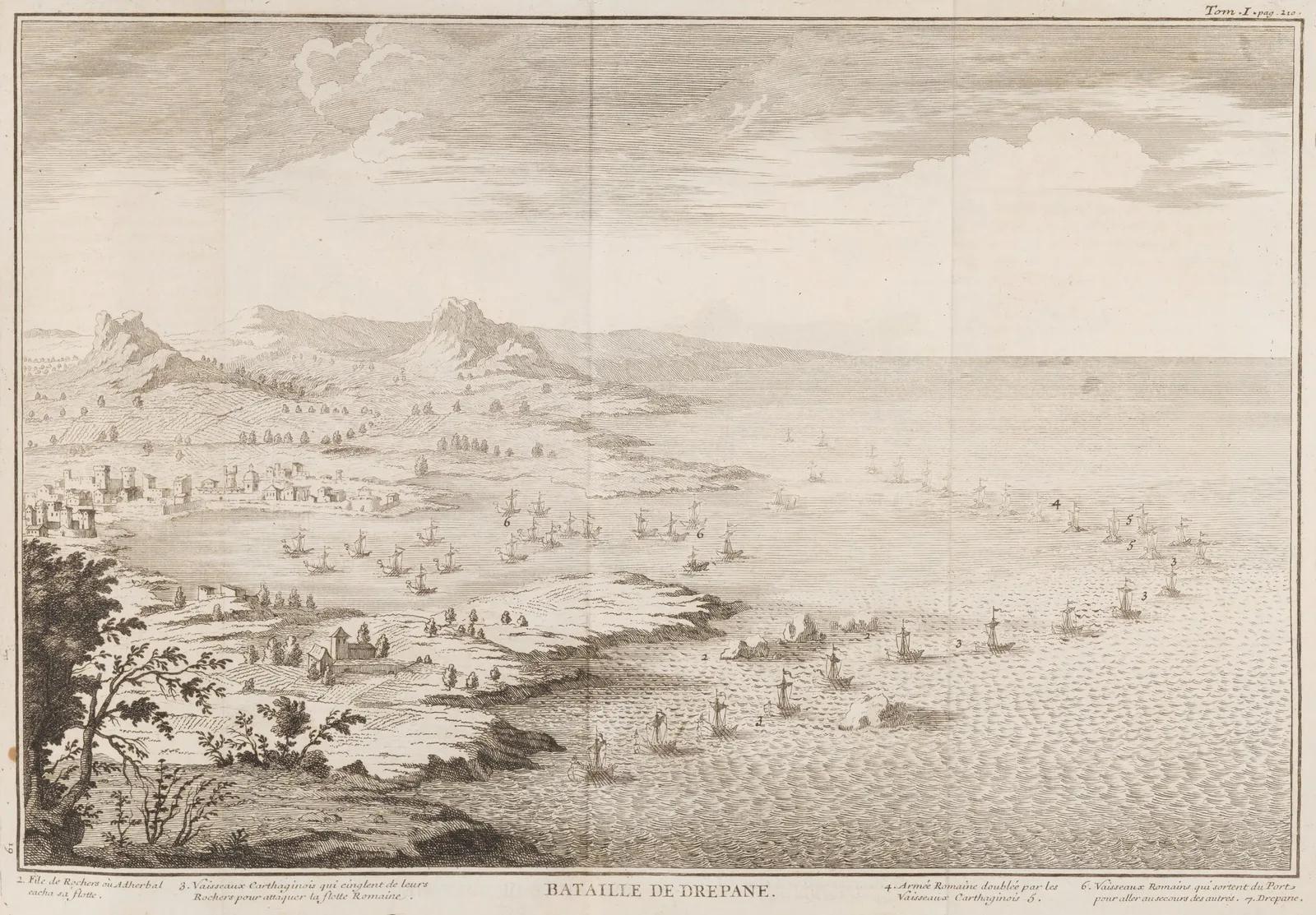
the story everyone remembers says that rome lost an entire fleet because a consul lost his temper with some chickens that would not eat their breakfast. the defeat is strictly true. with the scene of the chickens one has to be more careful.
the year is 249 bce. after a decade of naval disasters, rome was keeping its navy afloat with difficulty, and from the blockade of lilybaeum it was preparing a surprise strike against drepana, the carthaginian harbour at the western tip of sicily. in command was the consul publius claudius pulcher.
before a battle, roman religion required that the will of the gods be consulted through the pulli, the sacred chickens that travelled with the army. if they ate greedily and let grain fall from their beaks —the tripudium solistimum— the omen was favourable; if they refused to eat, it was not. according to cicero, that morning the chickens did not eat, and claudius pulcher had them thrown overboard with a line that became famous: if they will not eat, let them drink.
the defeat is in polybius. the chickens are not.
and there is the nuance that is almost always lost. the one who tells the anecdote is cicero in de natura deorum, writing two centuries after the event and with an argumentative purpose of his own: he is discussing divination, and the episode serves him as an example. polybius, the source closest to the war and the best informed about it, narrates the battle of drepana in detail and never mentions the chickens at any point. that does not prove the story false —the contempt of the claudii for religious form was a commonplace of roman propaganda— but it does make it a later tradition rather than a dispatch from the campaign.
what is documented is the defeat, and no impiety was needed to explain it. the roman fleet entered the bay of drepana in disorder and without having scouted the ground. the carthaginian admiral adherbal, instead of letting himself be bottled up, took his ships out through the harbour’s other exit, won the open sea and pinned the romans against the coast itself, with no room to manoeuvre or to row. carthage captured or sank ninety-three ships. it was the only great carthaginian naval victory of the entire war.
rome was left without a fleet, without public money to rebuild it and with morale on the floor. claudius pulcher was prosecuted on his return. and a couple of years later, with the war stalled in sicily, carthage would put the command of the island in the hands of a general who would turn the life of the legions into a hell: hamilcar barca, the father of hannibal.