

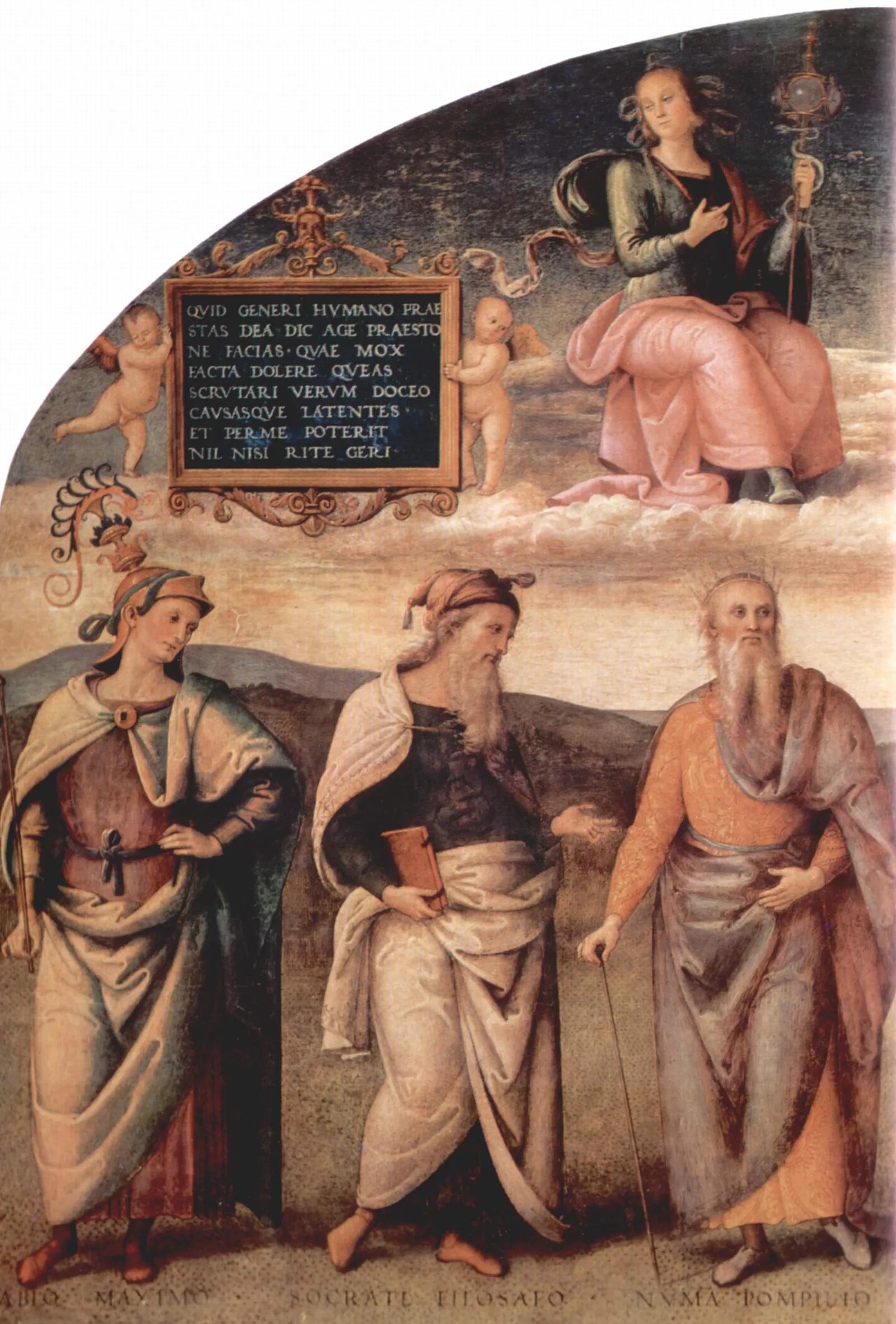
after three defeats in a row, rome handed command to a man whose strategy against hannibal fitted into a single order: do not give battle. quintus fabius maximus verrucosus, dictator in the summer of 217 before our era, spent six months following the carthaginian army through the hills without accepting a pitched battle, while his fellow citizens accused him of cowardice. he won no great battle, and even so posterity made him one of its heroes.
his surnames are explained by plutarch: verrucosus, for a wart above his lip; and, as a child, ovicula, «the little lamb», for his calm and slow character. he came from an illustrious family: livy calls fabius maximus rullianus, the victor of sentinum, his grandfather, and plutarch makes him fourth in the line descending from him. it is worth not confusing them.
his appointment has fine print. after trasimene and the loss of centenius’ cavalry, livy reports, the city resorted to the dictator, a remedy that had long been out of use; and since the only living consul was far away, with italy occupied by punic arms, the people elected him, something that had never been done. livy himself corrects this a few chapters later: only a consul could appoint a dictator, so what the people elected was someone to act in his place, a prodictator, and it was his descendants who, in inflating the titles of the family portrait, let him be thought a dictator. polybius, for his part, explains the office to his greek readers: twenty-four lictors instead of twelve, and an absolute command before which all magistrates gave way except the tribunes of the plebs. as master of horse, his second in command, he was accompanied by marcus minucius rufus.
polybius describes the strategy without ambiguity. hannibal offered him battle as soon as he arrived, near aecae, and no one came out of the roman camp. fabius, he says, had decided not to take risks or accept a pitched battle, because he would have lost it. the reasons polybius attributes to him are not the video’s: the enemy army had been fighting since childhood, it was led by a general brought up among those men, it had won many battles in hispania and had already beaten the romans twice in succession; and, above all, its only hope of salvation lay in victory. further on he adds the superiority of its cavalry. what rome had on its side were inexhaustible resources of supplies and men.
so fabius marched in parallel along the heights, occupying the best positions before anyone else, not letting his soldiers forage or scatter, and picking off the enemy foragers who strayed from their camp. plutarch sums it up: with time, money and men to spare, he meant to wear down little by little an enemy of scant resources. the small victories, polybius notes, also served to restore the spirits of troops broken by defeat.
minucius called him timid instead of prudent; the soldiers, hannibal’s paedagogus.
hardly anyone liked it. polybius reports that minucius, echoing popular opinion, branded him cowardly and slow. livy says it with a word that would end up as fabius’ title: minucius called him sluggish instead of cunctator, «the delayer», and timid instead of prudent. the soldiers, according to plutarch, mocked him as «hannibal’s paedagogus», the slave who follows the child everywhere.
hannibal then went down into the rich plain of falernus, in campania, to lay it waste before the romans’ eyes. fabius thought he had him trapped and occupied the pass by which he would have to leave. polybius tells how hannibal escaped: at night he tied bundles of burning wood to the horns of some two thousand oxen and drove them up the slope, and while the romans guarding the pass ran towards the lights, he crossed the defile with all his plunder. fabius, who suspected a trap, did not stir from his camp. the reproaches grew louder, and shortly afterwards he had to go to rome to perform some sacrifices. he left the army to minucius with a warning: he would do better to avoid a disaster than to harm the enemy.
minucius attacked hannibal’s foragers near gerunium, close to luceria, inflicted heavy losses on them and even assaulted their camp. the news reached rome exaggerated. polybius reports that the people, convinced that the problem was the general’s excessive caution, gave minucius the same power as the dictator: two dictators for a single front, something that had never happened. livy and plutarch give the proposal a name, that of the tribune of the plebs marcus metilius, a relative of minucius according to plutarch; livy adds that his only defender in the assembly was gaius terentius varro.
fabius came back without changing his mind and let minucius choose: command on alternate days or divide the army. minucius chose to divide it. hannibal, who knew of the rivalry, occupied a hill between the two camps and hid by night in the hollows of the ground five hundred horsemen and some five thousand foot. minucius took the bait, and when the ambush burst out on all sides, fabius came up with his legions and saved his fellow citizens. livy tells the ending: minucius led his legions to fabius’ camp, called him father in front of everyone and handed the command back to him; plutarch repeats the scene. and livy attributes a line to hannibal: that cloud that always settled on the peaks had at last unleashed the storm.
after six months, fabius handed the army over to the consuls. for the following year lucius aemilius paullus and the same varro were elected, and the dictators left office. polybius tells of the senate’s decision: to give battle, with eight legions, something rome had never done. fabius’ strategy had not been defeated; it was simply being abandoned.
the rehabilitation came later. in recording his death, years afterwards, livy quotes ennius: unus homo nobis cunctando restituit rem, one man, by delaying, restored the state to us. and plutarch takes from posidonius the image that gives this entry its title: the romans called fabius their shield, and marcellus their sword.