

the month of july you see today on your phone screen was not called that. it was renamed on purpose, so that one single man would be impossible to forget. and it worked: two thousand years later, half the planet pronounces his name thirty-one days a year without realising it.
it happened on a day like today, the 12th of july in the year 100 before our era, according to the traditional dating. in the subura —one of the most crowded and working-class neighbourhoods of rome, not an aristocratic enclave— gaius julius caesar was born. it was not the neighbourhood that was patrician, but his lineage: the gens iulia, which boasted of descending from the goddess venus through the trojan hero aeneas. history remembers him as the conqueror of gaul and the dictator who buried the republic. but his quietest mark, the one we still use every morning, he left on the calendar.
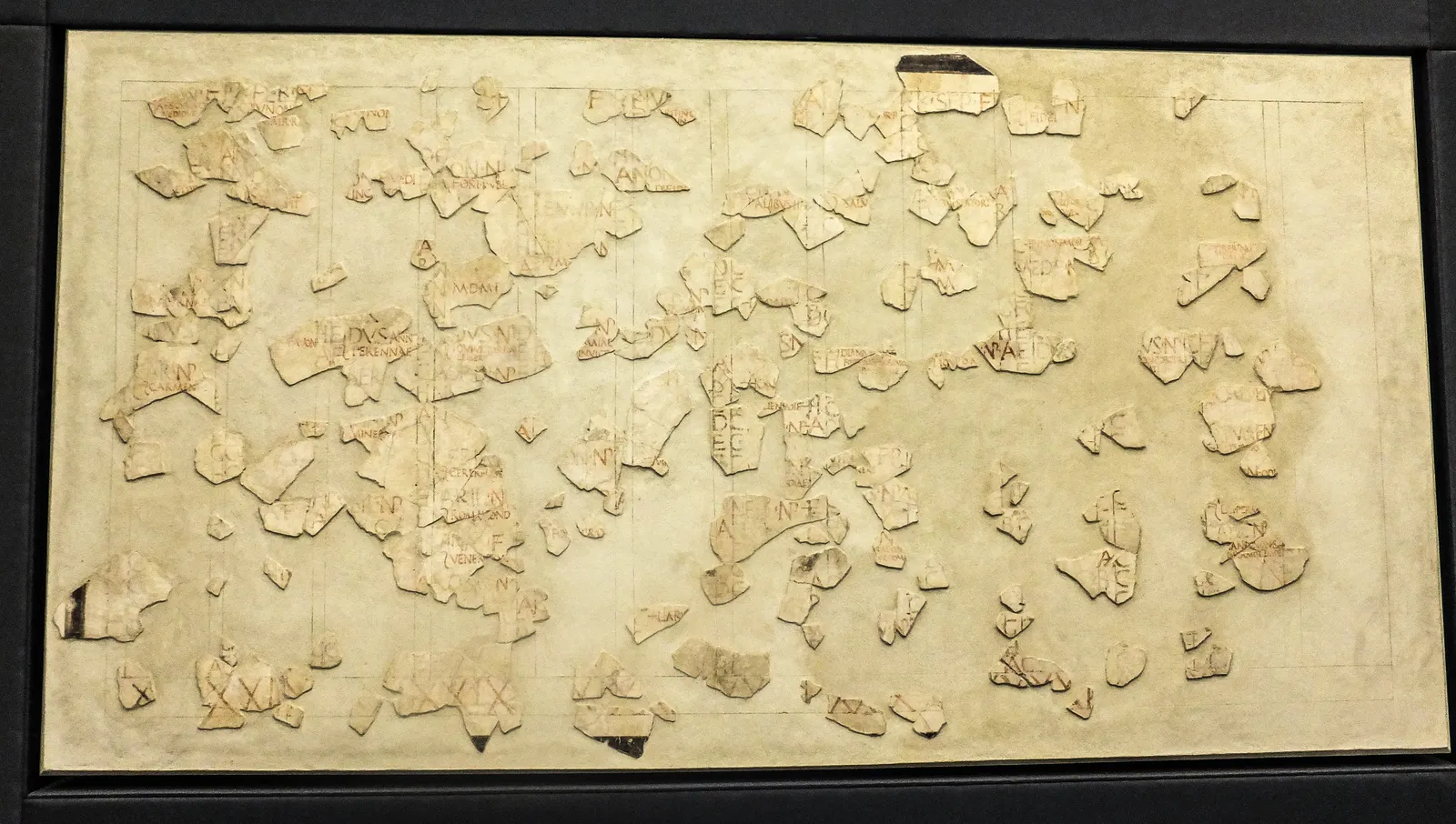
the romans called the month at the peak of summer quintilis: the fifth month of a calendar that began in march. the problem was that that lunar year was drifting, slipping little by little away from the sun, until the harvests and the festivals no longer fell in their season. and the one who was supposed to correct it was, precisely, the college of priests whose supreme head —the pontifex maximus— was caesar himself. in the year 46, newly returned from the war and advised by the astronomer sosigenes of alexandria, he swapped the lunar year for the solar year of three hundred and sixty-five days. to realign the seasons all at once, that year had to last four hundred and forty-five days: macrobius rightly called it “the last year of the confusion”.
he did not insert a new month nor push the others along. it was the old quintilis, under a different name, in the same place as always.
the renaming came in the year 44, the same year as his assassination. a law promoted by mark antony —the lex antonia— erased the name quintilis and replaced it with iulius, july, because it was the month in which caesar had been born. it is worth not fusing two things that are often mixed up: that was merely a change of name over the already-reformed calendar, not an ascent to the heavens. his official consecration as a god, the divus iulius, would not come until two years later, in 42. first they gave him the month; then, the altar.
the dying republic tried to erase him first with knife-blows: twenty-three, according to the count attributed to the physician antistius, in a session of the senate convened not in the curia of the forum, but in the curia of pompey. we deal with that chaos in another ephemeris; what matters here is that the manoeuvre backfired on them. at the games held shortly afterwards in his honour, a comet appeared —the sidus iulium that pliny records— and the people took it for the soul of caesar rising to the sky.
and here the usual nuance is in order: that comet was not merely a fortunate omen. his great-nephew octavian, the future augustus, knew how to squeeze it until he turned it into a propaganda machine. if the comet was caesar made star, then caesar was a god; and if caesar was a god, octavian —his adopted son— became, literally, divi filius, “son of the divine”. the wonder in the sky was thus transformed into a political argument for inheriting power. much of what we take for granted about the apotheosis of caesar comes, in truth, filtered through the one who gained the most by telling it.
the ending carries the usual bitter irony. the conspirators believed that, by plunging in their daggers, they were erasing caesar from history. they achieved the opposite: they fixed him at once in the firmament and in the calendar, and forced the entire world to name him every summer, thirty-one days in a row, forever. they meant to bury a man and instead gave him immortality twice over. few assassinations of great men have failed with such elegance.