

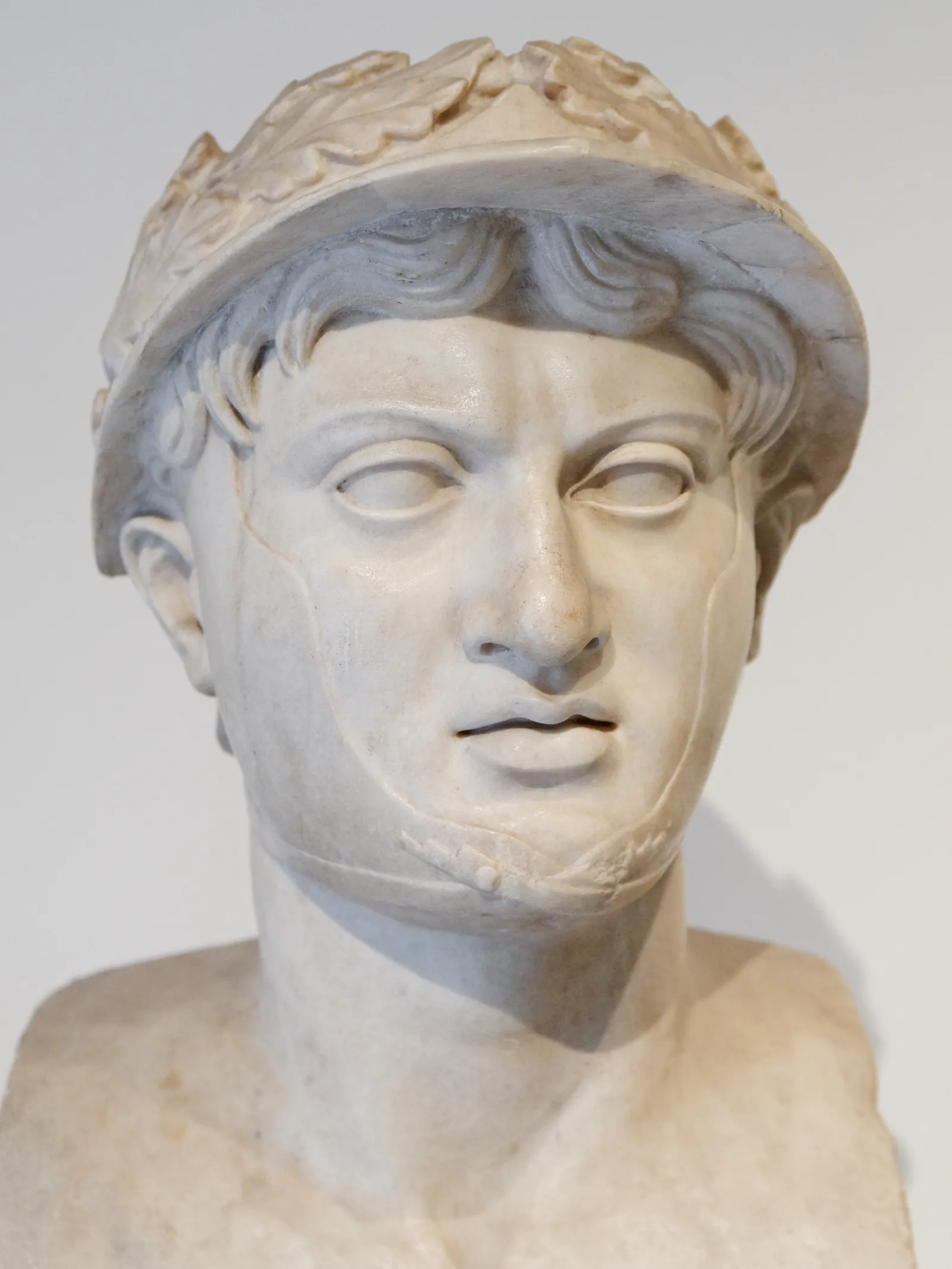
winning a battle can be the quickest shortcut to losing a war. no one proved it as starkly as pyrrhus, king of epirus, on a plain in apulia around 279 bce. he had crossed the adriatic to defend greek tarentum against roman expansion, and a year earlier, at heraclea, he had torn the legions apart with his phalanx and his elephants. asculum was to be his second triumph. it was also to be the beginning of his ruin.
after the disaster at heraclea, any sensible ancient state would have come to terms. rome did not. the senate, so tradition holds, listened to pyrrhus offer peace through the mouth of his envoy cineas, and very nearly gave in; it was the old and blind appius claudius the censor who, carried into the senate by his sons, rebuked it for parleying with an invader while he still trod italian soil. the assembly rejected the deal. in its place it voted a fresh levy and sent another consular army, under publius decius mus and publius sulpicius saverrio, to seek out pyrrhus in apulia. the king, who expected a surrendered empire, met instead another fresh host ready to die.
the fighting, according to the most detailed account, that of plutarch, lasted two days. on the first pyrrhus fought on bad ground — a fast-flowing river with wooded banks where his elephants and cavalry could barely manoeuvre — and the day ended undecided. on the second he secured the level field in advance, deployed his wall of pikes once more and hurled the beasts against the roman lines. the romans had come prepared: plutarch describes wagons fitted with iron tridents and incendiary grapples to check the great animals, but the phalanx, technically superior in open country, broke through again. as night fell, pyrrhus held the ground. he had won for the second time. dionysius of halicarnassus, it should be said, tells a different version — a single day, with no clear outcome, in which the romans even broke the enemy centre — so the detail of the second day rests on plutarch alone.
he won the map every time he fought; he lost the war every time he won.
the wound lay in the ledgers, not on the field. pyrrhus had lost a vast share of the army with which he had crossed the sea and, worse still, almost all of his officers and friends. they were professional phalangites and mercenaries hardened over years, impossible to replace so many days’ march from home. the precise figures depend on whom one believes, and they are worth attributing: hieronymus of cardia gave six thousand roman dead; pyrrhus’s own memoirs admitted three thousand five hundred and five of his own fallen; dionysius put the total on both sides above fifteen thousand. whatever the exact tally, the blood pyrrhus shed could not be replaced the way rome recruited its own: rome could lose six thousand men, pass another levy and replace them within weeks with citizen-farmers and italian allies bound by treaty to supply soldiers; pyrrhus could not replace a single one of his, each fallen far from home at the end of a whole life of war.
from that day comes the phrase that made him immortal. according to plutarch, when someone congratulated him on the triumph, the king replied that one more such victory over the romans would leave him utterly ruined. hence “pyrrhic victory”: the success that costs more than it is worth, won on the field and lost in the reckoning. pyrrhus, the general almost all the ancients reckoned the most brilliant of his age, had run up against something his tactical genius could not beat: a city with a practically inexhaustible reserve of men and the political will to spend it.
a historiographical caveat is in order, because popular accounts tend to tell asculum as a single crisp scene. we do not have one. no contemporary narrative survives: the three versions we keep — plutarch, dionysius, cassius dio — are far later and disagree on the essentials, from the number of days to the number of dead. the idea that rome won “by demography” is, besides, in large part a retrospective reading: the calculation of italy’s enormous reservoir of men comes above all from polybius, who wrote generations later and coldly compared the phalanx with the maniple. what does hold as the historical core is the important thing: pyrrhus won the battle, could not sustain the losses and, after a detour through sicily, ended up leaving italy without having broken rome. the phrase sums up honestly what the figures only hint at.
the irony would last for centuries. pyrrhus had come to teach rome how war was waged in the hellenistic manner, with kings, elephants and textbook manoeuvres; he left having taught rome, against his own will, what its true weapon was. not the phalanx nor the genius of a single man, but a whole peninsula turned into a quarry of soldiers. the king who won every battle and lost the war left behind a phrase we still use every time a triumph costs us too dearly, and a republic that, barely a decade later, would cross the sea to dispute with carthage the mastery of the mediterranean. asculum was not the end of rome: it was the rehearsal of its method.