
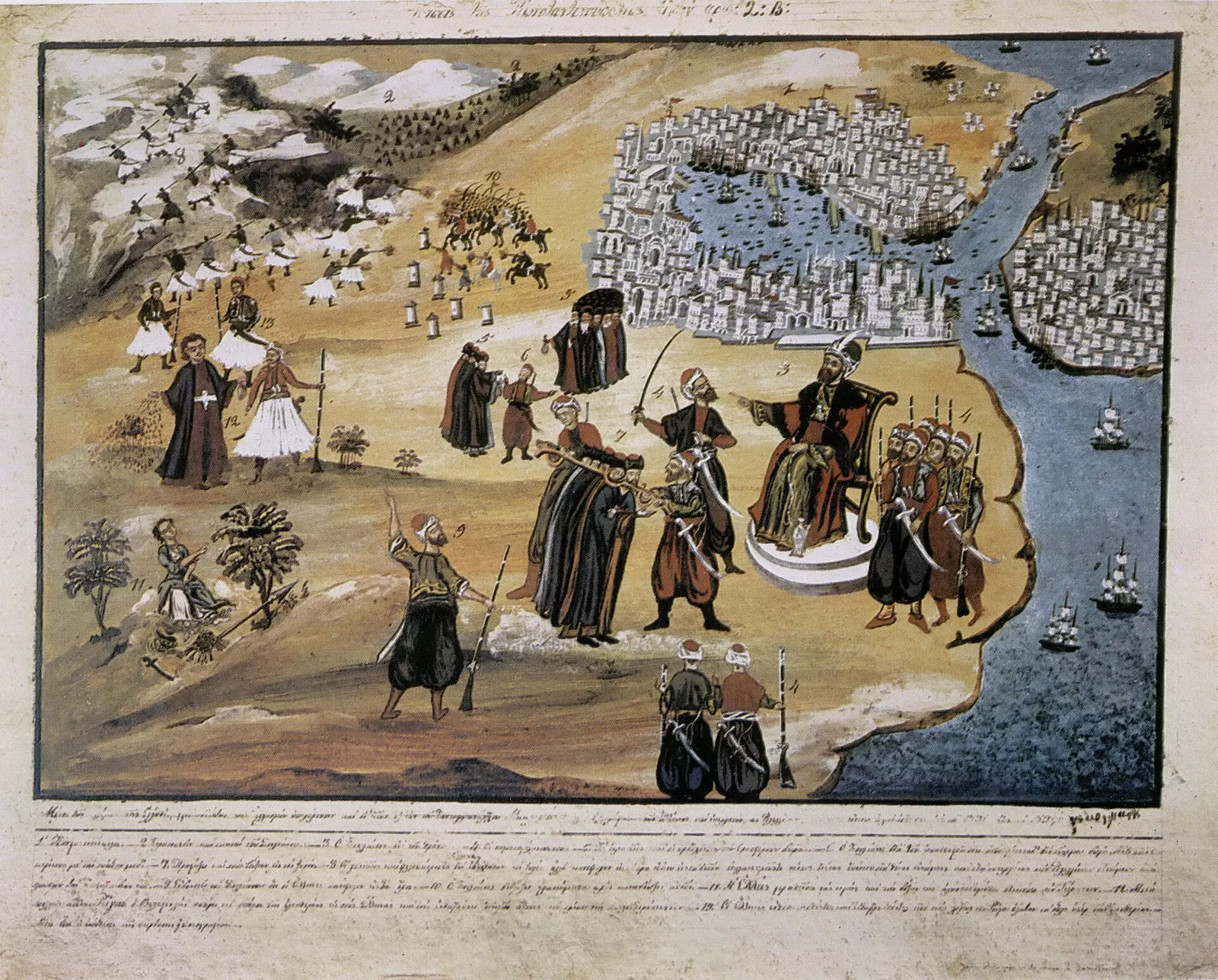
the roman empire did not disintegrate peacefully in 476. its core endured nearly a millennium more and was dismantled under the roar of heavy artillery. on 29 may 1453, after fifty-three days of siege, ottoman troops blew through the walls of constantinople, and the last institutional heir of augustus died sword in hand in the thick of combat.
to understand the scene one has to accept an idea popular writing tends to skip over: the byzantine empire was the roman empire. its inhabitants did not call themselves “byzantines”, a label invented by european scholars centuries later; they called themselves rhomaioi, romans, spoke greek but governed by roman law and considered themselves the unbroken heirs of the state founded on the tiber. what fell in 1453 was not just any medieval state: it was, in the literal and legal sense, the last living piece of rome.
by then that empire was a shadow. centuries of war, the catastrophe of the fourth crusade that had sacked constantinople itself in 1204, and the relentless advance of the ottomans had reduced it almost to the walled city and little more. facing it stood mehmed ii, a twenty-one-year-old sultan obsessed with conquest, who brought to the siege a new and devastating weapon: an artillery of colossal bombards capable of bringing down the legendary theodosian walls, which in their thousand years had never been breached by land.
the empire did not surrender on parchment: it went out sword in hand.
inside the city was constantine xi palaiologos, defending with a few thousand men, many of them genoese and venetian mercenaries, a perimeter that would have demanded ten times as many. most rulers in his situation would have negotiated surrender or fled by sea while they still could; in fact, mehmed offered to spare his life in exchange for handing over the city. constantine refused. faithful to the old roman stance in the face of an ultimatum, he answered that he would give up anything except the city, which was not his to give.
when the walls gave way at dawn on 29 may and the janissaries poured in, the emperor made the gesture that would turn him into legend: he stripped off the imperial insignia and the purple robes so that nobody could recognise him or capture him as a trophy, and threw himself sword in hand into the final charge alongside his soldiers. his body was never found among the fallen. refusing to be a dynastic hostage, he chose to vanish into the anonymity of combat, indistinguishable from any other defender.
the chronicles, mind you, must be read with care: byzantines like doukas and chalkokondyles mix the account of events with the epic of the martyr, and the image of the emperor dying like a common soldier is in part literary construction. but history, this time, grants him the ending legend attributes to him. there was no abdication, no treaty, no king in exile. the line that began with augustus, almost one thousand five hundred years earlier, did not end by signing a capitulation: it ended with a crownless man charging towards his death rather than hand it over.