
the religion of the roman republic did not console: it bargained. it was a system of exact pacts with the divine, in which, in return for victory, the gods might demand the highest price possible: the life of the head of state himself. in the summer of 340 bce, at the foot of vesuvius, one of rome’s two consuls decided to pay it. not out of blind despair, but following a ritual with a name, a formula and a priest: the devotio.
the setting was the latin war. the cities of latium, once allies, had turned against rome demanding political equality, and rome marched to crush them alongside her new samnite allies. the two consuls of that year were titus manlius torquatus and publius decius mus, the latter a plebeian homo novus from a family without illustrious ancestors. livy tells that during the campaign both generals had the same vision in their sleep: the side whose commander offered up himself and the enemy army to the gods of death would gain the victory. once the haruspices had been consulted, the consuls agreed between themselves that the first whose wing began to give way would be the one to sacrifice himself.
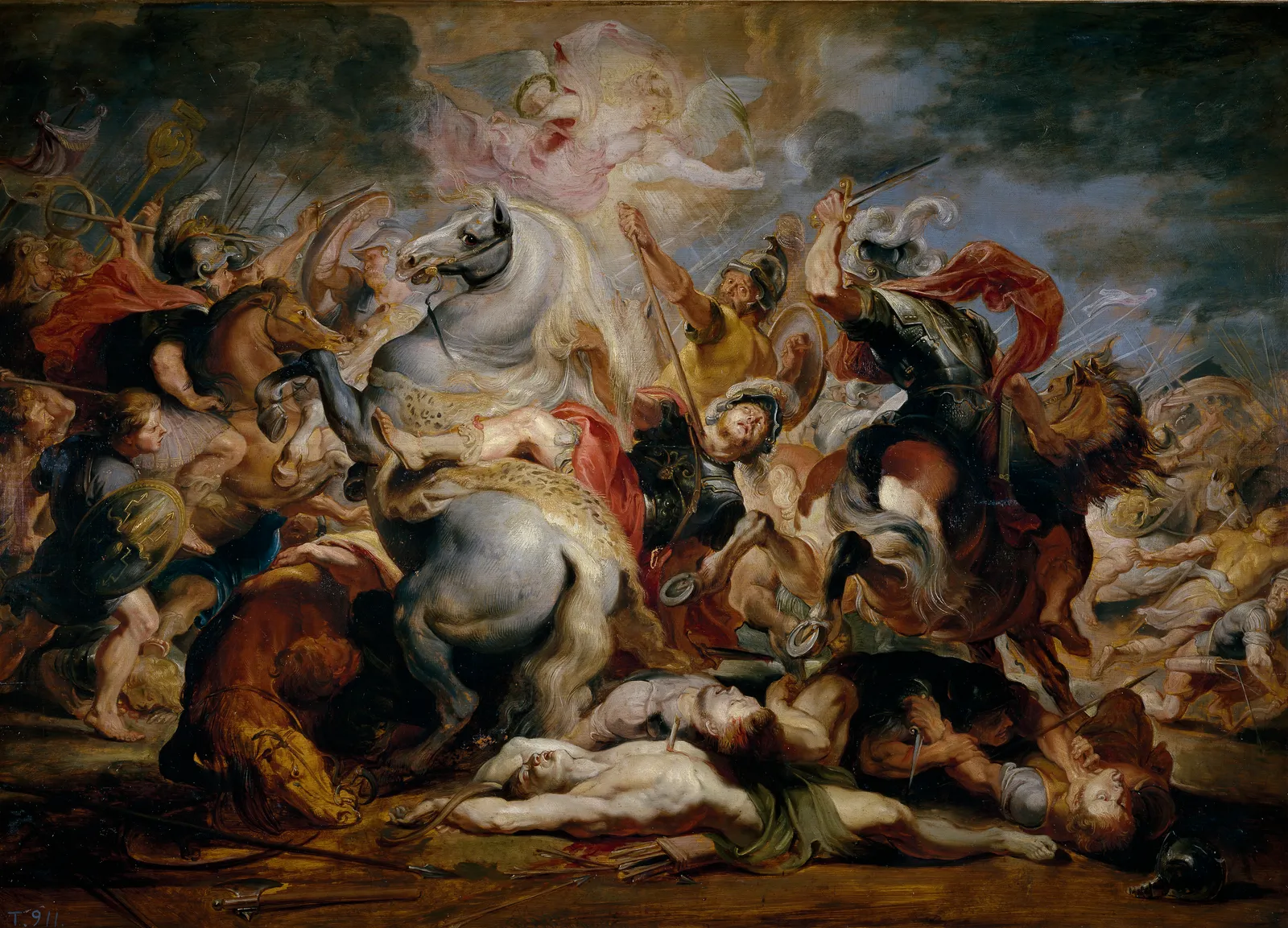
when the armies clashed near vesuvius, at the place the sources call veseris, it was decius’s left wing that buckled. true to the pact, the consul called upon the chief pontiff, marcus valerius, to dictate the words and the gestures to him. and livy hands down the full ritual, which is what gives this episode its shiver of antiquity: decius covered his head with the toga, stood upon a spear and repeated, phrase by phrase, an archaic formula that surrendered his person and the enemy legions to the di manes and to tellus, mother earth. then he mounted his horse, spurred it on and flung himself alone at the enemy’s centre.
the aim was not to win the duel, but to fall while dragging the gods of death down upon the opposing ranks.
that was precisely the logic of the rite. the “devoted” consul did not seek to survive: he sought to die, because his death sealed the contract. in falling, he discharged the divine wrath, which ceased to weigh on rome and came crashing down instead upon the latins. mary beard, john north and simon price, in religions of rome, read the devotio as the most extreme form of the roman vow, that “i give so that you may give” which structured the whole relationship with the sacred: here what was handed over was neither an ox nor a portion of the spoils, but the general in person. the romans, according to the account, saw their commander fall and fought with a fury livy describes as superhuman; broken by that onslaught and by manlius’s tactical plan, the latins were at last undone.
that campaign passed into roman memory as a compendium of religious and military severity. the other consul, manlius torquatus, had his own son executed for accepting a duel against orders, founding the proverb of the implacable “manlian discipline”. and decius remained the model of the magistrate who gives up the most valuable thing a citizen can give. the devoti of his line became the emblem of a civic virtue that mingled patriotism and sacred terror in equal measure.
now for the historiographical caveat, which here is best not skipped. the scene is magnificent, but it rests almost entirely on livy, who wrote more than three centuries later about an age of which rome preserved scarcely any records. and there is a greater problem: tradition holds that this decius’s son, consul in 295 bce, performed an identical devotio at the battle of sentinum, and that yet a third decius attempted it against pyrrhus at asculum. three generations repeating the same extraordinary gesture point for point is too much symmetry not to raise suspicion. gary forsythe, in a critical history of early rome, holds outright that the father’s devotio in 340 is an invented “doublet”, modelled on the son’s — the best-attested episode — to furnish the gens decia with a founding hero. it is worth, then, keeping two things apart: that the ritual of the devotio existed as a religious institution is certain; that this particular consul performed it on this particular field is tradition, not fact.
whether or not the real decius lies buried beneath vesuvius, the episode says something true about rome: that her power rested not on the sword alone, but on the conviction that the gods exacted their due in blood, and that a leader had to be ready to be the coin himself. that faith in the fatal contract would be invoked again — real or legendary — a generation later, when another decius mus covered his head on the plain of sentinum to halt the greatest coalition ever raised against rome.