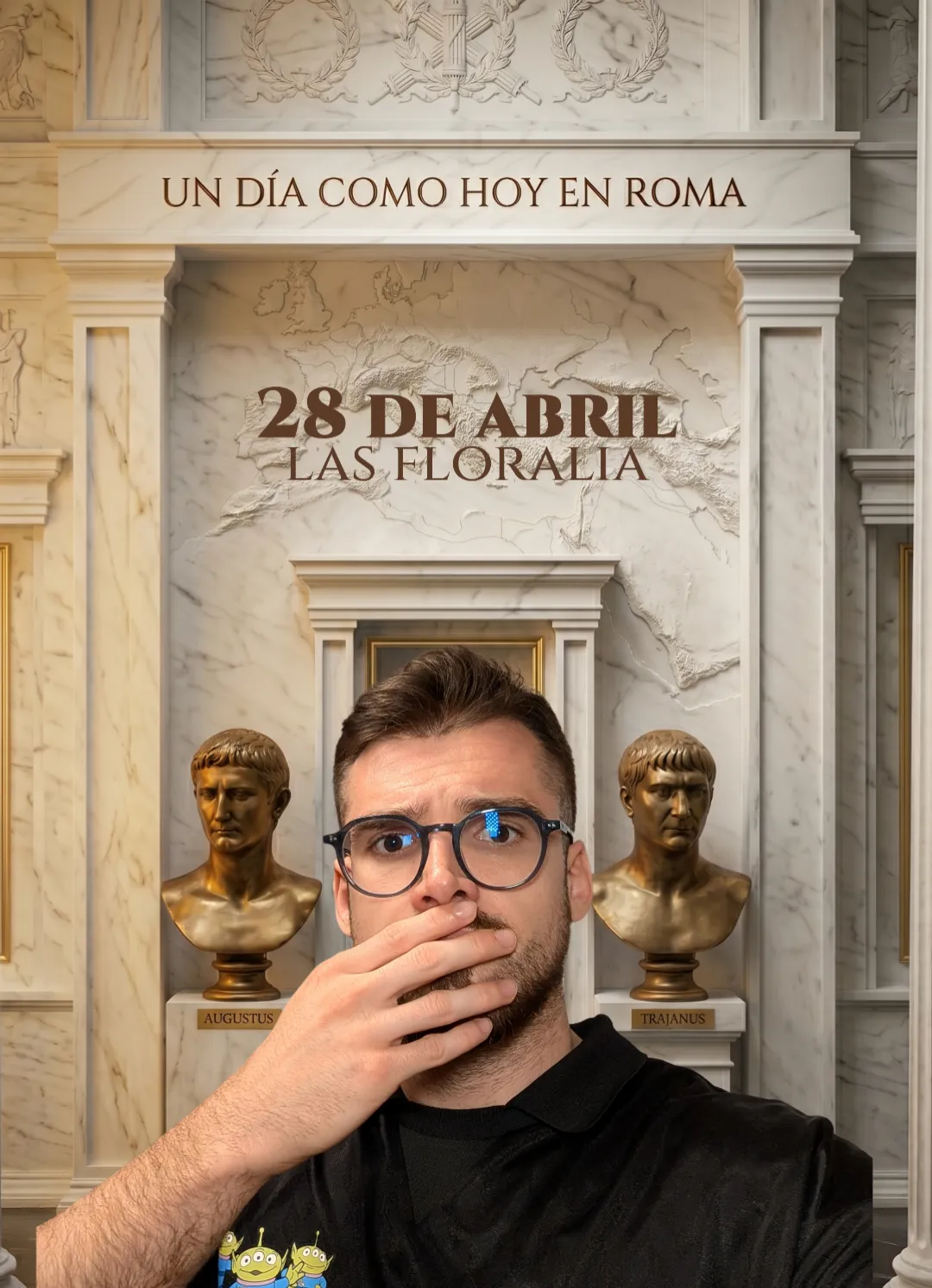


imagine a roman state decree forcing you to take off your serious clothes and allowing the street workers to claim the centre of the city’s greatest public stage. that was the floralia: the festival in which rome, the republic of discipline and gravitas, deliberately suspended its own moral reflexes and let go.
the feast began on 28 april and stretched several days into early may, dedicated to flora, the divinity who governed blossoming, the growth of plants and, by extension, fertility and sex. her cult was ancient, but the ludi florales, instituted occasionally in 240 bce, became annual and permanent in 173 bce, after a season of ruinous winds for flowers and vines, read as a punishment from the goddess for being neglected. rome, once again, set up a festival out of fear its fields would rot. even so, flora’s origin was already disputed among the ancients themselves: the christian lactantius reports —with scandal— that flora may in fact have been a courtesan whose bequest the senate disguised as a cult, against the official story of the temple voted in her honour.
the first rule to fall was the dress code. in roman civil protocol, wearing bright colours was considered unworthy of a serious citizen: white and sober tones marked status and respectability. but during the floralia the sober toga was banned and lively, cheerful, almost provocative garments were required. the city literally changed uniform, as if for a few days it was allowed to be someone else.
the plebeian aediles bankrolled the chaos knowing that social pressure, if not released once a year, ends up exploding.
the focus then shifted to the great stone theatres, and there the festival earned its scandalous reputation. the sex workers of the city enjoyed during the floralia a visibility and a protection they did not have the rest of the year: they headlined shows, dances and mimes without the usual restrictions. from the stands rained down not polite applause but tons of chickpeas, beans and lupins, symbols of fecundity, while the plebeian aediles released hares and goats into the audience, animals associated with overflowing fertility. it was deliberate chaos, loud and obscene, paid for by the plebeian aediles from the fines of the ager publicus and, increasingly, out of the magistrate’s own pocket to win votes.
here a caveat on the sources. much of what we know about the brazenness of the floralia comes from authors writing centuries later and with a moralising agenda: the christian lactantius describes them with horror precisely to denounce paganism, and satirists like juvenal exaggerated as a matter of trade. the most cited episode is told by valerius maximus: the severe cato the younger attended the games one year, and the audience did not dare to call for the ritual disrobing of the actresses while he was present; on hearing about it, cato left the theatre so as not to spoil the party. the anecdote says more about cato’s image than about the spectacle itself.
what is interesting is not the prurience, but the political calculation behind it. rome was a suffocatingly hierarchical and repressed society, and its elites understood that a pressure cooker without a valve ends up bursting. the floralia were that valve: an official and bounded permit to invert the rules, mix the classes and release the tension, with the guarantee that when the party ended each person would dutifully return to their place. the most disciplined state of antiquity funded its own chaos, because it knew it was the cheapest way to keep order intact the rest of the year.