
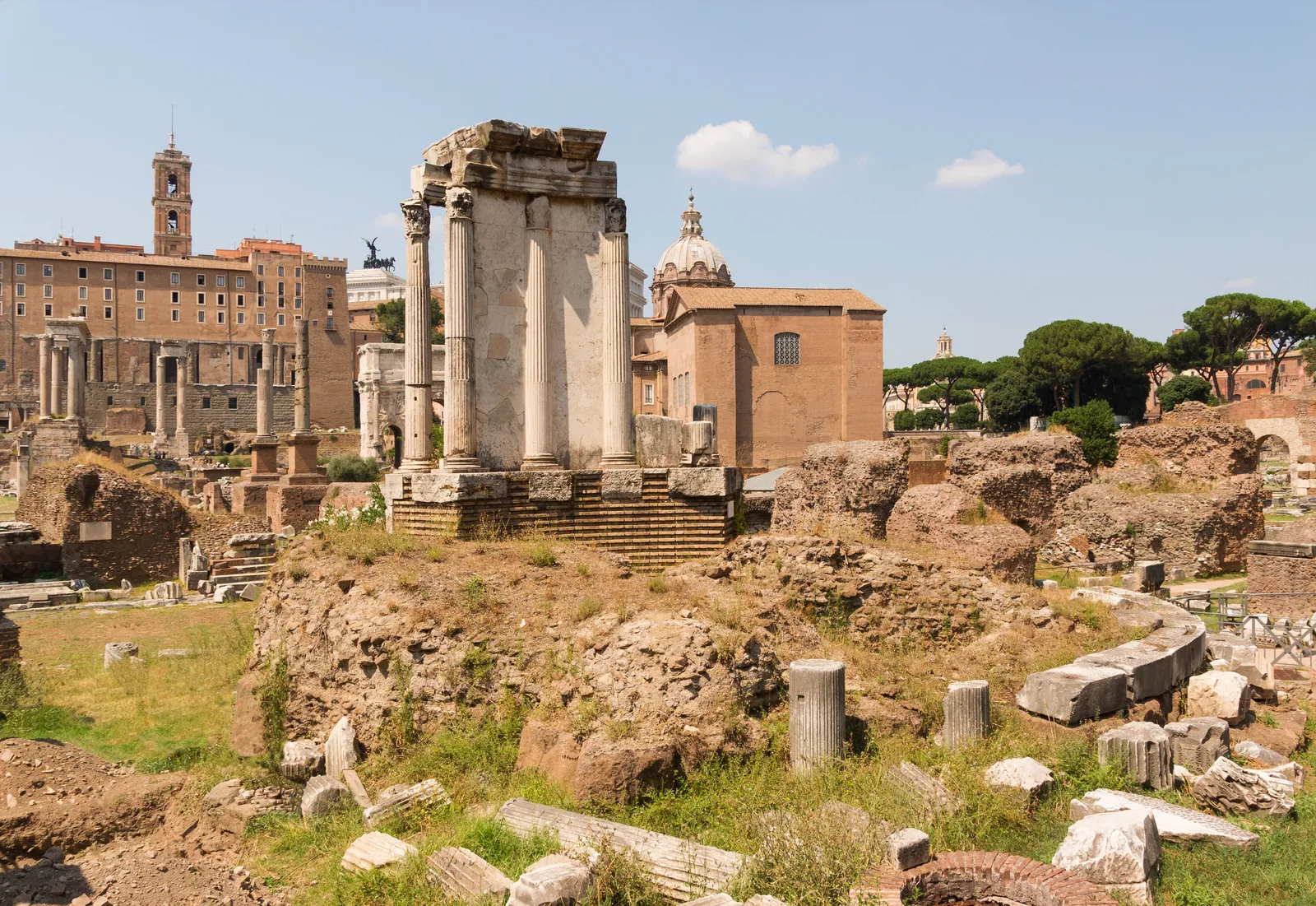
every june, for a handful of days, rome threw open the most closely guarded room in the city. for the rest of the year the holy of holies of the temple of vesta —the penus vestae, a sacred storeroom hidden behind a curtain— was off limits to everyone, and most especially to any man. only during the vestalia was the veil drawn back. the greatest military power in the mediterranean kept there, according to belief, the very guarantee of its existence: a wood fire, burning in the heart of the temple, that must never be allowed to go out.
the festival ran from 7 to 15 june, and the sanctuary stayed accessible throughout; but its central day was the 9th, the day consecrated to the goddess. on that day matrons could enter barefoot to bring offerings, and the three most senior vestals prepared the mola salsa, the toasted, salted flour with which the victims of the public sacrifices were sprinkled. the millers and bakers took a holiday, hung garlands on their millstones and decked with bread the donkeys that turned them. all of this is reported to us by ovid in the sixth book of the fasti, which is at once our best guide to the calendar and a poem deliberately strewn with mythic digressions.
it is the contrast that makes the scene dizzying. rome dismantled entire kingdoms with its legions, yet in religious terms it lived in thrall to a fragile balance: the pax deorum, the peace with the gods, had to be renewed by an exact ritual. as long as vesta’s fire burned and the rites were observed, the city believed itself safe. inside that sanctuary, besides the perpetual fire, were kept the pignora imperii, the pledges that secured rome’s power; the most famous was the palladium, the image of pallas athena that, legend held, aeneas had rescued from troy. so seriously did they take its safekeeping that when the temple burned in 241 bce, the pontifex maximus caecilius metellus threw himself into the flames to save the relic and, tradition says, was left blind for his trouble.
the women in charge of all this were six: the vestal virgins. far from being a burden, their status was among the most coveted in patrician society: having a daughter who was a vestal brought prestige, and it freed the women themselves from male guardianship, let them make wills and administer their own property. the price was a vow of chastity lasting thirty years and a responsibility without a safety net. letting the fire die through carelessness was a grave fault, but a reparable one: the pontifex maximus ordered the vestal flogged —in the gloom and behind a curtain, so as not to humiliate her entirely— and the flame was rekindled with a rite of purification.
the very generals who razed kingdoms slept soundly only so long as a bonfire did not go out and six women did not break their word.
the real terror lay at the other extreme. if a vestal was proven to have broken her vow of chastity, the crime was incestum: a religious treason capable, it was believed, of drawing the wrath of the gods down upon the whole city. and here rome ran up against an insurmountable taboo: it was forbidden to shed the blood of a vestal or to put her to death by force. plutarch, in his life of numa, describes the macabre solution the jurists found: a funeral procession carried the condemned woman to the campus sceleratus, the “accursed field”, where she was sealed alive in an underground chamber with a bed, a lamp and a little food. then the ladder was withdrawn and the entrance walled up. technically rome did not kill her: it let her fade away in the darkness.
two things popular accounts tend to trample over are worth clarifying, and they matter precisely because they are so easy to confuse. the first: flogging and entombment were not degrees of one and the same punishment, but responses to different faults. letting the fire go out was paid for with the whip and could be repaired; only proven incestum led to being buried alive. to blend them —as if negligence led to the grave— distorts the whole logic of the rite. the second: that “accursed field” was not on the outskirts, as is often said, but right inside the urban precinct, beside the colline gate, on the very edge of the pomerium. the geography was part of the horror: the vestal had to die within the sacred boundary of rome, because to rome she belonged, yet without the city soiling its hands with her blood.
so the image of 9 june is that of a state conquering the known world while at the same time standing guard over a pantry to keep a bonfire from going out. it was neither hypocrisy nor primitive superstition: it was the deep conviction that political power and divine favour were the same infrastructure, and that to lose the second was to lose the first. rome entrusted its empire to its armies, yes, but first it entrusted it to six women and to a fire that must never be allowed to sleep.