

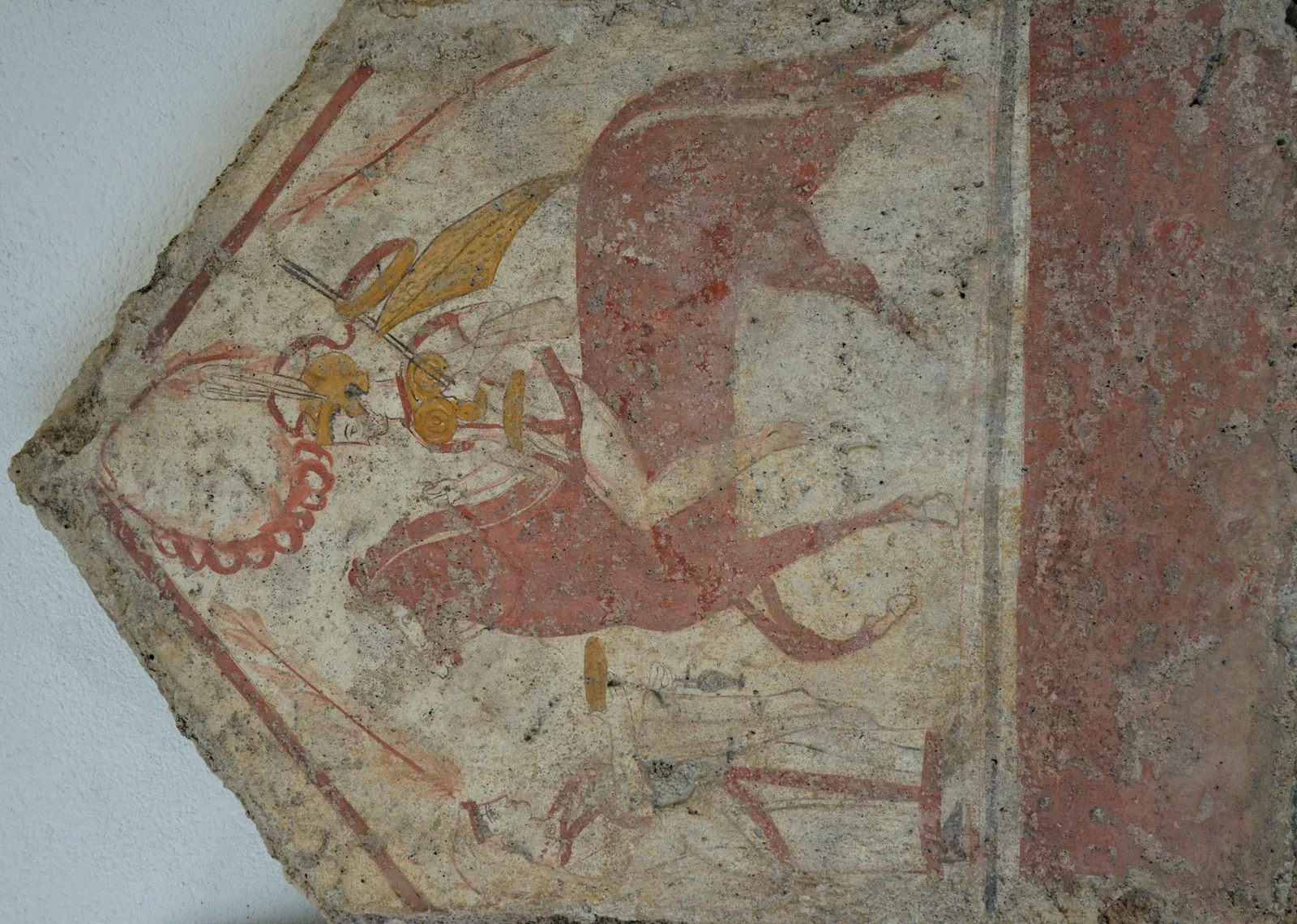
when an army knows it is about to run out of men, its last resort is not always to forge better weapons: sometimes it is to bind the ones it has left with an oath there is no longer any way out of. that is what the samnite aristocracy did in the year 293 bce, in the fourth decade of an almost unbroken war of attrition against rome. in a corner of their camp, beside the town of aquilonia, they raised an enclosed space and covered it with white linen. inside, one of the most sinister units that ancient history remembers was forged: the legio linteata, the linen legion.
the war ran deep. the samnites — a confederation of mountain peoples of the central apennines — had fought rome through three wars for the mastery of central italy, and the third, opened in 298, was slipping away from them. men were short and morale was shorter. the answer was a general levy under an old italic institution, the lex sacrata, the “sacred law” that consecrated recruits to the gods and turned desertion not into a crime but into sacrilege. every samnite of military age was bound to present himself at aquilonia on pain of death. from that mass came the flower of the army.
livy, our only source for the scene, tells it with an almost theatrical eye for detail. in the middle of the camp a space some two hundred feet on each side was fenced off, walled and roofed with linen cloth. there officiated ovius paccius, an aged priest who claimed to be recovering a most ancient rite read from an old linen scroll. the best fighters entered one by one. first they swore not to reveal what they were about to see; then they took the terrible oath, a formula that called down a curse upon their head, their house and their line if they fled from battle, or if they saw a comrade flee and did not kill him on the spot. those who refused the oath were cut down right there, before the altars, and their bodies were left heaped among the sacrificial victims as a warning to the next man. the unit’s name, livy reminds us, came not from its tunics but from the linen that covered that enclosure of the oath.
a soldier taught to fear the gods more than death is still, on the field, only one more soldier.
from that rite came, according to livy, sixteen thousand chosen men: the general named ten men, each of those chose another, and so on — vir virum legere, man choosing man — until the number was complete. it is worth stressing that this figure comes from no excavation and from no casualty report, but from the historian’s own narrative; the popular accounts that present it as an “archaeological” datum invent a precision the sources do not give. the rest of the army formed up behind. when the consul lucius papirius cursor — son of the famous dictator of the same name — finally attacked, he did so with the manipular legion, the open chequerboard formation that fought in staggered lines and could relieve the front rank without breaking. the clash proved something uncomfortable for anyone who trusts in sacred terror: the supple discipline of the maniples ground down the men of the linen just as it did the rest. the legio linteata, writes livy, held no better than any other stretch of the samnite line.
aquilonia was no isolated duel. twenty miles away, his colleague spurius carvilius maximus was at the same moment taking the stronghold of cominium, so that the two consuls broke the bulk of samnite power in parallel. the plunder was colossal: livy maintains that the gold and silver captured were enough to adorn the public buildings of rome with plenty to spare for other cities. papirius celebrated his triumph and seven days of thanksgiving were decreed for him. the third samnite war would still take some years to close completely, but the backbone of mountain resistance was broken that day.
now the historiographical caveat, which it would be wrong to skip. the whole episode rests on a single witness, livy, who wrote nearly three centuries later from roman annals of uneven reliability. stephen oakley, his modern commentator, suspects that the tale of the linen enclosure mixes a real core — the consecration of troops by lex sacrata, well attested among the italic peoples — with dramatic material borrowed from other samnite scenes, and doubts that an individual oath could truly have been administered to thousands of men one at a time. the colour of religious terror fits, besides, all too neatly with the image rome wanted of itself: the rational republic against the fanatical, superstitious enemy. the legio linteata is at once a fact and a self-serving portrait, and it is best read knowing which is which.
the irony came afterwards, and it did not come from the gods. papirius handed all that gold to the public treasury and shared none of it among the soldiers who had won it; the troops’ pay had, on top of that, to come out of a new levy, while carvilius did distribute one hundred and two asses a head to his men. the legionaries who had broken the most feared legion in italy went home empty-handed. rome had annihilated its worst enemy in the mountains; but the resentment of the soldier who bleeds and is not paid was already simmering within her walls, and that fracture between those who won the wars and those who kept the spoils would take centuries to present its bill.