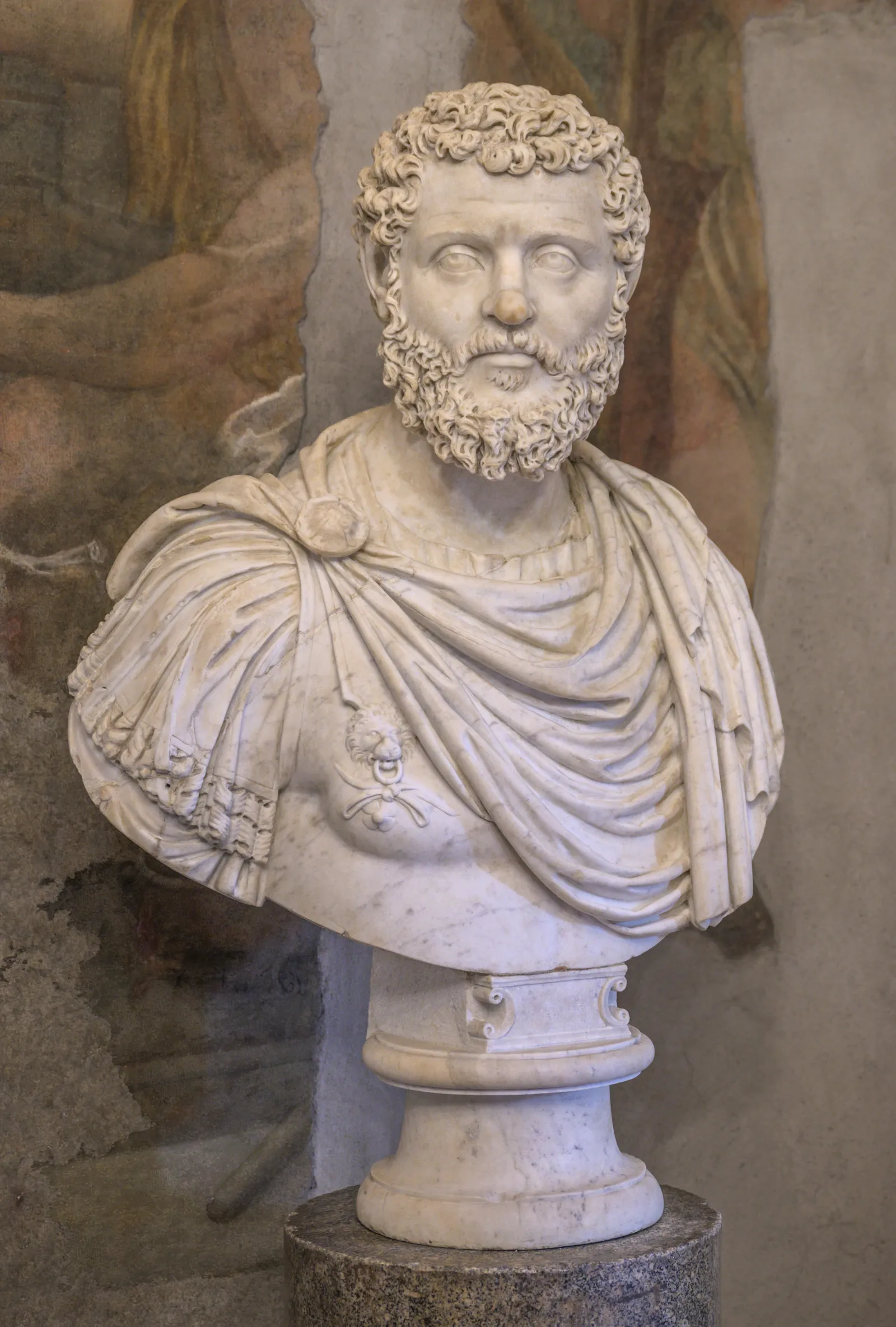
he had bought the dominion of the world, and the dominion of the world now fitted into an empty hall of the palatine. on 1 june 193 ce, didius julianus — the senator who two months earlier had had himself proclaimed emperor by bidding with hard cash — was left alone. the guard that had sold him the purple had abandoned him, the senate had just condemned him to death, and along the corridors no one remained. barely a handful of days after his triumph in the barracks, he was discovering the one thing his fortune had failed to foresee: that bought power is not held up with coins, but with the arms one does not have.
it is worth setting the scene without telling the whole of it again. on 28 march of that year, after murdering the emperor pertinax, the praetorian guard — the nine or ten thousand men who were the only troops stationed in italy — had auctioned off the empire from the walls of their camp, and julianus had secured it by promising twenty-five thousand sesterces to each soldier. that is another story, told elsewhere. what matters here is what came after: the moment the purchase revealed itself for what it was, a cheque with no military funds behind it.
for julianus had bought the guard, but not the army. the legionaries hardened on the frontiers of the rhine, the danube and the east were no part of the bargain, and they were outraged to learn that a magnate had knocked down rome’s military honour in an auction. three generals proclaimed themselves emperors almost at once. the swiftest was septimius severus, governor of upper pannonia, who according to herodian spurred his legions on by reminding them that the blood of pertinax cried out for vengeance, and set off for italy with the legio i adiutrix and the xiv gemina at a march no one expected. cassius dio reports that he took ravenna without striking a single blow. julianus, meanwhile, tried everything from the capital: he declared him a public enemy, sent envoys, offered to share the empire, ordered the gladiators of capua to be armed, and begged an old aristocrat, claudius pompeianus, to reign alongside him. pompeianus declined. no one was left willing to fight for a bought throne.
with money he bought the men who guarded the city; but legitimacy was no longer in the city, it lay in the swords of the frontiers, and those were not for sale.
when severus drew near, the praetorian guard itself, bought and all, made the coldest possible calculation: severus promised them clemency if they handed over the murderers of pertinax, and the very men who had taken the bribe arrested its instigators and left julianus without an escort. the senate, which two months earlier had ratified his purchase, met in emergency, stripped him of power and proclaimed severus emperor. within hours, the master of the world was left without a single armed subject. what the historia augusta describes as a total desertion — “abandoned by all, alone in the palace” — was the logical outcome of having mistaken a transaction for a mandate.
the ending was as humble as the beginning had been scandalous. the senate sent a common soldier to execute him, and found him alone. herodian says he was found weeping without dignity; the historia augusta adds that he died begging for the protection of severus himself, the rival he had sentenced not long before. and cassius dio, who was a senator and living in rome in those years, preserves his last words, a question of total bewilderment: “but what wrong have i done? whom have i killed?”. he had reigned sixty-six days. his body was handed to his wife and daughter, who buried him in his great-grandfather’s tomb, beside the via labicana.
now the historiographical nuance, which is best not skipped. the exact date of death wavers between 1 and 2 june: the 1st is the day the senate condemns him and the guard abandons him — the point of no return — and some sources place the actual execution on the following day. nor do the ancient versions agree on the tone: herodian paints him tearful and pathetic, while cassius dio describes him soberly reclining in the palace itself, with no drama. popular writing sometimes kills him “in a bath”, but no ancient source mentions such a scene: it is a late embellishment. and the idea that his fortune came from murky “monopolies” does not hold either: the sources speak of a well-off family, enriched by trade, and of a rise owed above all to having been raised in the house of domitia lucilla, the mother of marcus aurelius, and to imperial favour. rich he was; how rich is more slippery than the legend suggests.
out of that summer came the lesson rome would repeat to the point of nausea over the following century. the so-called year of the five emperors did not invent succession violence, but it did lay bare the mechanism: as mary beard points out, imperial power rested in the last instance on who controlled the soldiers, not on who paid most for them. julianus was the pure experiment, the man who tried to buy the state as one acquires a company. he died asking what he had done wrong. the answer was simple, and he had signed it himself in the barracks: he had paid for everything, save the one thing that was not for sale.